Free webinar "Characterizing ultra-precision & sealing surfaces"
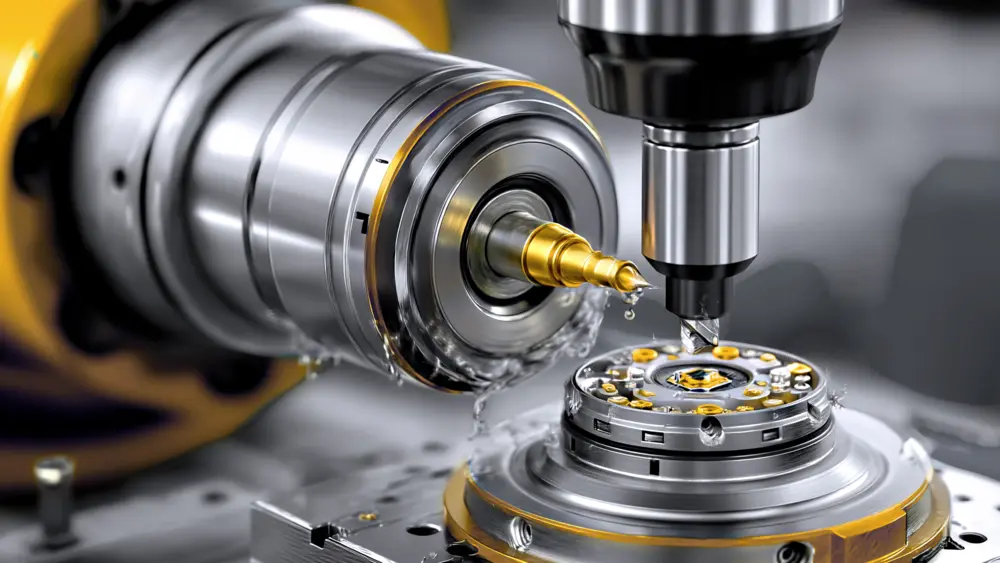
Compact web talk on 3D surface characterization of ultra-precision machined (UPM) and sealing components — from lapped, CNC ground to polished texture and finish.
Characterizing form and finish of ultra-precision machined surfaces
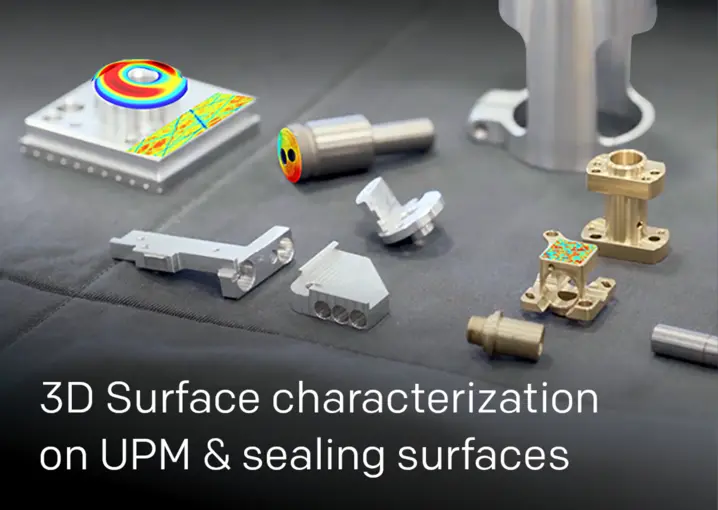
Ultra-precision machining places extreme demands on surface quality and form accuracy. Sub-micron deviations and nanometer-scale roughness have a direct impact on functionality, reliability and service life.
Polytec optical 3D surface metrology enables non-contact, areal inspection of form, roughness, and microstructure — from diamond turning to grinding, lapping, and polishing. Reproducible measurement data provides clear process feedback and support stable, high-quality manufacturing.
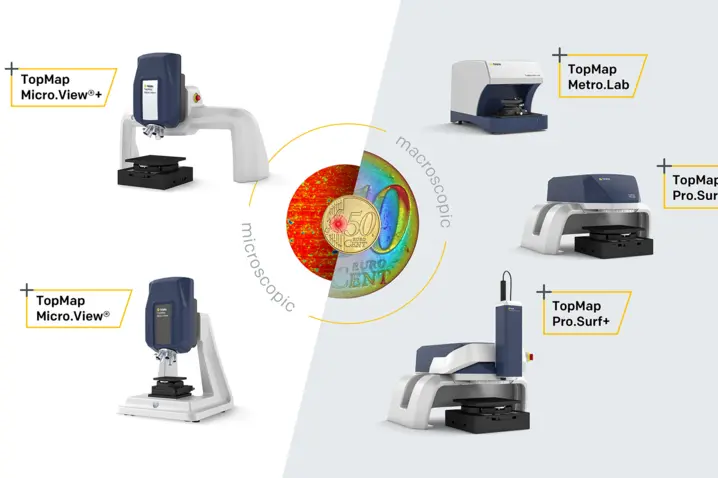
- Macro-systems with telecentric optics for faster form measurements over a large field of view (FOV).
- Microscope-based profilers with focused optics for greater structural details with sub-nm resolution.
Areal surface analysis is key to UPM quality
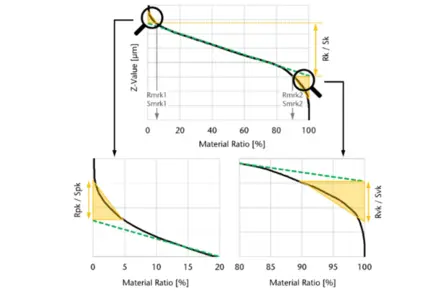
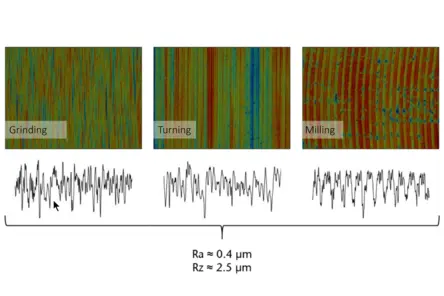
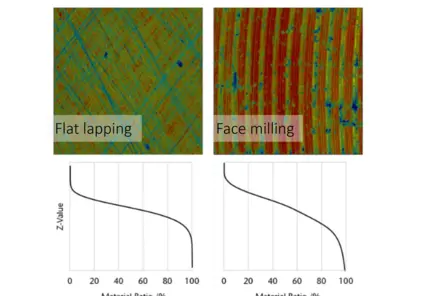
The functional performance of ultra-precision machined surfaces cannot be fully described by conventional roughness parameters alone. Only an areal analysis of the material distribution provides reliable insight into load-bearing behavior, contact mechanics, and tribological performance.
TopMap optical 3D surface profilers capture surface topography areally and with high resolution – both in the lab and close to production. From these data, material ratio curves (Abbott–Firestone curves) are derived, enabling a differentiated and nuanced evaluation of surface structure beyond Ra or Rz values.
In many UPM applications – such as diamond turning, ultra-precision grinding or polishing – friction and contact behavior can be deliberately influenced by controlling particle distribution, size, and shape. A defined material distribution helps reduce unwanted relative motion, minimize wear, and increase functional reliability.
TopMap 3D profilers provide the metrological basis for this approach: reproducible, standards-oriented and suitable for closed-loop process feedback in ultra-precision manufacturing.
Optical profilers for form, roughness and functional surface inspection
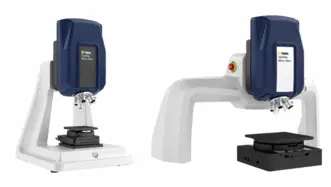
Micro-Profiler
Micro.View profiler systems are optimized for measurements with sub-nanometer resolution. With focused optics and high vertical resolution they enable detailed analysis of microstructures, surface finish and material distribution where even the smallest deviations matter.
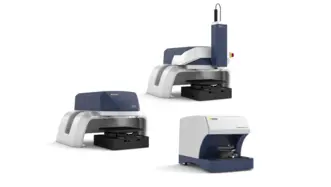
Macro Profiler
Pro.Surf inspects flatness, step height and parallelism on large parts and multi-part trays — non-contact, in seconds. No-crash telecentric optics measure even into bores, with the precision and repeatability production demands.
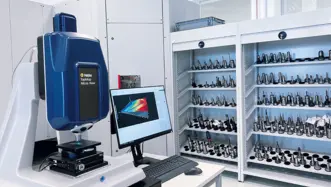
Roughness Deal Days
Save 30% on Polytec’s optical Roughness Tester—precise, non-contact 3D profilometry with sub-nm resolution. Offer valid until October 31, 2026.
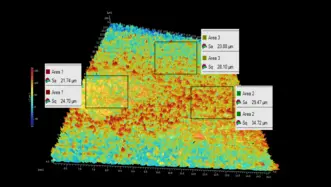
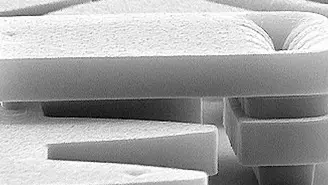
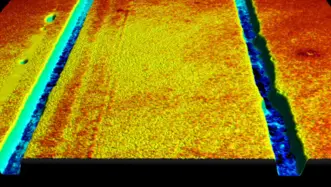
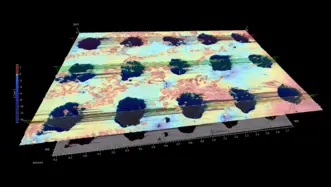
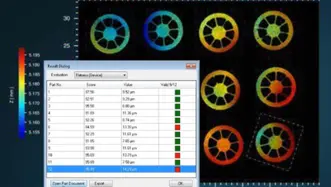
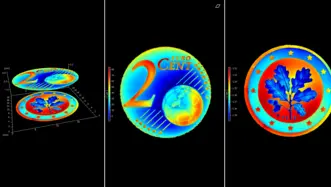
High precision manufacturing examples
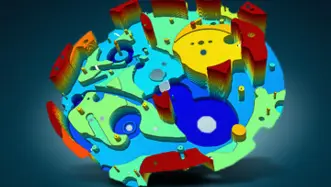
Watchmaking
Fast, high-res 3D surface measurements for micro parts in watchmaking & precision mechanics – e.g. minute wheels, data disks. Contact Polytec.
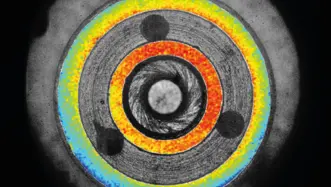
Sealing surfaces
The quality of sealing surfaces has a decisive influence on connections not being ‘leaky’. Prevent this risk with surface measurement systems from Polytec.
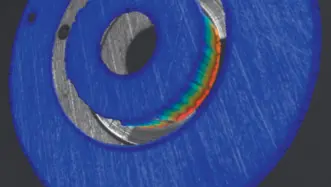
Fuel injection systems
Tight tolerances are a must for the energy efficiency of injection systems. The use of precise surface measurement ensures reliable and high quality.
Discuss your demands with our experts
Let’s start with a short discussion about your parts, tolerances, and workflow—and, if useful, we can add a feasibility study, PolyMeasure (contract measurements), or a PolyRent trial as optional next steps.