Experts in industrial NIR analyzer solutions -
whether standard or customized

Explore our range of NIR spectrometers and NIR analyzer solutions
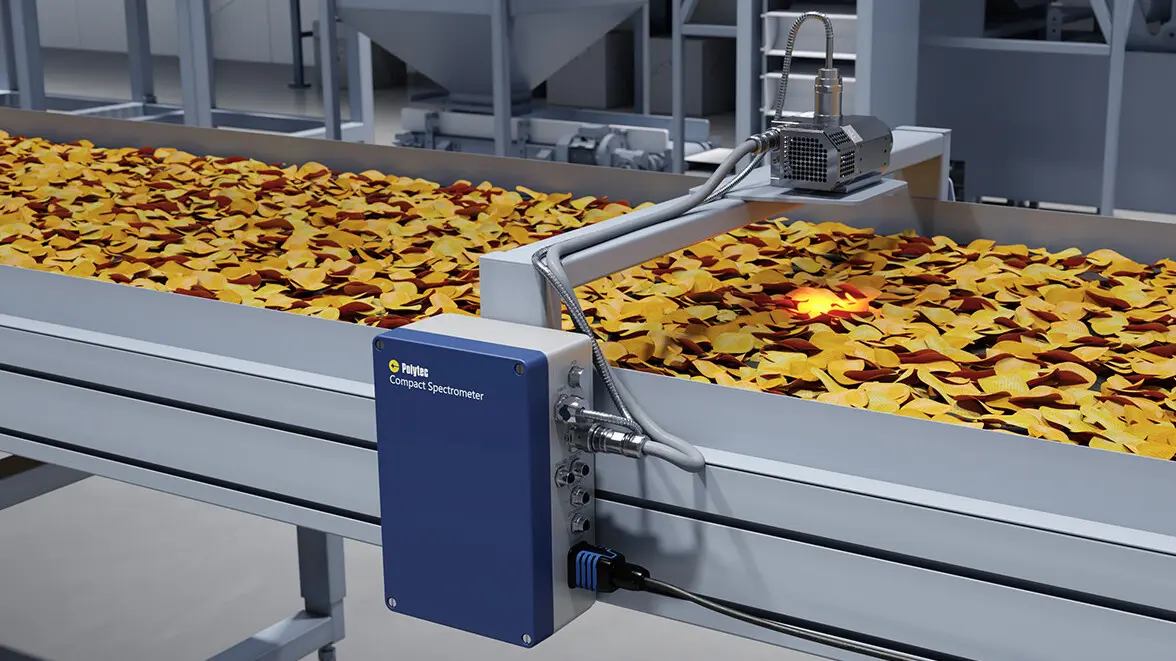
//Polytec NIR spectrometers deliver reliable real-time analytics for solids, liquids and pasty materials across food, agriculture and polymer industries. With standardized components and robust design, Polytec spectrometers combine highest precision, easy operation and long-term reliability.
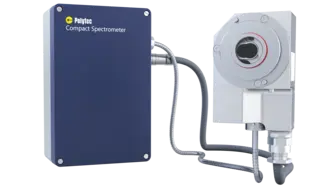
Compact spectrometer (PCS)
Lowest entry cost for a single-point NIR analyzer - one measurement point, one compact spectrometer.
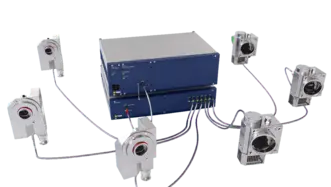
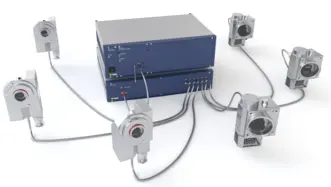
Scalable spectrometer (PAS)
One NIR spectrometer serves up to six measurement points via multiplexer - the lowest cost per point for multi-point and multichannel setups.
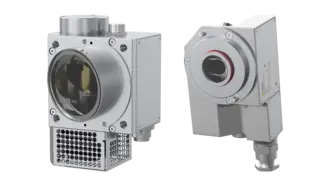
Sensor heads / probes
Contact and non-contact distance probes, in standard, hygienic or ATEX design.
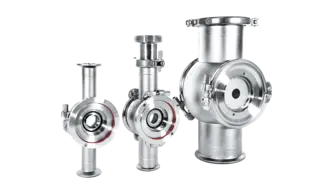
Accessories
A full set of mounting units and devices to build the best fitting NIR analyzer solution
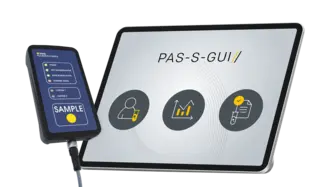
Software
Flexible software modules to operate NIR spectrometers easily

Customized solutions
Polytec offers engineered-to-order NIR analyzer solutions - down to OEM spectrometers.
Get in touch with our experts
Get in touch with our experts
Our specialists will help you to find and select the proper setup of a NIR analyzer and software to fit to your materials and process.
Q&A for NIR analyzers
What can a NIR analyzer measure inline?
Moisture, fat, protein and further constituents, measured directly in the production line.
A Polytec NIR analyzer measures composition parameters such as moisture, fat and protein directly in the production line, without taking samples. Near-infrared light is reflected from or transmitted through the product, and a calibration model converts the resulting spectrum into the values your process needs, in real time.
Moisture, fat, protein and further product-specific constituents.
Solids, liquids and pasty products, in food, agriculture and polymer production.
How many measurement points can one spectrometer serve?
One point with the compact PCS, up to six with the scalable PAS.
One Polytec spectrometer serves either a single measurement point or up to six, depending on the system. The compact spectrometer PCS is built for one point at the lowest entry cost. The Polytec Advanced Spectrometer PAS serves one to six points, so several positions in a production line share one instrument instead of needing a separate spectrometer per point - which is why the cost per measurement point falls with every point added.
One measurement point, at the lowest entry cost.
One to six measurement points on a single spectrometer, for the lowest cost per point.
Can a NIR analyzer be installed in hygienic or ATEX areas?
Sensor heads are available in standard, hygienic and ATEX (Ex) design.
Yes. Polytec NIR sensor heads are available in standard, hygienic or ATEX (Ex) design, as contact or distance probes, so the same measurement principle can be installed in a wash-down food line or in a hazardous area. Mounting flanges with sapphire windows allow the sensor head to be removed without interrupting production.
Standard, hygienic and Ex design; contact or distance probe.
Sapphire-window flanges allow head removal while the process keeps running.
How does the analyzer deliver data to our process control system?
Software modules for acquisition, analysis and process control, plus integration support.
Polytec spectrometers connect over standard industrial interfaces: the compact spectrometer PCS provides Ethernet, Modbus and OPC, so measured values can be read directly by a PLC or process control system. Polytec software modules cover data acquisition, multivariate data analysis and process control, and Polytec specialists support the integration into your production system.
Data acquisition, multivariate data analysis and process control.
Ethernet, Modbus and OPC; SMA fiber-optic connection to the sensor head.
Can a NIR analyzer be customized or supplied as an OEM module?
Spectrometer, sensor head, flange and software are separate building blocks.
Yes. Because spectrometer, sensor head, flange and software are separate building blocks, Polytec builds engineered-to-order analyzers from proven modules, down to OEM spectrometer modules for integration into your own product. Custom and OEM work is core business rather than an exception.
Spectral range, sensor head housing, mounting and flanges, software modules.
Polychromator-based spectrometer modules for integration into your own system.
Which spectral range do Polytec NIR spectrometers cover?
950 to 1700 nm with the PCS; 850-1650 nm or 1100-2100 nm with the PAS.
The compact spectrometer PCS covers 950 to 1700 nm. The Polytec Advanced Spectrometer PAS is available in two ranges, 850 to 1650 nm and 1100 to 2100 nm, so the instrument is matched to the constituent being measured rather than the other way round.
950 to 1700 nm.
850 to 1650 nm or 1100 to 2100 nm.
What is the difference between a NIR analyzer and a NIR spectrometer?
The spectrometer is the instrument; the analyzer is the complete system built around it.
The spectrometer is the measuring instrument. A NIR analyzer is the complete system - spectrometer, sensor head, process flange, cabling and software - configured for one measuring task. Polytec supplies both, as standard products and as engineered-to-order systems.
PCS for single-point measurement, PAS for multi-point measurement.
Spectrometer plus sensor head, flange, cabling, calibration model and software.
Should I choose the compact PCS or the scalable PAS?
PCS for one measurement point; PAS where several points share one spectrometer.
The compact PCS is the lowest entry cost where one measurement point is enough. The scalable PAS serves up to six points from a single spectrometer via multiplexer, which gives the lowest cost per point as soon as a line has more than one measuring position.
PCS: one. PAS: up to six via multiplexer for multichannel operation.
PCS: 950 to 1700 nm. PAS: 850-1650 nm or 1100-2100 nm.
Diode array on both; PAS with 256 or 512 pixels.
PAS from below 4.0 nm with the 512 pixel model.
Ethernet, OPC and Modbus on both.
PCS: a single measuring position. PAS: several positions on one line.