Optical profilers for high precision roughness to efficient pass / fail inspection
Optical profilometers are non-contact 3D surface measurement systems that capture roughness, texture, form, flatness and microstructures with high vertical resolution. Polytec systems use coherence scanning interferometry and related optical technologies to inspect surfaces from microstructures to large-area components. Use the overview below to choose between microscope-based profilers, large-area profilers and roughness-focused entry systems.
Benefits of optical profilometers from Polytec
- True Stitching extends measurement field to ~230 × 220 mm while achieving the highest accuracy
- Outstanding measurement precision reveals surface details down to 0.01 nm Z-resolution.
- Any-surface measurement with SST Smart Scanning Technology.
- Easy operation and automation-ready features & interfaces.
- Modular concept enables custom configurations and upgrades, expanding your capabilities.
- Long-term reliability due to rugged design and a 4-year warranty.
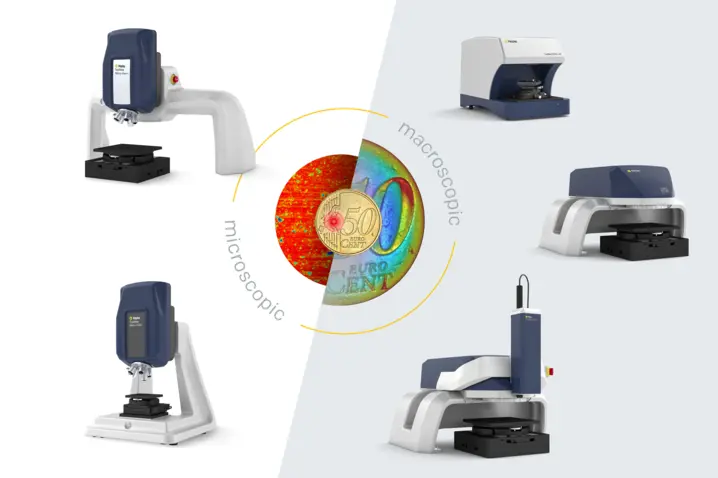
When to use a micro or macro surface profiler?
| Profilers | Field of view | Strengths | Measurement tasks | Best suited for |
| Micro profiler | From 0.07 up to 3.7 mm² | Highest lateral resolution, sub-nm vertical accuracy. | Surface texture, roughness analysis, focused tribology | High resolution analysis of precision parts, MEMS, micro-optics, microfluidics, ... |
| Macro Profiler | Single FoV 44 × 33 mm, with True Stitching up to 230 × 220 mm and more | Large-area form measurement, telecentric optics, stable geometry. | Flatness, parallelism, step height, thickness, form measurement deviation. Roughness with Pro.Surf+ | Quality inspection (pass / fail) in precision manufacturing, small to large parts and trays. |
| Roughness Tester | From 0.07 up to 3.7 mm | Compact, cost-effective system to step into areal roughness measurement | Roughness analysis / sample inspection | Teams shifting from tactile / stylus to areal surface inspection with tight budget |
Discuss your demands with our experts
Let’s start with a short discussion about your parts, tolerances, and workflow—and, if useful, we can add a feasibility study, PolyMeasure (contract measurements), or a PolyRent trial as optional next steps.

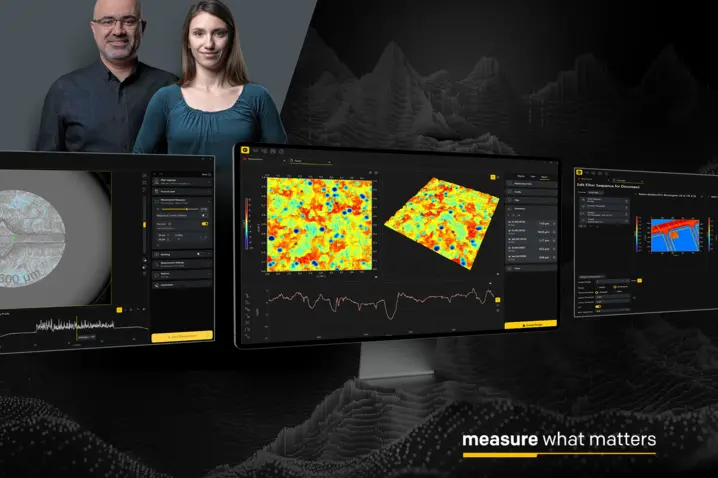
Take a look at the Sherpa launch event
Explore the capabilities of the new Sherpa software for Polytec TopMap profilers. Learn how intuitive workflows, automated routines and powerful analysis tools simplify surface metrology and improve measurement reliability.
Our 3D surface profilers in depth—for sub-nanometer roughness to industrial surface texture inspection
Below you’ll find descriptions of each CSI optical profilometer type to help you compare capabilities and select the right system for your measurement task. In case you are not sure what fits best to your metrology strategy, use the contact form at the end to talk to our experts.
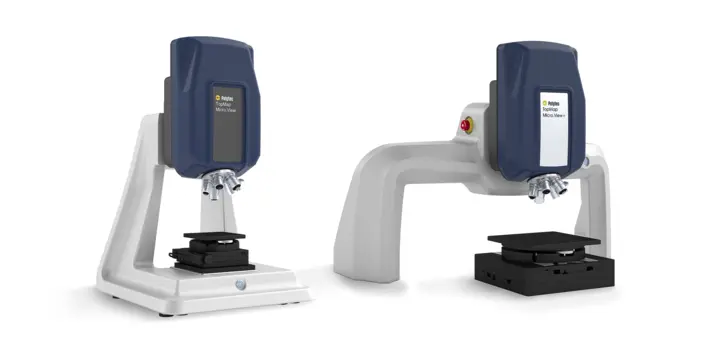
TopMap micro surface profiler
Microscopic, high-resolution 3D optical profiler for surface topography measurement with high lateral resolution—best for analysis of microstructures, precision components and optics, MEMS, and high precision tribology.
- Variable FoV with spot sizes from 0.07 to 3.7 mm.
- Ideal for sub-nm resolution.
- True Stitching enables highest precision on wider areas.
Choose Micro.View white-light interferometers when maximum lateral resolution and high repeatability is key for your microstructure analysis and ultra-precision machined surfaces.
Our macro profilometers
- Pro.Surf and Metro.Lab
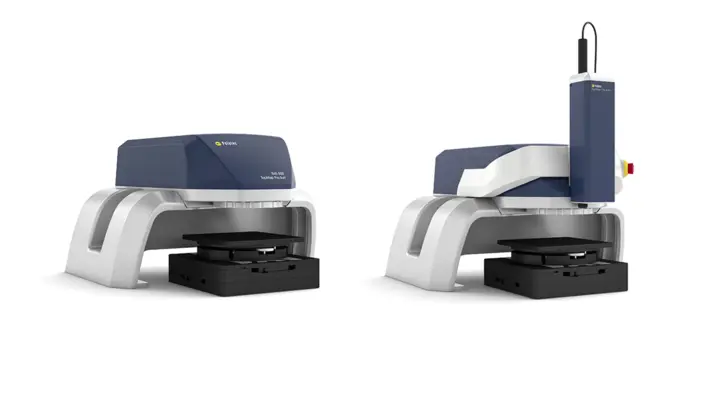
Super-efficient macro surface profilometer for large-area surface form measurement and trays. Pro.Surf is the preferred profiler in manufacturing due to the reliability, efficiency and flexibility.
- Captures up to 2M data points within just seconds
- Outstanding single FoV up to 44 × 33 mm—expandable to 230 × 220 mm with True Stitching.
- Measures flatness, shape, parallelism faster—even inside bores.
- Pro.Surf+ adds a chromatic confocal sensor for combined 2D roughness examination.
- Ideal for precision mechanics, sealing surfaces, watchmaking, and optics
Choose Pro.Surf when you need large-area, high-throughput form deviation measurement with maximum stability.
Customer stories with optical profilometers
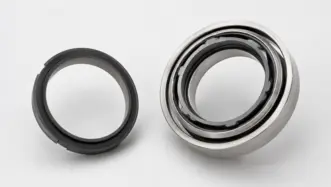
How macro profiling stopped seals from leaking
A sealing face may look flat and still leak. See how non-contact optical profiling detects the micron-level deviations that decide sealing performance.
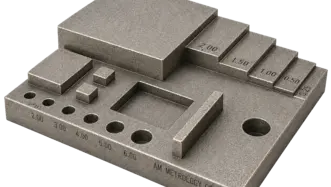
Manufacturing of 3D metal printed parts optimized with macro profiling
In metal 3D printing, hidden defects can compromise entire parts. See how large-area optical profiling helps keep safety-critical production processes under control.
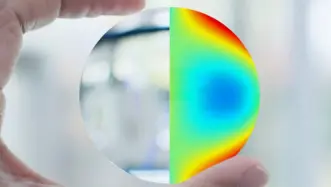
Ensuring highest quality of optical components with WLI inspection
Tiny, mirror-flat thin-film filters push standard microscopy to its limits. See how WLI inspection ensures the optical quality of micro-components.
Turn surface profiling into standardized, repeatable workflows
Get the most from your 3D optical profiler: accelerate quick quality checks, support in-depth research, and enable your team to measure with confidence.
- Intuitive 2D & 3D visualization
- Recipe-based workflows (SOPs)
- Full automation readiness (MES/PLC)
- Advanced analysis tools
- Export formats for metrology & QA systems
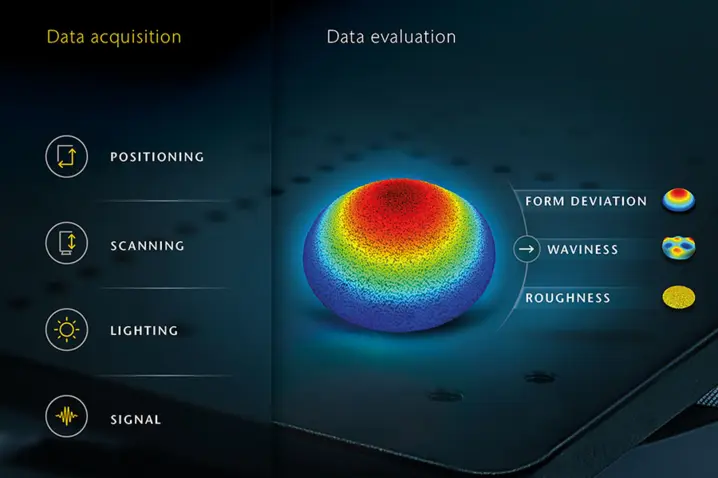
Operate your metrology task with our WLIs —easy, precise, repeatable
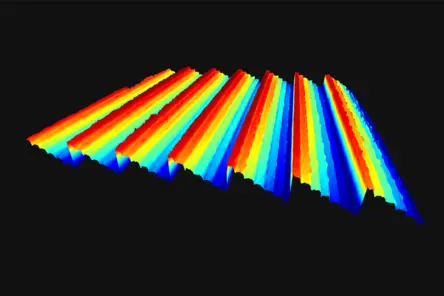
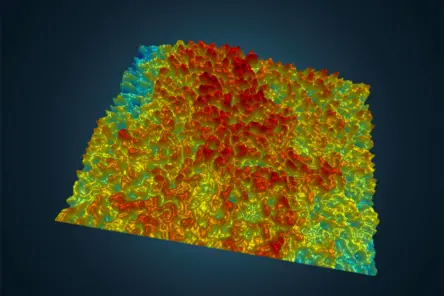
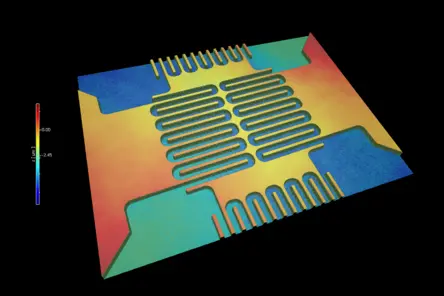
Here are some surface measurement examples—from roughness, tribology measurement to analyzing microstructures.
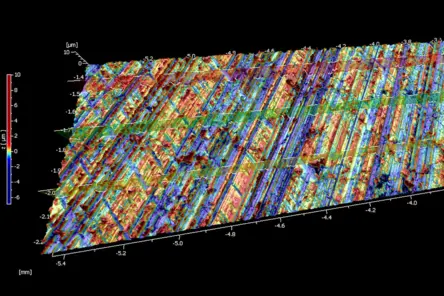
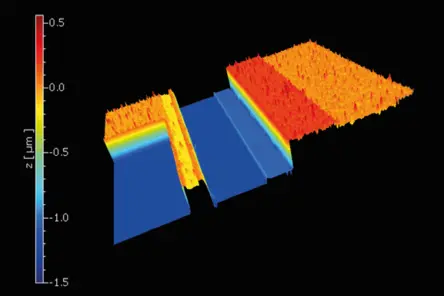

Typical questions and guides to understand and find the right optical profilometer
Guides
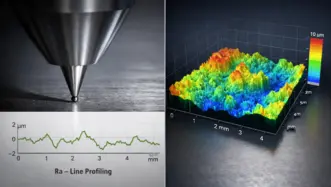
Stylus or optical profiler
Learn when non-contact 3D metrology offers clear advantages over tactile measurement — from speed and flexibility to delicate surface inspection.
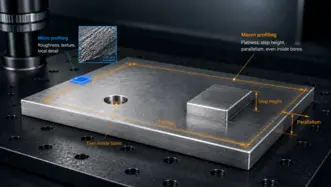
Micro or macro 3D profiling?
Find out how measurement scale, sample size and application requirements influence the choice of the right optical surface profiler.
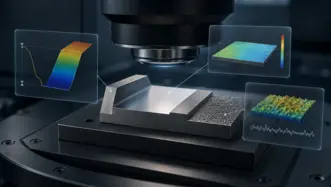
Which optical profiler technology is the right one?
Compare key technologies such as WLI, confocal microscopy and focus variation — and understand which method best fits your surface.
Q&A
What is an optical profilometer?
An optical profilometer is a non-contact measurement system used to capture 3D surface topography with high vertical resolution. Optical profilometers are commonly based on coherence scanning interferometry (CSI) and are used to measure surface roughness but also form, flatness, step height and microstructures across a wide range of materials.
Are companies shifting from their installed profiler to Polytec systems? And if so - why?
Yes — many companies transition from existing profilers to Polytec when their applications become more demanding. Their systems reach limits – for example with challenging materials (such as highly reflective surfaces), growing sample sizes and stitching quality, or the need for higher automation. Polytec systems excel in such areas - difficult to measure surfaces, large-area measurement and reliable, precise stitching.
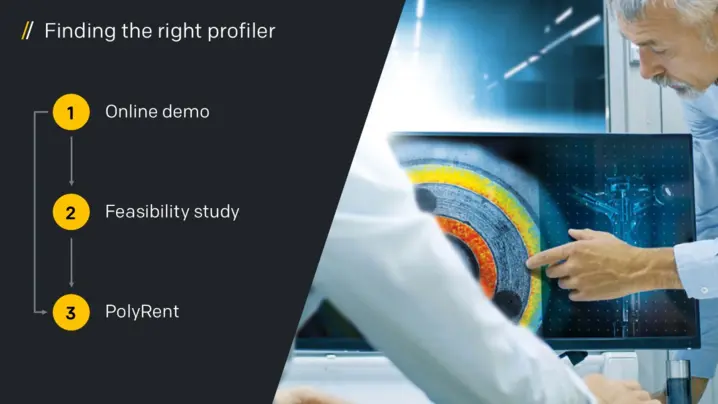
The investment in a profiler is a significant decision - from a cost perspective but also the effort on your site (training, integration, ...). Thus, we recommend to thoroughly test and evaluate potential systems. We from Polytec offer feasibility studies, PolyMeasure and PolyRent for a future-proof investment decision.
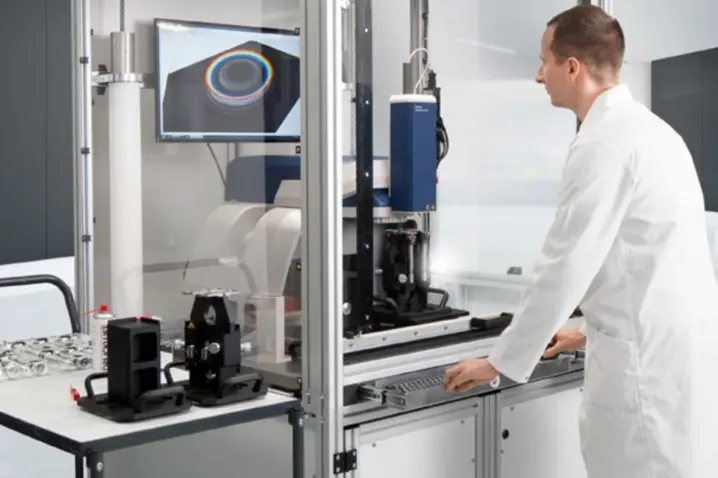
How can you help me in identifying the right system? What is the try-before-buy offer?
3D optical profilers are a significant investment. It’s only natural to ask whether a system will support your short- and long-term needs and align with your metrology strategy.
With try-before-buy we want to support you in finding the best fitting profiler directly from the start. This lets you validate performance, workflows, and ROI before investing.
Micro vs macro profiler - When to use what?
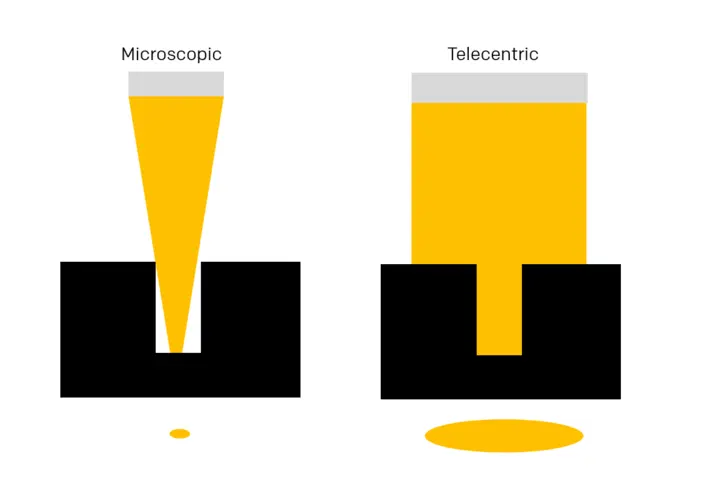
Large area systems with a telecentric configuration allow you to simultaneously and quickly measure the topography of large surfaces in a single measurement. Optical profilers based on microscope systems, where the optical configuration including the reference arm is integrated into the lens, are more suitable if you require more lateral details on the whole area.
Microscopic systems (Micro.View)
- Small FoV
- Highest lateral resolution
- Best for microstructures and MEMS
- Trade-off: lower throughput on large samples
Macroscopic systems (Pro.Surf / Metro.Lab)
- Telecentric optics, large FoV
- Ideal for trays, flatness, parallelism
- Best for larger components
- Trade-off: lower lateral detail than microscopy
Rule of thumb:
- Need micro-scale detail? → Micro.View
- Need large-area form (flatness, parallelism,..) ? → Pro.Surf / Metro.Lab
Microscope or telecentric optics for profilometers?
Telecentric optics (Pro.Surf / Metro.Lab)
...keep magnification constant across height and offer a long, safe working distance. On Pro.Surf and Metro.Lab this helps measure near steep edges and down into bores while maintaining scale accuracy — ideal for flatness/parallelism on larger parts.
Focused, microscope optics (Micro.View)
....prioritize lateral resolution on small fields for rich details and sub-nm analysis. They excel at micro-features and surface finish but typically have shorter working distances, so access to deep holes/edges can be more constrained.
Why is stitching highly relevant for wider samples? What is "True Stitching"?
Because larger surfaces exceed the single-shot field of view — stitching merges tiles into one accurate dataset.
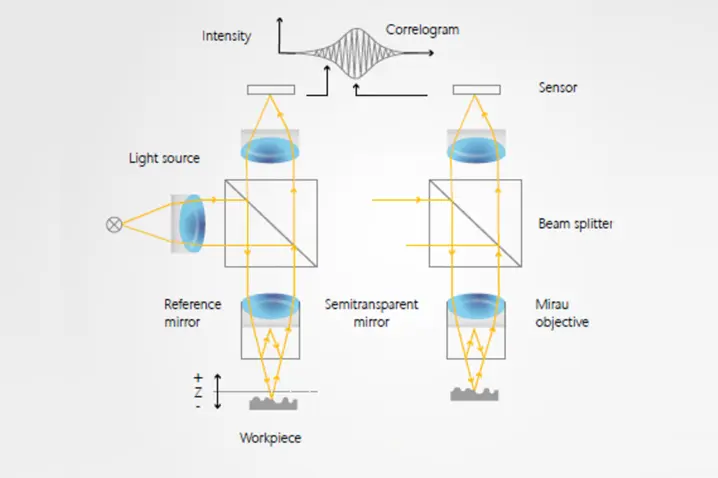
When the area to be measured exceeds the single-shot field of view (FoV), the system must acquire multiple single measurements and stitch them into one areal dataset. The metrology quality of such large-area measurements depends on the optics and sensing technology, the number of tiles and the stitching algorithms.
True Stitching delivers high-fidelity large-area measurements by minimizing stitching artifacts and preserving geometry.
An independent benchmarking at a leading German technical university compared six optical profilers from different manufacturers and the Polytec profilometer demonstrated the highest stitching and measurement quality. This is achieved by various features as:
- Large single-shot FoV → fewer tiles and seams, less cumulative error
- Sophisticated stitching algorithms → controlled overlap, robust registration, and metrology-safe blending that preserves steps and edges
- For Pro.Surf: Telecentric/CSI optics with correlogram evaluation → stable geometry and height fidelity across tiles
The result is high-fidelity, large-area topography with fewer artifacts and audit-ready residuals—what we call True Stitching.
Are TopMap profilers ready for production?
Due to the rugged design with very limited to no moving parts, SST (Smart Scanning Technology) and ECT (Environmental Compensation Technology), the Pro.Surf line and Micro.View+ are ready for in- and at-line metrology. Also Metro.Lab, as an easy to use bench solution, is an often used at-line quality control system.
Another advantage is the modular design of Pro.Surf and Micro.Surf. The sensor heads can be utilized as a single unit and by this easily integrated into your process.
So yes - Pro.Surf and Micro.View+ are ready for in-line and at-line integration thanks to rugged mechanics and stable sensing technology as fitting features.

What is the warranty for the Polytec optical profilometers?
Polytec stands behind the durability and performance of its surface metrology systems by offering a unique 4-year warranty, reflecting our confidence in the quality and longevity of our optical profilers.

White light interferometer
Introduction of the white light interferometry technology and the benefits for non-contact areal surface measurement.
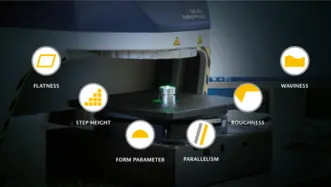
Surface parameters
Learn more about roughness, flatness, step-height and layer thickness.
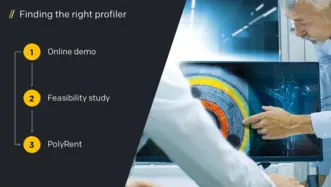
"Try before buy" offer
Measure, rent, decide - on your terms. Make a confident decision about which surface profiler fits into your metrology strategy and safeguard your capital investment.
Discuss your demands with our experts
Let’s start with a short discussion about your parts, tolerances, and workflow—and, if useful, we can add a feasibility study, PolyMeasure (contract measurements), or a PolyRent trial as optional next steps.