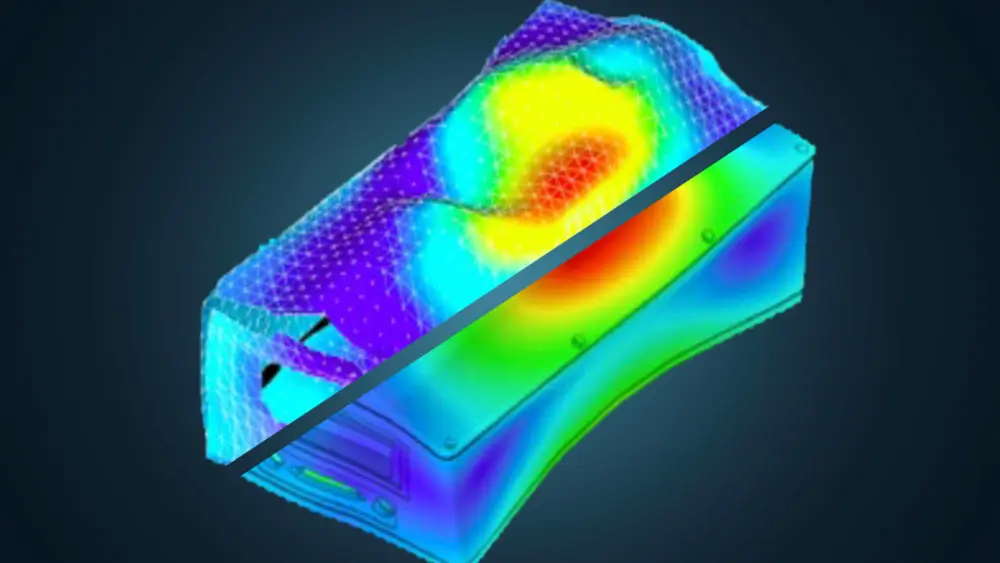
Finite Element model validation - comparing simulation model & modal test data
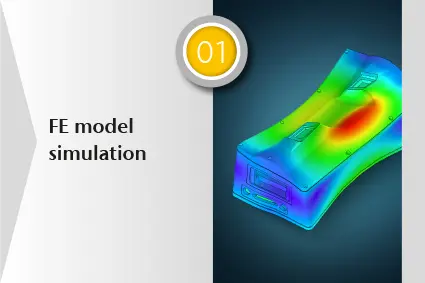
Finite Element (FE) models can greatly reduce development time and cost, as it can be done on a computer with less prototyping. But the main concern is that these FE models have to predict the behavior of the « real » device. The idea behind the term FEM validation is to compare the results from a simulation to data from a real test, the so-called experimental modal test. For most real cases, FE models need to be checked against experimental data to obtain a validated model, that can be trusted and then be used to predict behavior under load or with small modifications. If the model does not fit the experimental reality, there is no point in using it for design purposes.
Get in touch with our experts
Get in touch with our experts
Free demo on how to validate your FE simulation models with laser measurement data
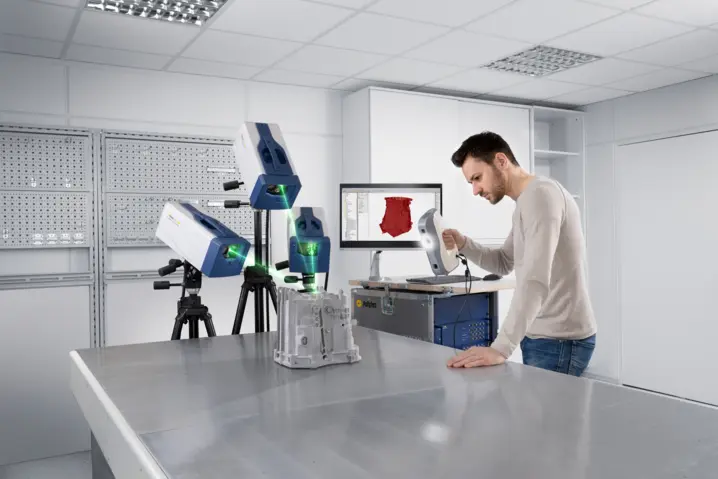
Typical test setup for the validation of FE simulation models
To perform an experimental vibration test as the counterpart of FE simulation models, the sample must be mounted and, of course, it must be excited to vibrate. This requires sample excitation in a specific manner covering the frequency range of interest and at specific locations. This approach may differ from numerical FE simulation, which only considers the inherent properties of a sample. It solves differential equation of motion for an assumed set of material properties and boundary conditions. Therefore, the results from an experiment are, strictly speaking, only the responses of the sample to a particular kind of excitation and with a specific mounting. Modes are extracted from the experimental results by a curve fitting procedure, which is part of the post-processing.
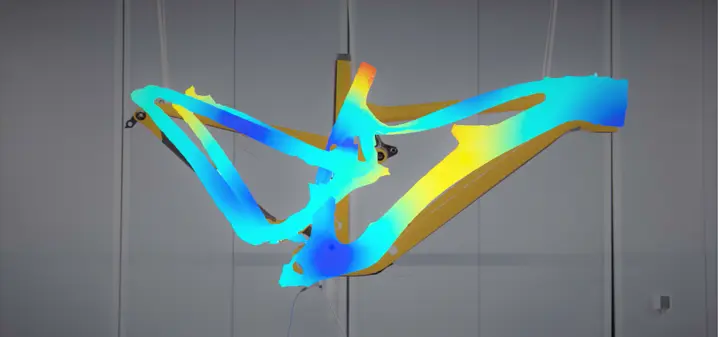
FE model validation based on Scanning Laser Doppler Vibrometry
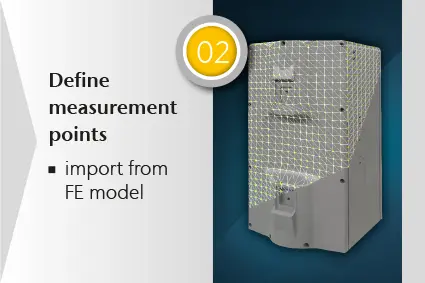
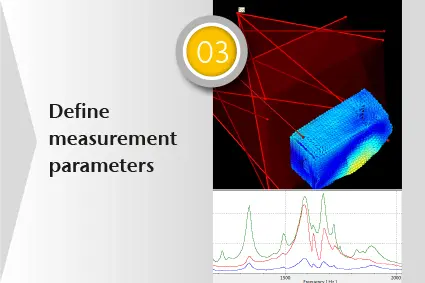
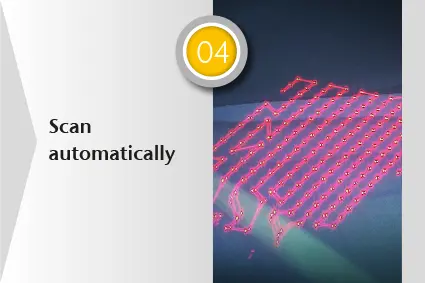
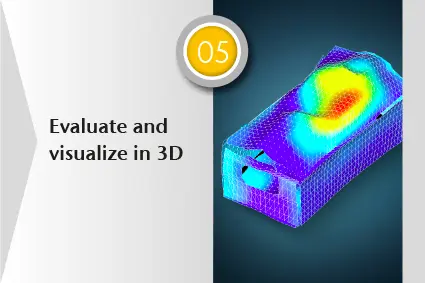
Can I trust the experiment? When defining the modal test setup the FE model’s boundary conditions should be replicated to allow comparison of Finite Element and measurement results. The measurement parameters like frequency bandwidth and the selected measurement points need to match the task. Mass-loading or stiffening effects should be avoided or taken into account during the modelling process. Using light as a sensor makes data from laser scanning vibrometers a more valid input for the model validation process. The laser method provides an exceptional high spatial measurement resolution since the sensor is software-defined and the sample is scanned automatically. The animated 2D/3D deflection shapes provide an intuitive visualization. This also helps reduce remaining ambiguities in the following validation and evaluation process. The resulting more sample points allows for a better curve fitting in the post-processing, improving identification of local parameter deviations such as local damping or locals changes in mass distribution.
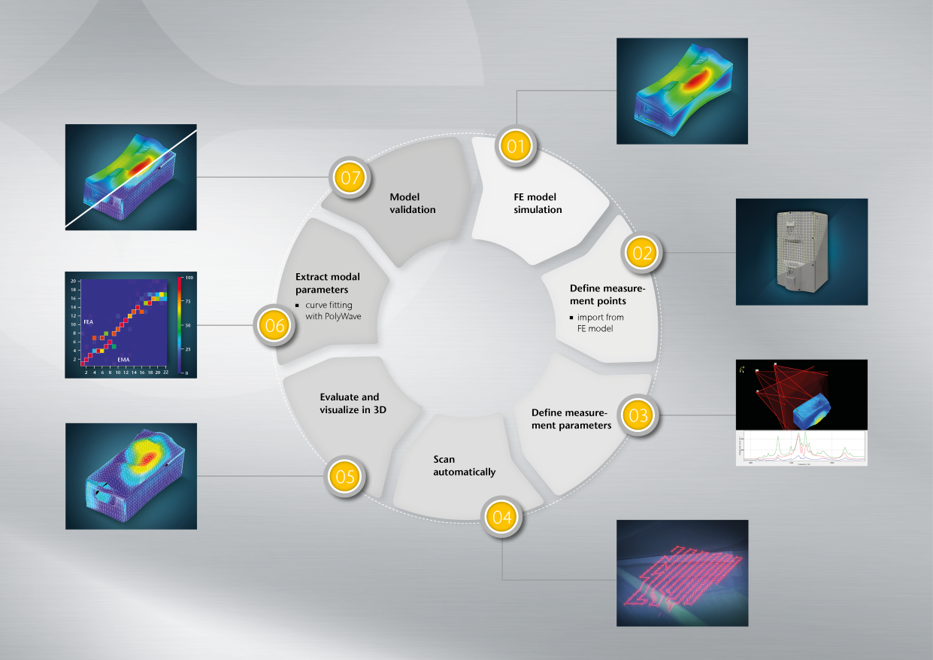
Product development phase
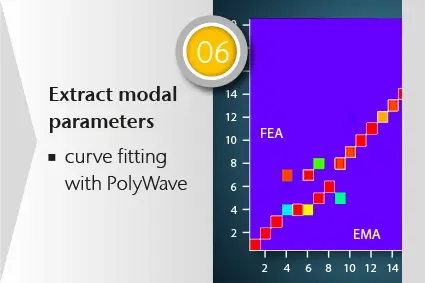

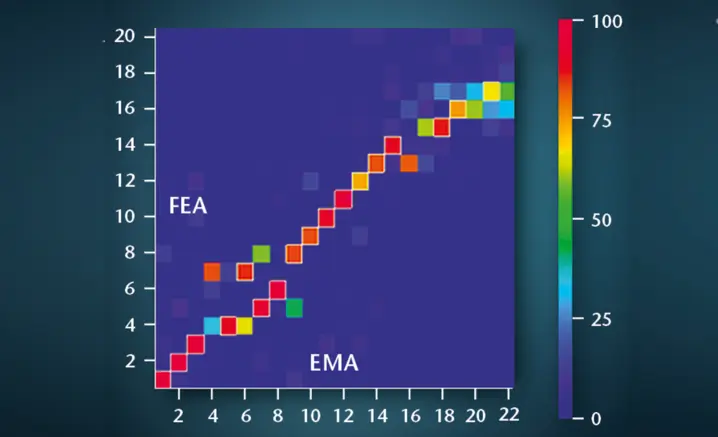
FE correlation with simulation modes: Frequency, damping and MAC
There are two parameters for comparing FE model and experiment: The eigenvalues and the eigenvectors as a result of solving the differential equations of motion in the model. They correspond to the resonance frequencies and mode shapes of an experimental test. The simplest approach is comparing the frequencies on one side and compare the eigenvectors and mode shapes visually. Using the modal assurance criterion MAC to compare the mode shapes is a common way to get and obtain an objective and quantitative comparison. The MAC requires modal modes rather than operational deflection shapes (ODS) as an input. These are extracted from the experimental results by a curve fitting procedure, which is part of the post-processing.

Talk to our experts
Our experts are ready to support your projects with tailored measurement solutions or support you in measuring what matters—get in touch with us today.
Why validate simulated FE models with laser vibrometry
For simple samples, like cast metal plates, today’s FE models will predict the vibration modes and resonance frequencies very exactly if the finite elements are chosen in a reasonable way. Things are different when components and modelled structures become more complex. As soon as there are multiple parts, connected to each other by joints, or if they are made of composite material, the simulation results may be a lot less trustful at first shot. Therefore, these FE models need to be checked against real experimental data. If they can predict the experimental data correctly over the range of needed working conditions, the model is called validated. So for most real cases, finite element models need to be checked against experimental data to have a validated model, one that can be trusted and that can then subsequently be used to predict behavior under load or with small modifications. If the model does not fit experimental reality, there is no sense in using it for design purposes.
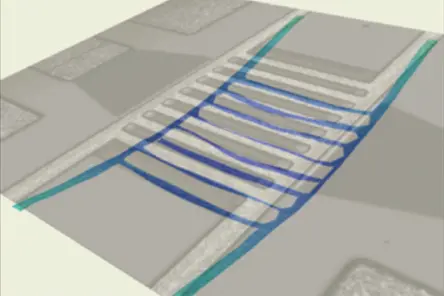
MEMS & microstructures: How laser vibrometry helps validate FE models
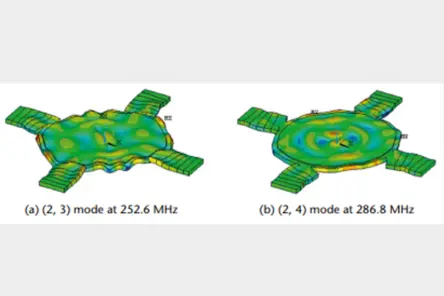
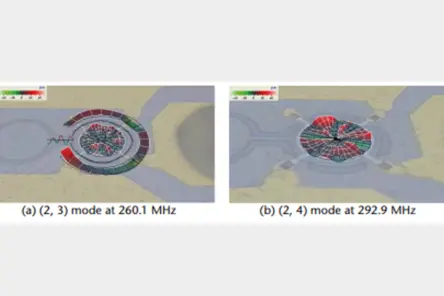
MEMS transducers are employed in many everyday objects from tire pressure sensors to mobile phones. Computer simulation models are essential to the development of MEMS devices, but need to be validated and refined through comparisons with precise experimental data. These validation data characterizing the real, physical mechanical response of a MEMS are easily acquired by laser-based Micro System Analyzers and optionally a wafer probe station.
Mechanical resonance is one of the most fundamental dynamics exhibited by MEMS. It is used for gyroscopes, mass sensors, optical scanners, clock oscillators etc. One natural research direction for MEMS resonators is to pursue higher resonance frequencies and find new applications. Electrostatic and piezoelectric transductions are two major driving principles. Both types can be measured even at highest frequencies, using laser vibrometers with light as a reliable precision sensor.
Testing services & application support for validating FE models
For further information, find these additional sites and learn about Polytec solutions for importing, measuring, comparing, evaluating, post-processing and documenting any modal test data.
- How does the non-contact technology of laser Doppler vibrometry work?
- How to perform laser scanning measurements in 2D or 3D?
Our PolyXperts are looking forward to hearing from you. For complex shaped and larger structures, automated testing with robotics can significantly reduce testing time and cost. Polytec operates several structural test centers around the globe – in Waldbronn Germany, Plymouth, MI USA and Yokohama Japan for measurements as a service. Contact Polytec for individual support or contact us and send your sample for cost-effective validation of your FE simulation models.
Polytec Magazine

Keep healthy teeth with ultrasonic scaler using EMS Piezon NO-PAIN technology
In order to keep your natural teeth as long as possible and to prevent caries and periodontal infections, home-care methods like brushing your teeth and flossing are essential. Unfortunately, these alone a…

On self-supporting and self-aligning compact shakers
Artificial excitation is the basis for various noise and vibration techniques, from experimental modal analysis, over transfer path analysis, load identification, simulation model correlation, hybrid model…
Laser-Doppler-Vibrometer set standards in the development of electric drives
Electric machines are increasingly being used as the primary drive technology in vehicles. The acoustic behavior of the drive is a key factor in the perceived quality of electric vehicles. Numerical method…

No budget? Just measure.
Whether you need contract measurements, equipment rental, or leasing, our scalable services deliver precise data—without the overhead of major investments. Ideal for short-term projects, occasional use, or limited budgets.
With PolyFlex you get results without compromising timelines or budgets.
Related products
VibroScan QTec Xtra
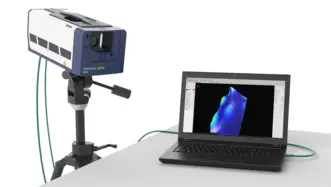
VibroScan QTec Xtra measures vibrations in a new way - without contact, full-field and with unprecedented precision. With its groundbreaking multi-path interferometry, QTec® sets new standards in terms of optical sensitivity and interference immunity. The Xtra, based on an infrared (SWIR) laser is characterized by the highest optical sensitivity to guarantee highly accurate measurements even on demanding technical surfaces. VibroScan QTec Xtra ensures maximum portability through integrated data acquisition and signal generator up to 32 MHz.
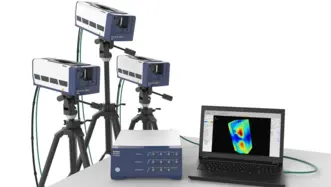
VibroScan QTec Xtra 3D
VibroScan QTec Xtra 3D measures vibrations triaxially in a new way - without contact, full-field and with unprecedented precision. With its groundbreaking multi-path interferometry, QTec® sets new standards in terms of optical sensitivity and interference immunity. The Xtra, based on an infrared (SWIR) laser is characterized by the highest optical sensitivity to guarantee highly accurate measurements even on demanding technical surfaces. VibroScan QTec Xtra 3D ensures maximum portability through integrated data acquisition and signal generator up to 32 MHz.
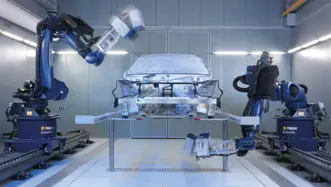
RoboVib®
By combining a 3D scanning vibrometer and an industrial robot, RoboVib® forms an automated test station for measuring everything from complex components to complete vehicle bodies. Reduce testing time and expenses as well as time to market significantly in experimental modal analysis. Conduct comprehensive 360° testing of a vehicle body, for example, within only one-two days and overnight instead of weeks of preparation with conventional test setups.
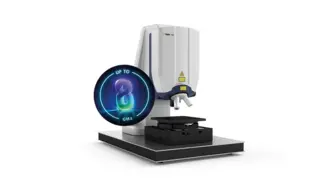
MSA-600 Micro System Analyzer
The all-in-one optical measurement solution for static and dynamic 3D characterization of MEMS and microstructures- now for up to 8 GHz! The MSA-600 enhances microsystem development and quality inspections - also allowing testing on wafer-level when integrated into commercially available probe stations.