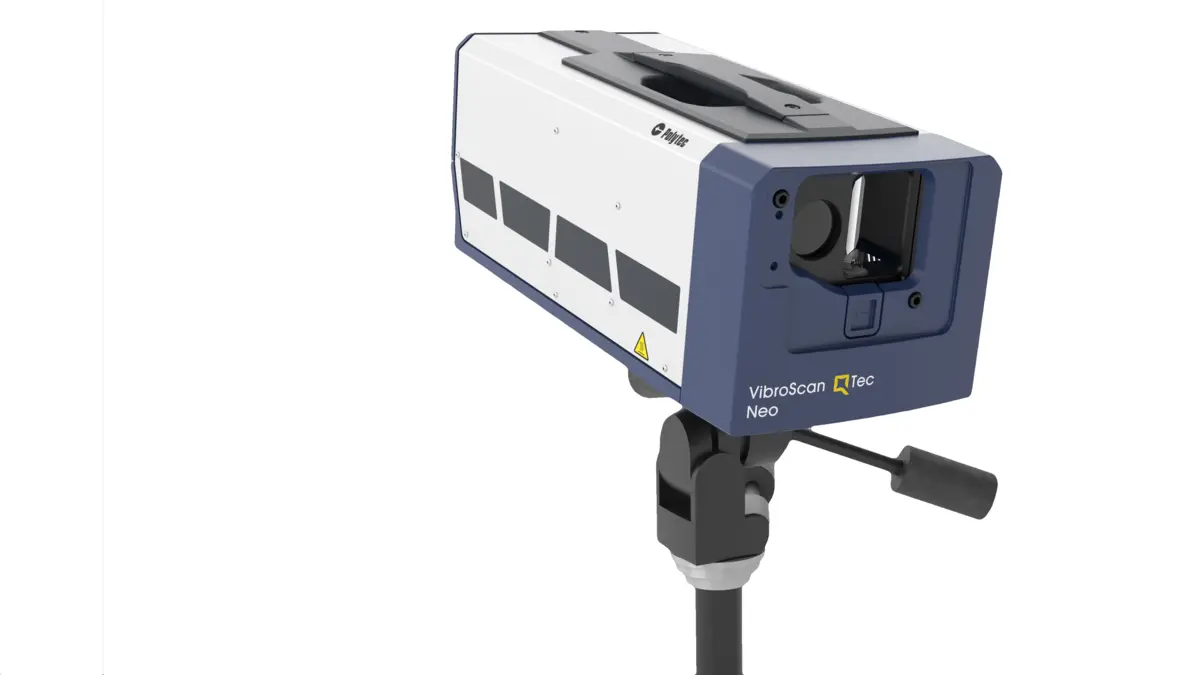
A new class – for new ideas
VibroScan QTec measures vibrations in a new way – non-contact and with unprecedented precision. With its groundbreaking multi-path interferometry and diversity combining, QTec® sets new standards in terms of optical sensitivity and interference immunity.
For the first time, QTec® technology has been successfully transferred from the infrared SWIR laser to the visible helium-neon laser. With its small laser measuring spot, the precise helium-neon laser is suitable for measurements on the finest structures and even measures in and through water. These properties are a decisive advantage when determining operating vibration modes and eigenmodes in microsystems, electronics and medical devices, for example when analyzing sensor systems, hydrophones or ultrasonic components, over the entire frequency range up to 32 MHz.
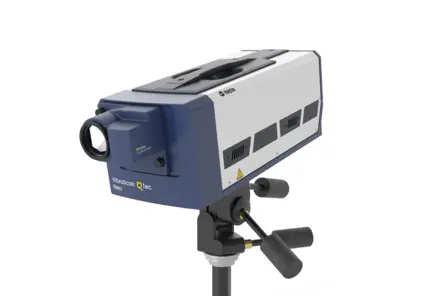
The VibroScan QTec scanning vibrometer guarantees maximum portability. The VibroLink Ethernet data interface reliably transmits vibration measurement data to your notebook and serves as an automation interface.
Get in touch with our experts
Get in touch with our experts
Let’s talk! We will find the right solution for your needs.
Highlights
//- Non-contact and full-field with FEM-like spatial resolution
- Best SNR on technical surfaces
- Up to 10x faster with QTec®
- Visible laser - measures through water
- Visible laser - precision on the smallest structures with a µm-sized spot
- Upgradeable to 32 MHz
- AI-supported grid generation
- Extended evaluation and scripting options
- Open API and drivers
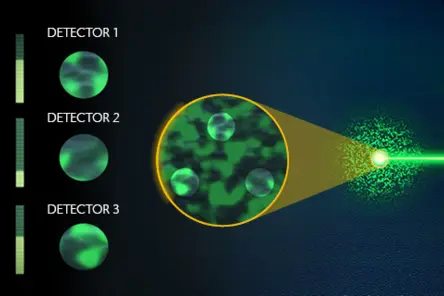
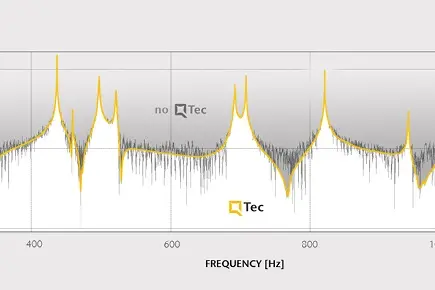
Faster results with QTec® multi-path interferometry
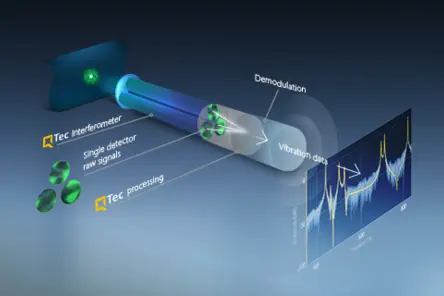
The patented QTec® multi-path interferometer technology now also significantly boosts the signal quality for the visible helium-neon laser and guarantees maximum optical sensitivity. QTec® enables highly accurate results with the shortest measurement times regardless of the surface - even on dark, biological, rotating or moving objects. This safe laser technology is perfect for challenging applications, especially for smaller measurement objects. QTec® makes vibration measurements faster, easier and more reliable than ever – for the most robust, unambiguous results.
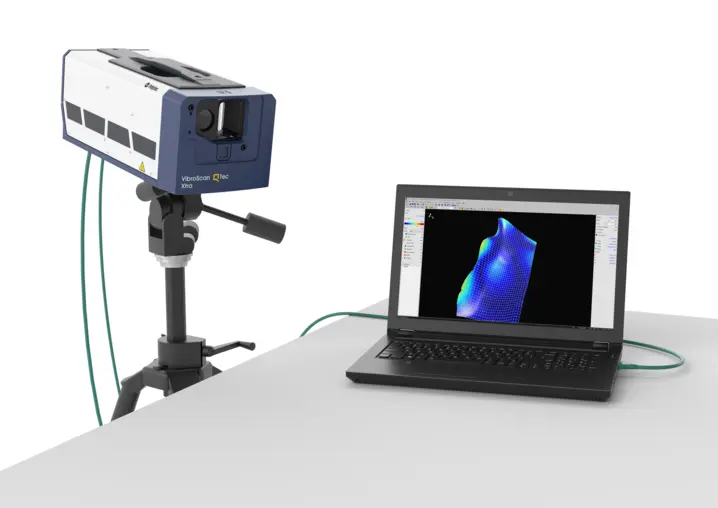
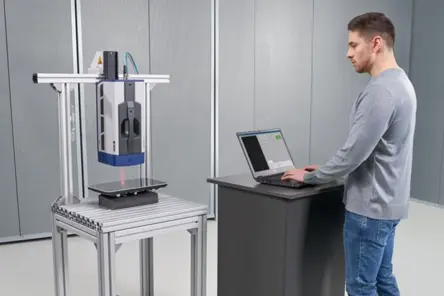
One Vibrometer from Macro to Microscale
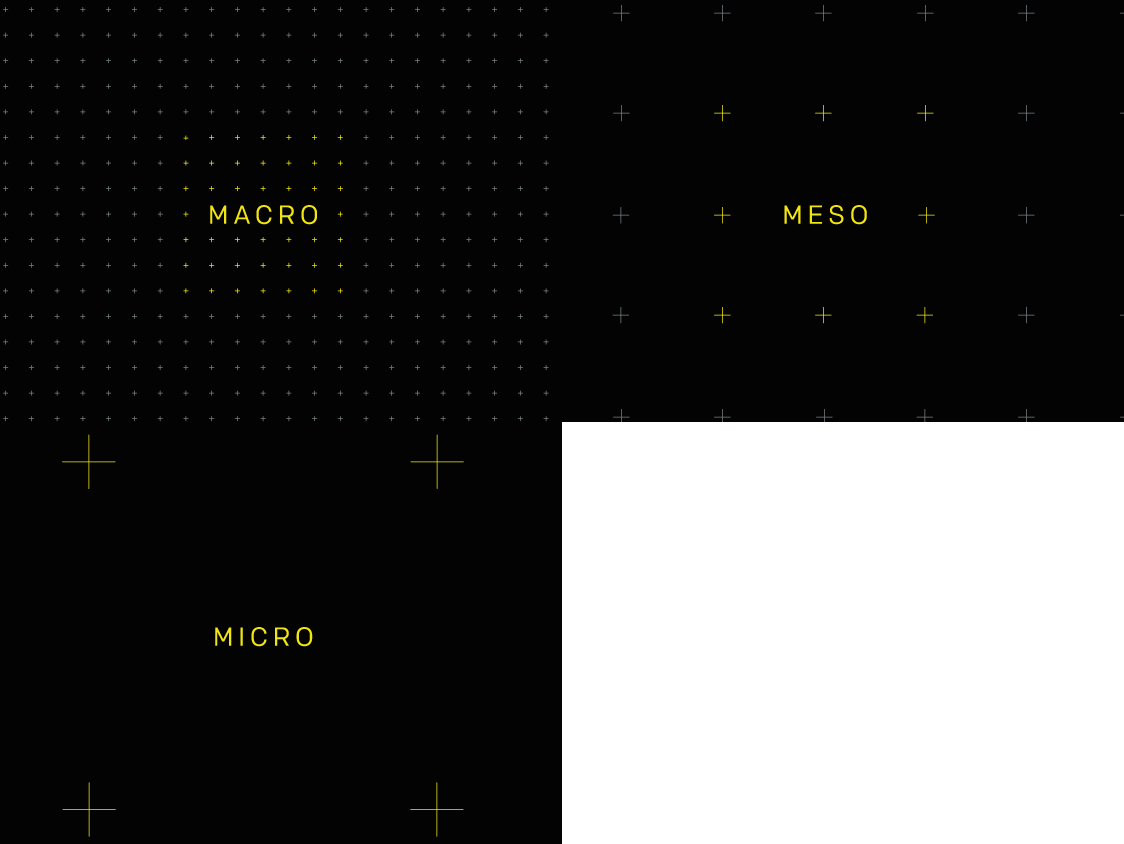
Measurement without limits—from macro to micro
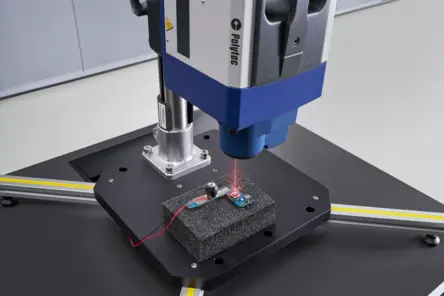
From a few centimeters to several meters—this is the range our customers are already working within today using the VibroScan QTec®, whether on a vehicle body or a compact individual component.
The microscope extension now opens up a third dimension. Using the same measuring head and without switching systems, you can measure down to the micrometer range.
From an elephant to a fly’s leg—measure without limits using a single system.
VibroScan Microscope Extension
The new Microscope Extension for the VibroScan Scanning Vibrometer enables high-resolution, non-contact vibration measurements from macro to microscale using a single measurement system.
It combines full-field scanning vibrometry with microscopic measurements, opening new possibilities for research, product development and quality assurance.
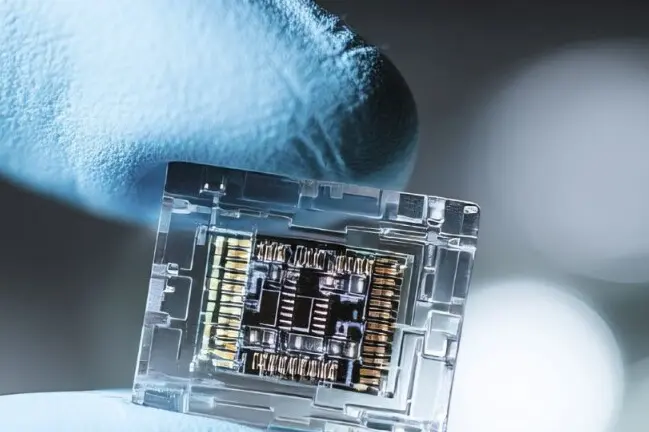
Non-contact vibrometry for meso-components and microstructures
From cm² to the µm range: Learn how VibroScan QTec precisely characterizes the dynamic properties of small, embedded structures such as camera modules, MEMS microphones, or bonding wires, and how it extends the measurement setup into the meso and micro ranges with compatible additional optics.
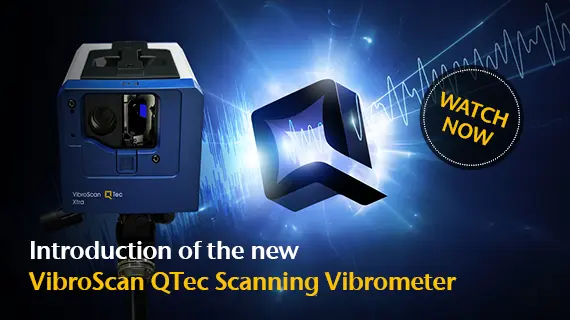
Experience the new VibroScan QTec in a video presentation
With the new VibroScan QTec, we are taking reliability, flexibility and speed in non-contact vibration measurement to a whole new level. In this webinar recording, our expert Jörg Sauer takes you into the world of groundbreaking QTec technology and the new VibroScan QTec for your modal analysis, acoustic and NVH measurements, operational vibration analysis and product development.
Videos
VibroScan QTec – a new class for new ideas
Get to know a new technology for full-field optical vibration measurement. VibroScan QTec is the most compact scanning laser vibrometer featuring the unrivaled data quality based on patented multi-path interferometry. The video shows how you can transfer measurement quality and productivity to your applications and easily expand VibroScan QTec to 3D vibration measurement capability.
QTec® multipath interferometry for fast and efficient vibration measurement
The patented QTec® laser technology reinvents laser vibration measurements by eliminating the root cause of noise, delivering superior optical sensitivity and enabling high-fidelity measurements on all technical surfaces – whether rotating, moving or dark. In order to achieve this, QTec vibrometers from Polytec use an innovative multi-path interferometry with diversity reception, that balances the information from the highest signal level of each path with patented algorithms, resulting in an always stable signal. This patented laser technology leads to faster, easier measurements and consistent results for all research, development and production testing efforts.
VibroScan QTec – patented data quality
Do you want to generate areal vibration data quickly and reliably? Scanning laser Doppler vibrometers with QTec® multi-path interferometers are your solution. Simple, fast, reliable.
- Enhanced signal quality for even higher reliability
- Up to 10x faster measurement
- Increased flexibility with a user-friendly setup
- First HeNe with QTec®
- Improved technical specifications
Specifications
Measurement characteristics
| Max. Frequency Bandwidth | DC bis 32 MHz |
| Measurands | velocity, displacement, acceleration |
| Max. velocity | 12 m/s |
| Velocity ranges | 1 mm/s bis 12m/s |
| Best resolution velocity | 1.7 nm/s/√Hz |
| Best resolution displacement | < 0,05 pm/√Hz |
| Max. acceleration | 10000 km/s² |
| Signal Processing | Dual FPGA design, 960MSamples/s |
Optics
| Optical design | Patented QTec® heterodyne multi-path interferometer utilizing reception diversity. |
| Optical Signal Robustness (OSR) | 10.000 mm/Dropout, Speckle-free measurment |
| Signal optimization | 3 steps |
| Speckle tracking | 3 steps |
| Measuring laser | 633 nm visible, <1 mW |
| Pilot laser | n/a, visible measurement laser |
| Pilot laser angular deviation | 0°, pilot laser = measurement laser |
| Laser wavelength pilot laser | n/a, visible measuring laser |
| Laser safety class | Class 2 |
| Smallest laser spot | 2µm (with PSV-A-711 Microscope Extension) |
| Measurement field size | > 10 m² |
| Working distance | 125mm .. 100m |
| Measurement of small objects | Close-up Unit featuring Micro Scan Lenses or Microscope Extension |
| Focusing | Manual and software-controlled focusing |
| Geometric measurement | Autofokus sensor coupled with scanners |
Camera
| Camera resolution | Full HD |
| Zoom | 120x |
| Optical zoom | 30x |
| Viewing angle | 63,7° (wide) to 3,2° |
Scanning
| Scan angle | 50° × 40° |
| Angular resolution | <0.0008° |
| Point stability | <0.001°/h |
| Max. scan points per second | 50 |
| Scan point density | 512 × 512 scan points, configurable for higher resolution |
| Scanner control | via software, external control interface for tracking and continuous scanning vibrometry |
Connectivity
| Communication interfaces | Ethernet, WiFi, external scanner control |
| Synchronization between components | 80 MHz Clock,star shaped distribution |
Data acquisition
| Signal outputs | Vibrometer:
|
| Signal generator output voltage | +/- 2 V (10 V with optional front end or A-AMP-0001 amplifier) |
| Signal inputs | Vibrometer:
Front end (optional):
|
| Digital inputs/outputs |
|
Secure the investment
| Software updates | Online and offline with Polytec Update |
| Extended manufacturer warranty | 5 years |
System
| Configuration and Data Acquisition Software | PSV Software, pre-installed on the high-performance laptop included in the package. Alternatively: Can be run on any high-performance Windows 11 laptop |
| Operating temperature | -10 °C … +45 °C (14 °F ... 149 °F), passive fanless cooling up to 40°C (104°F) |
| Power consumption | <75 W typical |
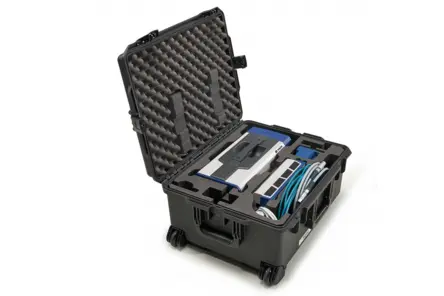
| Portability | Compact All-in-One-Design; suitable for checked airline baggage |
| Dimensions Vibrometer (W × L × H, including handle) | 187 x 391 x 177 mm (7.3 x 15.4 x 7.0 in) |
PSV Software
Setup
| Workflow | Step-by-step user guidance from setup to measurement |
| Calibration of laser movement | Automatically or manually via image processing |
| Setup of the vibrometer in the room | n.a. |
| Geometries for defining measurement points |
|
| Geometry measurement | 3D geometry via integrated distance sensor |
| Geometry import | Universal File Format (UFF, UNV), STL, OBJ, PLY, ASCII (CSV), ASAM ODS (some optional) |
| Geometry and texture import option | OBJ, PLY for photorealistic representation of ODS |
| Geometry editing option | Refinement, coarsening, creating connections |
| Displacement compensation of the measurement grid under load | Image processing with marker tracking |
| Focus assignment | Automated or manual assignment to points or components |
| Calibration of the pilot laser offset to increase local precision | Not required; visible measurement laser |
Data acquisition
| Central data model | Open SVD file format (vibration data from vibrometers and external sensors, video images, measurement settings) |
| Synchronization of measurements between system components | automatic |
| Synchronization of multi-device setups | Ethernet, trigger |
| Remote control of vibrometers | Several vibrometers, including a reference vibrometer |
| Signal waveforms from the signal generator | Predefined signals (sine, random, chirp, burst, sweep) and user-defined signals, including uncorrelated signals for MIMO |
| MIMO measurements | Principal Component Analysis (PCA), partial coherence |
| Real-time signal analysis | Yes, triggers intelligent averaging and signal enhancement |
Data evaluation
| Analysis (spectral) |
|
| Analysis (deflection shapes / ODS) |
|
| Analysis (time, rotational speed, order) |
|
Data import and export
| Import and export filters |
|
| Export of animations of modal shapes or time data (wave propagation) | Animated GIF, MP4, WMV |
Automation & Scripting
| Programming Interface (API) | Programming and scripting interface Polytec File Access: API for retrieving, programming, and scripting via external applications that support the Component Object Model (COM), e.g., Visual Basic .NET®, C#, MATLAB®, LabVIEW™, and Python(TM). |
| Macro programming | Compatible with Visual Basic® for Applications (VBA) for automating test routines and evaluations. Includes sample macros for a quick start. |
| Drivers | Open-source drivers (Linux, Windows) for integration into external applications, with programming examples in C++, Python, LabVIEW, and MATLAB |
Postprocessing
| SignalProcessor | Spreadsheet for applying mathematical operations to measurement data. Suitable for real-time data and post-processing. (optional) |
Software maintenance
| Basic software maintenance | 1 year of software updates included |
| Advanced software maintenance | Additional maintenance and software updates. Available in 12-month increments. |
| Software option package for universities | Software options bundle including lifetime software maintenance for universities and education (terms and conditions apply). |
Downloads
Accessories and components
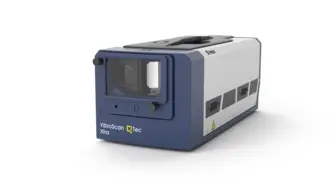
PSV-A-526 Protective Window
Protects the scanning mechanism against dust, wind and acoustic excitation at high dB levels.
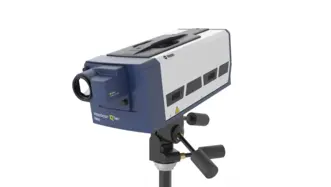
PSV-A-710-Neo Close-up Unit
For close-up measurements, on small parts without parallax.
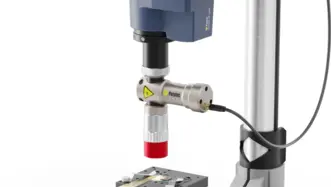
PSV-A-711 Microscope extension
Microscope attachment for maximum resolution: spot sizes <2 µm, coaxial LED illumination, ideal for analyzing the smallest structures.
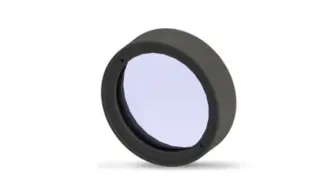
PSV-A-CL-Neo-S01 Micro Scan Lenses
Parallelized beam path for measuring small components and on reflective surfaces. Requires close-up unit.
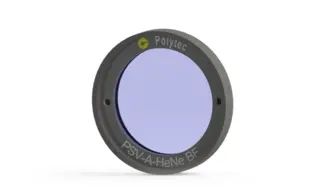
PSV-A-HNeBF Helium-Neon Filter
Notch filter to improve laser spot visibility for measurements on very shiny surfaces and small components
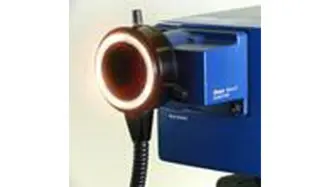
PSV-A-RLight LED Ring Light
LED ring light for illumination of small test objects. Requires PSV-A-710-Xtra Close-up Unit and PSV-A-CL-Xtra-200 Micro Scan Lens (fig. similar).
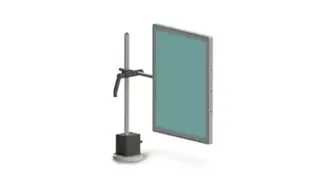
A-MIR-S001/ A-MIR-S002 Mirror set
Mirror set for measurements in difficult-to-access areas.

PSV-A-440 Optical Derotator
For axial measurement of rotating objects. Locks onto the rotation and allows measurements as if stationary up to 24,000 rpm.
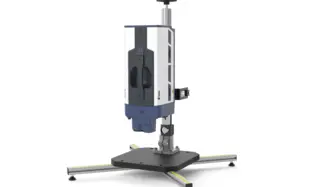
PSV-A-T19 Vertical Test Stand
Test stand for precise vertical positioning of the VibroScan QTec Scanning Vibrometer for measurement on small objects
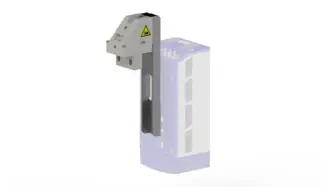
PSV-A-T37 Vertikal Holder
For convenient overhead vertical mounting of the scanning vibrometer, e.g. for shaker tests.
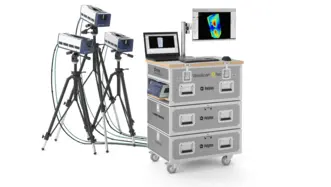
PSV-A-018 System Cabinet
Ergonomic mobile workstation with storage for all parts and accessories.

A-RMK-0004 Rack Mounting Kit
Rack installation kit with two front handles and mounting brackets for installing the PSV-F-700 VibroScan Front-end in a 19" rack.
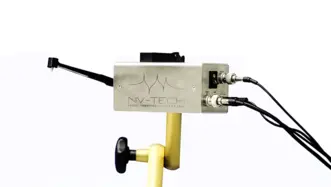
Scalable Automatic Modal Hammer SAM
Excitation of sample for experimental modal tests with repeatable force level. Broadly configurable and avoids double hits reliably.
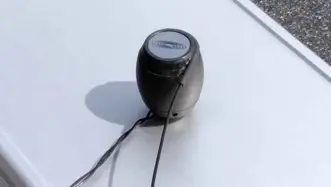
Qsources Qlws LightWeightShaker
The Qsources Qlws LightWeightShaker is a self-supporting, self-aligning dynamic decoupled electromagnetic shaker specifically developed for modal testing and consistent repeatable structural excitation in a limited space.
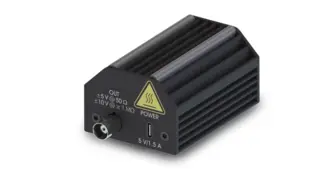
A-AMP-0001 Amplifier for signal generator
Amplifies the max. 2 V output signal to max. 10 V with a bandwidth of up to 32 MHz.
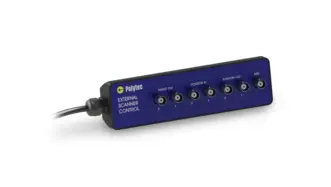
PSV-A-EXT External Scanner Control
Allows for an additional control of the scanning mirrors by external voltage signals. Enables Continuous Scanning Vibrometry and tracking applications.
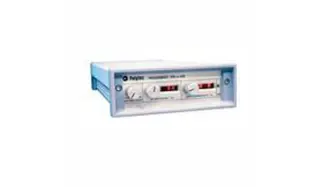
PSV-A-430 Acoustic Gate Unit
Activates the gate input if a noise exceeds a certain threshold. Suitable for event trigger applications such as brake squeal measurements.
Related products
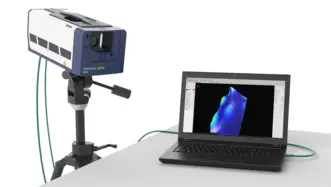
VibroScan QTec Xtra
VibroScan QTec Xtra measures vibrations in a new way - without contact, full-field and with unprecedented precision. With its groundbreaking multi-path interferometry, QTec® sets new standards in terms of optical sensitivity and interference immunity. The Xtra, based on an infrared (SWIR) laser is characterized by the highest optical sensitivity to guarantee highly accurate measurements even on demanding technical surfaces. VibroScan QTec Xtra ensures maximum portability through integrated data acquisition and signal generator up to 32 MHz.
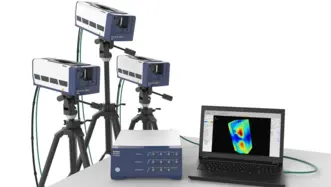
VibroScan QTec Xtra 3D
VibroScan QTec Xtra 3D measures vibrations triaxially in a new way - without contact, full-field and with unprecedented precision. With its groundbreaking multi-path interferometry, QTec® sets new standards in terms of optical sensitivity and interference immunity. The Xtra, based on an infrared (SWIR) laser is characterized by the highest optical sensitivity to guarantee highly accurate measurements even on demanding technical surfaces. VibroScan QTec Xtra 3D ensures maximum portability through integrated data acquisition and signal generator up to 32 MHz.
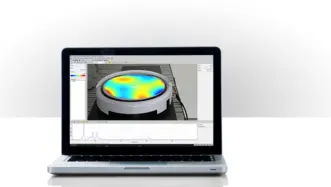
PSV Software
The PSV Software is the heart of every Polytec full-field vibration measurement system. This comprehensive software package allows the fast and simple acquisition, display and editing of vibration measurement data gathered with all VibroScan QTec Scanning Vibrometers, the MSA Micro System Analyzer series for microscopic observations or the automated structural test station RoboVib®.

RoboVib®
By combining a 3D scanning vibrometer and an industrial robot, RoboVib® forms an automated test station for measuring everything from complex components to complete vehicle bodies. Reduce testing time and expenses as well as time to market significantly in experimental modal analysis. Conduct comprehensive 360° testing of a vehicle body, for example, within only one-two days and overnight instead of weeks of preparation with conventional test setups.
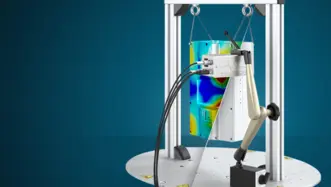
RoboVib® Bench
RoboVib® Bench enables automated and full-body experimental modal analysis using Polytec’s optical 3D scanning laser vibrometers. Its easy to set-up hardware and software integrates seamlessly into the Polytec scanning vibration measurement workflow and saves time by automatically repositioning the devices-under-test (DUT) instead of a manual and tedious relocation of the sensor setup. 360° measurements of the DUT are as easy as a measurement from just one side.
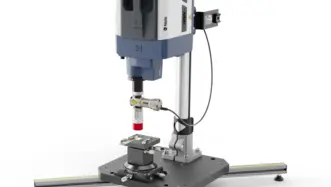
Microscope extension for full-field vibrometer
With just one vibrometer, you can analyze vibrations from macro to microstructures. The microscope extension for the VibroScan QTec scanning vibrometer enables laser spots smaller than 2 µm, allowing for the dynamic characterization of MEMS, components, and assemblies in consumer electronics and medical technology ranging from cm² down to the µm scale.
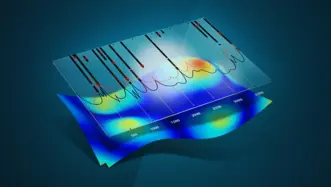
PolyWave
PolyWave - the scalable software package for comprehensive analysis of vibration test data offers a seamless post-processing, making your vibration analysis with Polytec laser Doppler vibrometers more efficient than ever.

Automation
Polytec offers intuitive and powerful interfaces and options for remote control and automation of measurement data acquisition and evaluation. Speed up your tests by automating recurring measurements and evaluations, integration into your own testing software via driver, remote adjustment of measurement settings, querying and monitoring the device status and more.
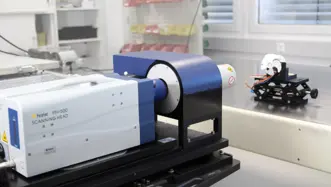
PSV-A-440 Optical Derotator
The PSV-A-440 Optical Derotator enables non-contact vibration measurements on rotating parts with PSV Scanning Vibrometers. Fully characterize dynamics of rotating objects such as fans for consumer products and vehicles or turbines under operational conditions up to 24,000 RPM.

No budget? Just measure.
Whether you need contract measurements, equipment rental, or leasing, our scalable services deliver precise data—without the overhead of major investments. Ideal for short-term projects, occasional use, or limited budgets.
With PolyFlex you get results without compromising timelines or budgets.