The offer: save up to 30% until October 31, 2026
- Up to 30% off: preconfigured package
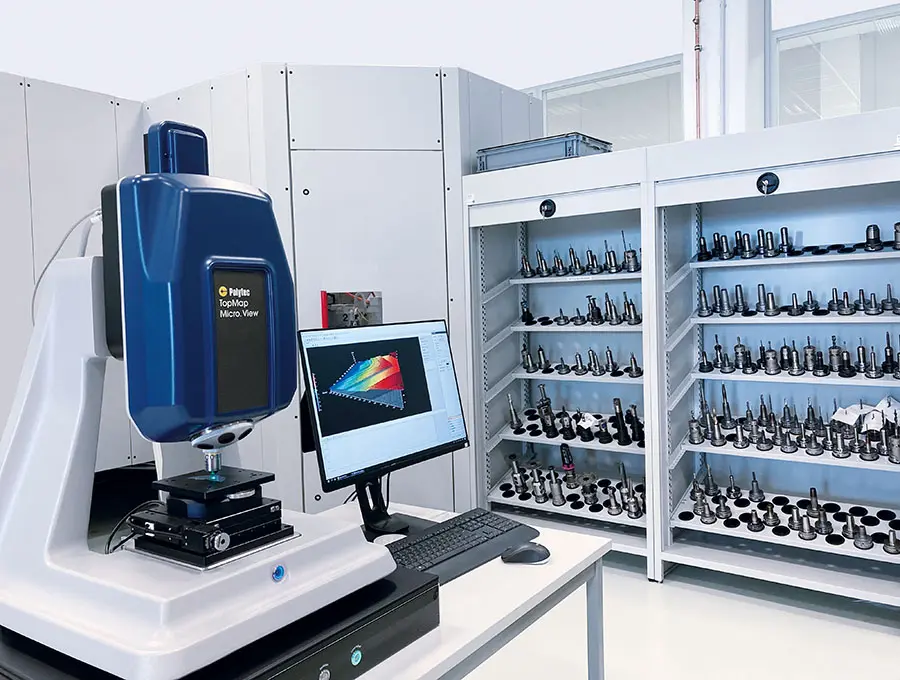
- Compact white-light interferometer including a 10x lens, integrated electronics and vibration isolation, optional XY stage, Sherpa measurement and analysis software and 4-year warranty.
- Up to 20% off for custom configurations
- Ask for the advanced Micro.View+ configurations, consider motorized stages, choose from 0.6x to 111x lenses and software add-ons – tailored to your application.
- Valid until October 31, 2026
- The Roughness Deal Days discount applies until October 31, 2026.
When to switch from tactile to optical profilers: where single line-based roughness & form is not representative.
- Ra, Rz, Rq, RMS – is this all?
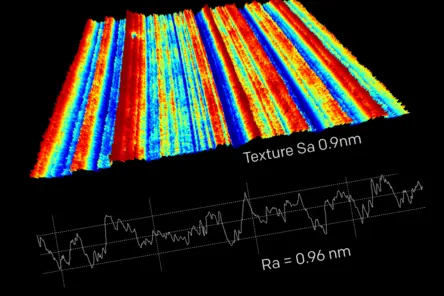
- More and more specifications require surface roughness measurements in accordance with ISO 25178: Sa, Sq, Sz, or ASME. More and more processes require more robust, areal-based evaluations.
- An area tells more than a thousand lines
- A line-based roughness of just a few millimeters is supposed to describe an entire component. But as the exact location of the line determines the result—it will hardly replicate the true surface.
- When stylus tips wear out
- With stylus tips wearing out, the repeatability of your measurement results gets worse. The necessary recalibratiion, replacement and documentation slows slows you down.
- Contact with impact
- On films, delicate materials, sealing surfaces, optical components, or coatings, probe tips can damage the functional surface and affect the measurement itself.
- When time is of the essence
- Aligning, approaching, measuring — and especially repeating this sequence for covering larger areas — are not efficient. Optical scanning in a single shot, potentially even automated, boosts your productivity.
- When you aim for more
- In-depth analyses — for example, of microforms, steep steps, or tribological measurements —require more; this is where tactile measurements reach limits.
The Roughness Tester solves this – now up to 30% off until October 31.
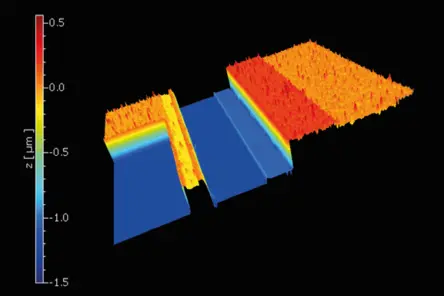
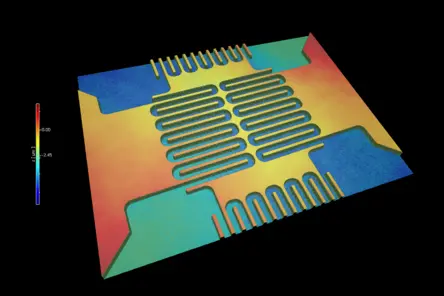
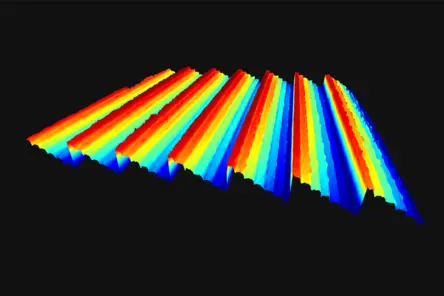
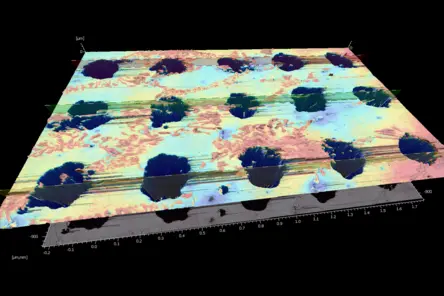
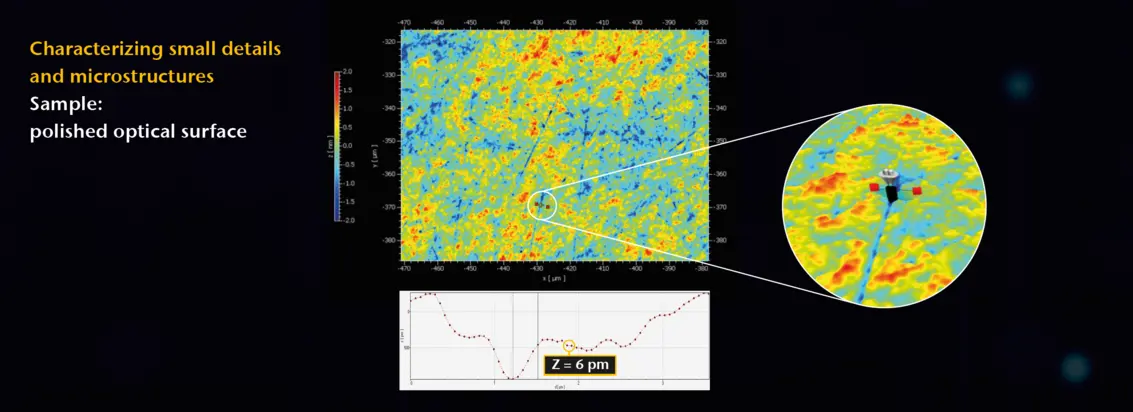
Characterizing surfaces with high resolution — whether roughness, finish, appearance, microstructures, or MEMS
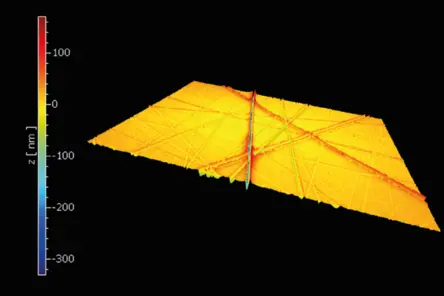
Solve metrological challenges related to roughness or (3D) texture with a vertical resolution down to the sub-nm range. Characterize precision-machined workpieces and functional surfaces after precision machining such as polishing, (flat) lapping, grinding and more. Support your machining processes with repeatable, valid measurement results. Inspect microstructures or microsystems for dimensional accuracy and quality – with the Roughness Tester as an easy introduction to non-contact 3D profilometry.

Your benefits with the Roughness Deal Days
- Entry-level white-light profilometer for special price
Only during the Roughness Deal Days: until October 31, 2026, you save up to 30% on the preconfigured Roughness Tester package. Request your quote now to secure the deal price. - Free feasibility study
We evaluate the potential for your application on your own sample – free of charge. - Application engineers at your side
Our application engineers help you with application questions, trainings or customization. Your team will measure and control quality faster and compliant to the latest standards. - Upgradable any time
Start with the entry-level package and extend it whenever needed: motorized positioning stages, custom lenses ranging from the unique 0.6x to 111x, and software add-ons.
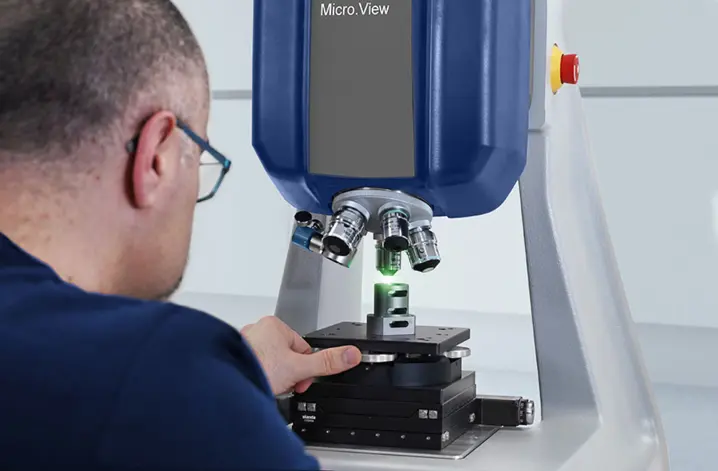
Roughness Tester package: Non-contact 3D surface measurements, precise & reliable.
| ~1.35 M points per scan | < 0.6 nm measurement noise | < 0.2 nm repeatability | 0.05–100% reflectivity | sub-nm vertical resolution |
The Roughness Tester is a slim but powerful configuration. One scan covers ~1.35 M measurement points, granting much more meaning than any single roughness line. Valid roughness values like Sa, Sq, Sz – in addition to classic Ra, Rq, Rz, RMZ values – in a single data set enable more reliable evaluations and decision-making, while being fully compliant with ISO 25178, ISO 21920, ISO 4287 and ASME B46.1.
With low measurement noise < 0.6 nm and high repeatability < 0.2 nm, this affordable profiler also handles varying reflectivities from 0.05% to 100% (from matte to mirror-like surfaces). With integrated vibration isolation, 4-year warranty and proprietary Sherpa measurement and evaluation software, this table-top profiler is ready to use.
Measuring non-contact means no wear on a probe tip, no maintenance, no defects on the sample surface, no unexpected costs. Start small with the Roughness Tester and save 30%—while custom Micro.View configurations qualify for up to 20% off.
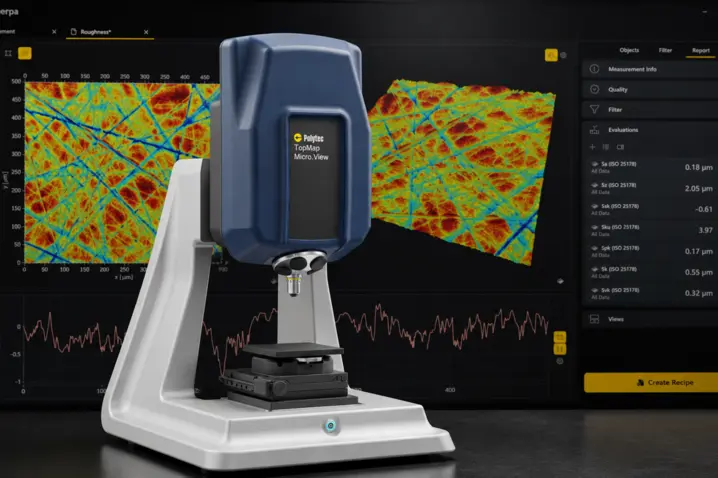
Complete package, ready to use – save up to 30% until October 31.
NEW: Sherpa Measurement & evaluation software
Every Roughness Tester comes with Sherpa, our latest-generation software for measurement, evaluation and documentation.
ADAPTIVE USER INTERFACE
Sherpa shows only relevant features and guides you step by step – with Virtual Positioning, Focus Finder and Auto-Level.
SET FILTERS, GET IMMEDIATE PREVIEW
Live Filtering previews selected filters on raw data; a data validity check shows true pixels vs. filling.
MEASURE, DOCUMENT, REPEAT
Measurement recipes enable one-click testing for recurring and multi-sample tasks – independent of operator errors or training.
FAQs
What can this Roughness Tester measure on my surfaces?
The Roughness Tester measures (3D) topography and (2D/line based and 3D/ areal) roughness on nearly any material, handling various reflectivities from 0.05 to 100%—meaning from matte to shiny surfaces. For steep edges and areas with widely varying reflectance, the integrated Smart Scanning Technology and HDR secure valid measurement data. For testing, send us a test object for a free feasibility study.
How to efficiently deal with recurring measurements like for production testing?
The latest generation measurement and analysis software SHERPA keeps offering practical measurement recipes for recurring measurements like in production environments. Define and save measurement, filter and evaluation settings as recipes — avoid operator errors and rely on reproducible, comparable mesurements shift for shift even with untrained operators. This one-click testing solutions will increase productivity for repetetive measurements.
What is this Roughness Tester?
The Roughness Tester is the basic version of our proven Micro.View - a compact but high-performance white-light interferometer, configured as slim and highly affordable entry-level package. Upon demand, additional features, such as motorized positioning stages, custom lenses ranging from the unique 0.6x to 111x, as well as software add-ons, can be upgraded or customized any time. For more information, visit the Micro.View product page.
Get your quote – 30% off until October 31
Tell us about your measurement task and discuss your application with our application engineers. Until October 31, 2026, you save 30% on the preconfigured Roughness Tester package and up to 20% on custom configurations. Whether for application support, purchase or a measurement of your component as a service: We are looking forward to receiving your inquiry.