The challenge: when failures outpace understanding
More than half of one critical part was failing in operation — and nobody knew why.
A leading manufacturer of heavy-duty engines had built a precision part that controls oil flow through a press-fit assembly. In the field, it was failing at a rate exceeding 50%, with no clear explanation. For a company operating at the leading edge of fuel-injection metrology — and already equipped with respected surface measurement systems — that was both costly and deeply frustrating.
Engineers suspected that subtle differences in surface texture and form quality might separate the parts that passed from the parts that failed. But there was a second, uncomfortable possibility: that the measurement approach itself was hiding the answer. The geometric differences were so fine that existing methods struggled to reveal them with confidence.
To break the deadlock, the team needed faster insight, more reliable data, and fundamentally a different way of measuring.
The solution: seeing more in a single measurement
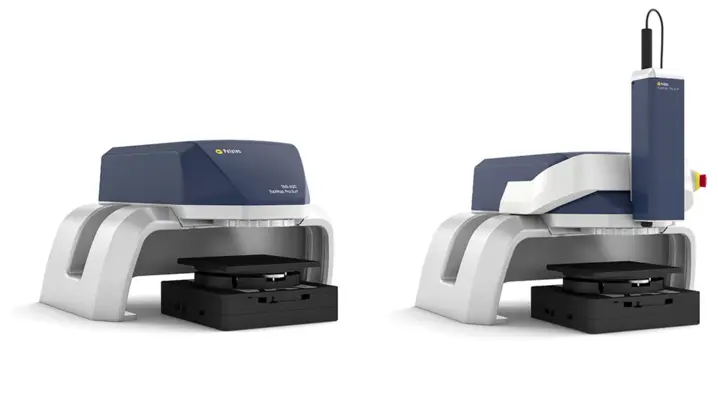
To accelerate the investigation, the team evaluated the TopMap Pro.Surf profiler, with its telecentric optical design, as an alternative to their existing systems. Its defining advantage is a large field of view that captures far more of the surface in a single shot.
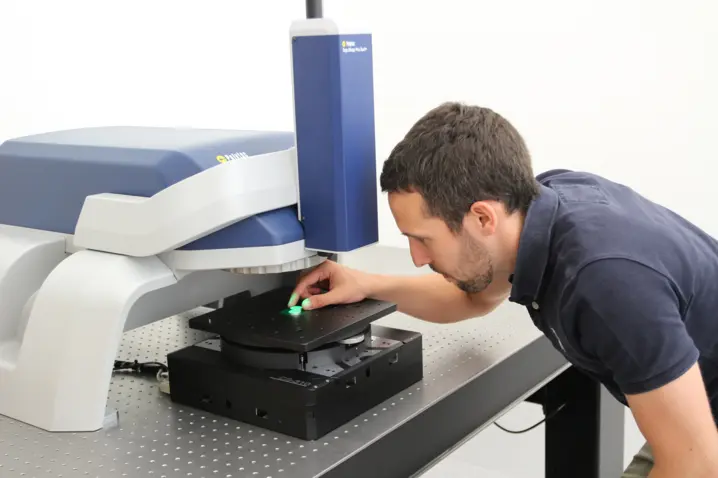
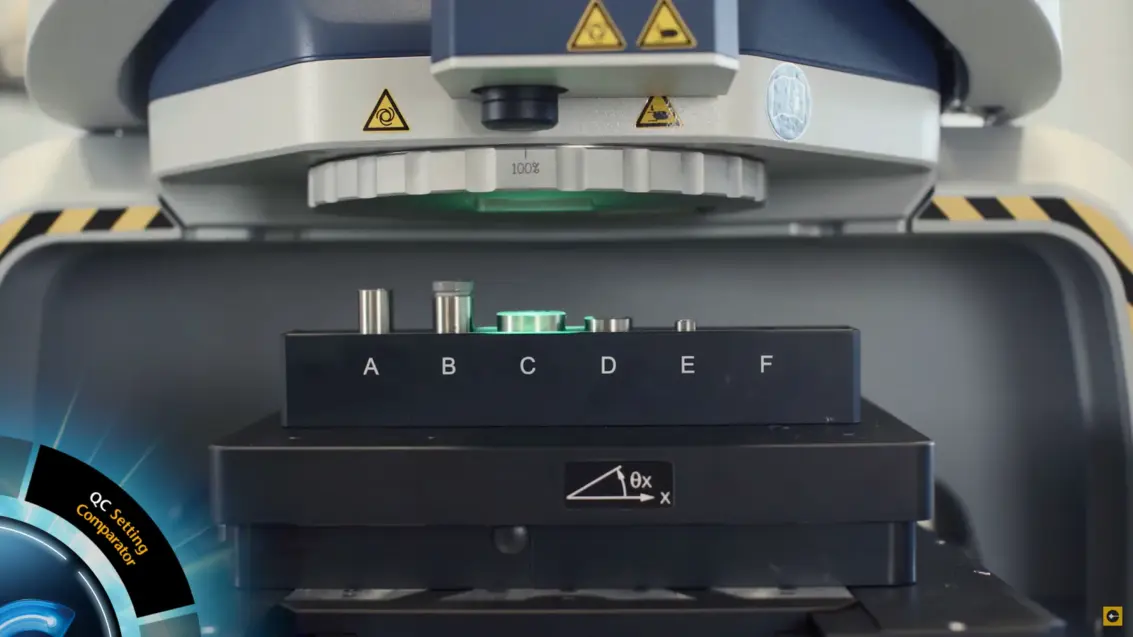
The parts in question were unusually tall, so the demonstration began with an improvised touch: a raised mounting setup to give the components enough clearance under the profiler. That small workaround turned into the first proof point — thanks to the system's generous working distance, even bulky parts could be measured with minimal preparation.
From there, the advantages became immediately clear. Parts that would previously have required stitching several measurements together were now captured in a single field of view — faster, and with fewer sources of error.
This was important not only for speed, but also for measurement confidence. When investigating subtle differences in flatness and geometry, every additional stitching step can introduce uncertainty into the results.
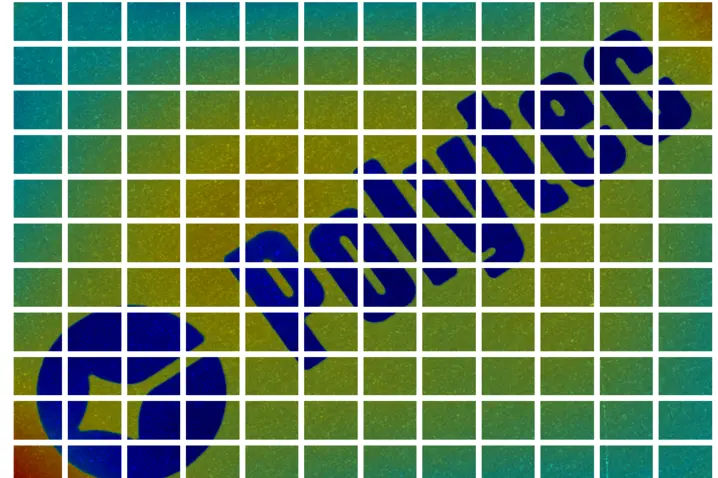
For larger components that still required stitching, the TrueStitching capability of the Pro.Surf provided a more consistent and reliable measurement workflow.
Another important advantage was the system’s non-contact, objective-less design. Unlike contact-based approaches, it avoids physical contact with sensitive reference elements, helping reduce wear, maintenance effort, and the risk of costly downtime.
From measurement to insight with industrial performance
Beyond the large field of view, the TopMap Pro.Surf was well suited for real production environments.
Compared to microscope-based systems, the large working distance made it possible to measure taller or more complex components with minimal preparation and fewer handling constraints.
At the same time, the objective-less system design reduced common risks in daily operation:
- No objective crash risk
- Less cleaning and adjustment effort
- Reduced maintenance-related downtime
- Lower risk of expensive repairs
This made the system not only powerful, but practical for quality, production, and engineering teams.
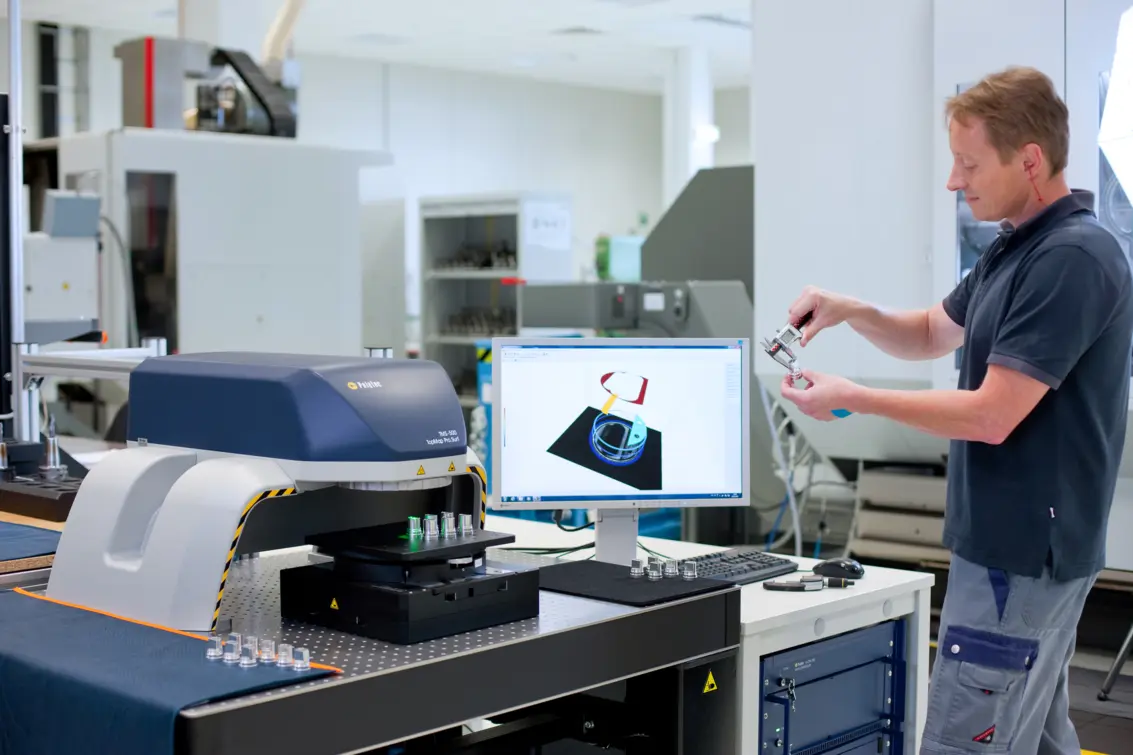
With the new approach, the team did not only gain speed — they also gained confidence in the measurement data. Results more reliably reflected the actual surface conditions, which was critical when evaluating subtle geometric differences on functional components.
At the same time, faster measurement cycles allowed more parts to be analyzed in a shorter time, enabling broader comparisons and a stronger basis for decision-making.
Instead of spending time on complex setups, stitching workflows, or repeated measurements, engineers could focus on the actual question:
What is different between parts that pass and parts that fail?
This combination of improved measurement quality and higher throughput enabled a more efficient, data-driven approach to root cause analysis.
The benefits were clear:
- More reliable representation of real surface conditions
- Faster comparison of good and failed parts
- Ability to analyze larger sample sets
- More confidence in measurement results
- Shorter analysis loops
A clearer path toward identifying the root cause
Final verdict: Measure what matters
On high-precision parts like those inside heavy-duty engines, the smallest geometric differences can decide whether a component survives in the field or fails. That is exactly why a more-than-50% failure rate, with no clear cause, became the single biggest reason this team chose to act.
With a measurement approach that finally revealed what their previous systems could not, they could compare good and failed parts side by side, analyze far more samples in less time, and base decisions on data they trusted. Reliable surface measurement stopped being an isolated quality check and became a key to understanding why the part behaved the way it did.
By making measurements faster, reducing uncertainty, and turning complex parts into clear data, the TopMap Pro.Surf helped the team move from “we don’t know why” to a confident path toward the root cause. Because in the end, it is about measuring what matters.
Industrial large-area profiler
The telecentric Pro.Surf systems are optimized for industrial surface profiling with high throughput and repeatable measurement precision.