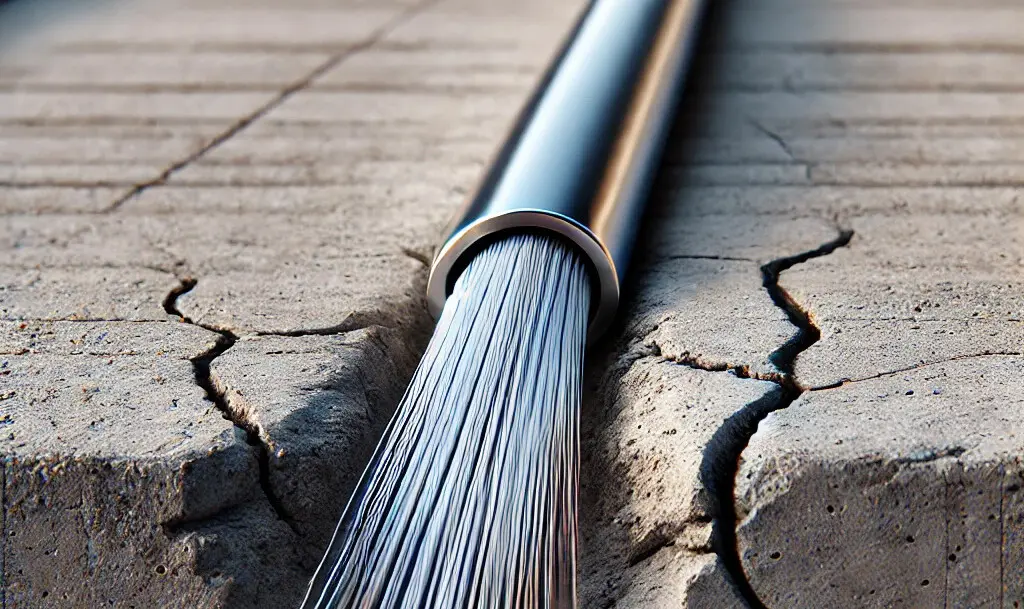
Spatially Resolved and Distributed Measurements of Compression, Strain and Cracks
The measurement of strain at one or more points along a glass fiber provides information about its relative change in length in the location being examined. The fiber or the fiber optics cable must be firmly attached to the inspection object for this purpose. Causes of these changes in length include tensile or compressive stresses, material displacements, changes to the position and shape, etc.
In many places, the fiber-optic measurement principle is increasingly replacing classic methods such as strain gauges , not least because of the possibility to conduct a spatially resolved and distributed measurement along a single fiber. The systems also appear to be superior in situations where the weight, space requirements or a high level of flexibility is what counts to reach inaccessible places. A single fiber weighing just a few grams can therefore contain hundreds of sensors and serve as a signal path at the same time.
Strain profiles, for example, also provide you with support in
- monitoring structures
- detecting micro-cracks and local material defects
- moving pipelines in the ground
- dike monitoring
- optimizing production for GRP and CRP in lightweight construction
- vibration analysis
You can find more detailed insights into our experience and the areas of application for this technology here:
Related Articles

Distributed fiber-optic temperature and strain measurement with extremely high spatial resolution
Sampling of the Rayleigh scattering along a length of optical fiber allows the realization of a distributed sensor system where every point along the fiber acts as a sensor. This novel method allows ...

Continuous fiber optic strain measurement
Some bridges in Germany are aging and not designed for today’s increasing traffic loads. Authorities must now find cost-effective solutions to manage these existing structures.
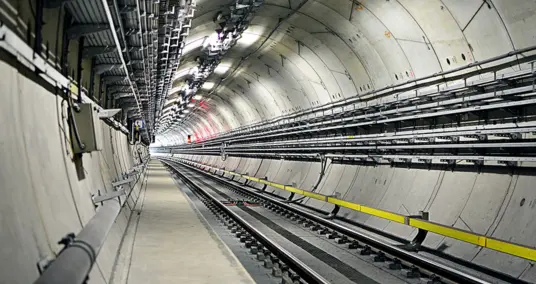
Distributed Fiber-Optic Sensing for Geotechnical Monitoring
Stones, blocks, steel, cement, concrete, and mortar—combined with large, heavy, clumsy, and noisy construction machinery—hardly make an ideal environment for a fragile glass fiber.

Fiber Bragg Grating Sensors in Practice
Fiber-optic sensors are used in wind turbines not only for monitoring but also for control, for example, to adjust the rotor blades based on load measurements of the blades.