Why non-contact laser vibrometry?
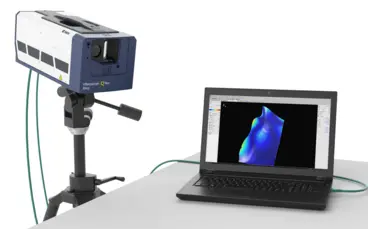
Measure vibration, structural dynamics, and acoustic behavior without contact or added mass. Polytec laser vibrometry helps engineers identify critical behavior earlier, validate simulations with real-world data, and improve the performance and reliability of mission-critical systems across land, sea, air and space.
- Greater confidence
- High-fidelity data for better decisions, validation, and compliance.
- Rugged & reliable
- Built for demanding test environments and mission-critical programs.
- Versatile & scalable
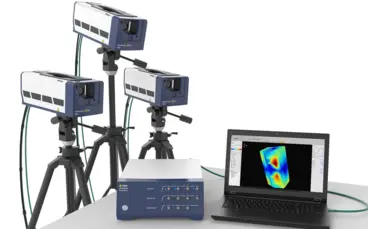
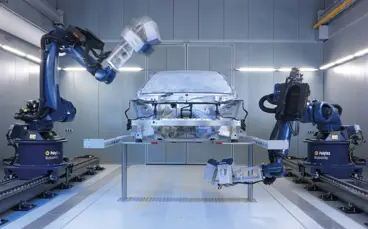
- From micro to macro, 1D to 3D to automated robot-based testing.
- Non-contact precision
- Laser-based measurements without altering the structure or adding mass.
- Solve challenges faster
- Identify and resolve issues sooner in the development and testing process.
- Mission-ready reliability
- Improve performance, durability, and safety across critical defense systems.

Our application engineering team can help determine the right approach for your structure, environment, and measurement objective.
Applications across every domain
Air & space
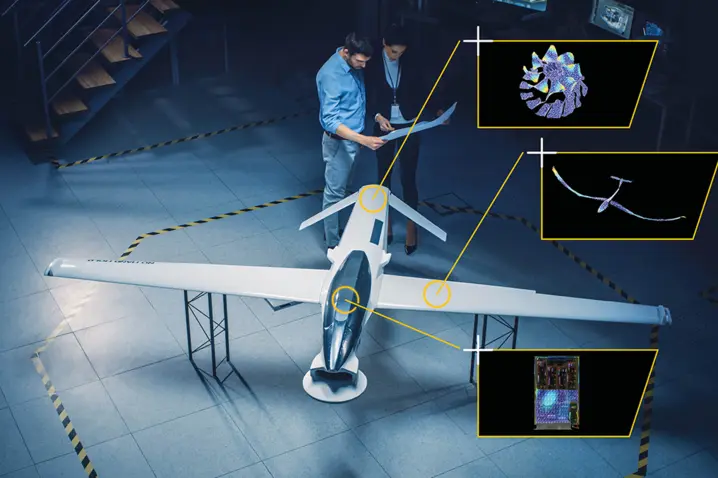
//Airborne and space systems must perform under extreme vibration, acoustic, thermal, and shock loads—from lightweight aircraft structures and turbine components to satellites, payloads, and launch systems. Laser vibrometry provides non-contact, high-bandwidth measurement without adding mass to sensitive structures, helping engineers identify critical dynamics, validate simulation models, and improve reliability from development through qualification.
- Finite element model validation
- Correlate high-density measurement data with simulation models to improve predictive accuracy and confidence in aircraft and spacecraft structures.
- Structural dynamics & modal analysis
- Identify natural frequencies, mode shapes, and structural coupling in lightweight airframes, satellites, payloads, and complex assemblies.
- Turbine & propulsion dynamics
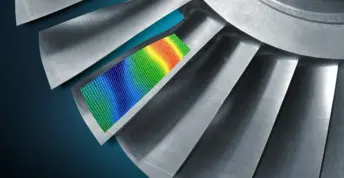
- Characterize vibration behavior of turbine blades, blisks, propulsion components, and rotating structures.
- Launch vibration & pyroshock testing
- Capture high-frequency transient response and dynamic behavior associated with launch loads, separation events, and pyrotechnic mechanisms.
- UAV & aeroelastic testing
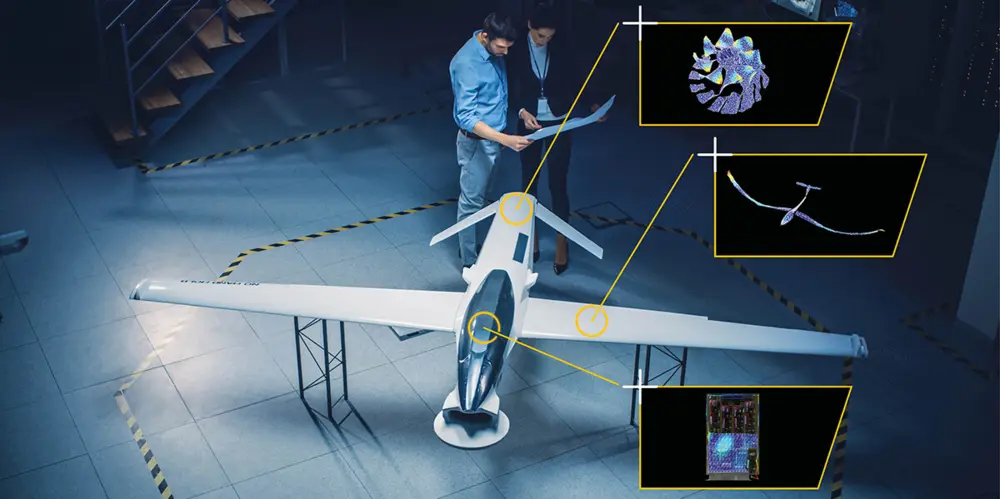
- Analyze bending, torsion, mode coupling, and flutter behavior without influencing lightweight structures with added sensor mass.
- Inertial sensor & precision component testing
- Evaluate vibration performance of inertial sensors, electronics, optical assemblies, and other mission-critical components.
Ground
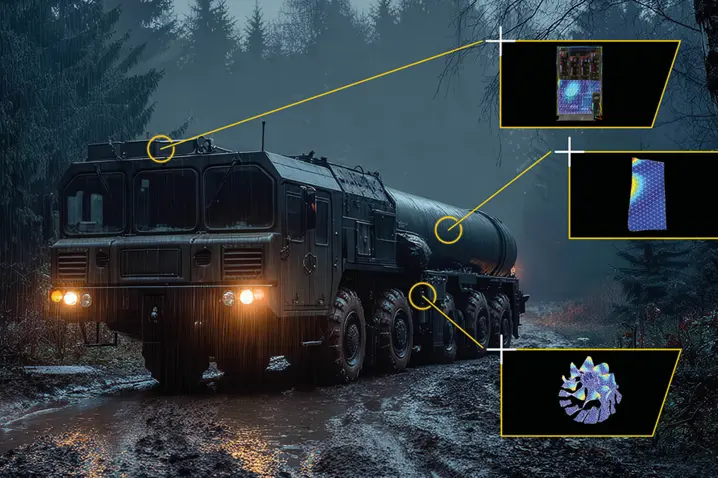
Rugged land systems face harsh, high-shock operating conditions—from cross-country terrain to weapon recoil—that demand rigorous validation of ride comfort, handling, and mechanical durability. Laser vibrometry captures this non-contact, delivering precise insight into component behavior and structural integrity even under the most demanding field conditions.
- Vehicle dynamics
- Evaluate ride, handling, and dynamic response of rugged land systems.
- Component level testing
- Measure vibration behavior of subsystems and critical mechanical assemblies.
- Quality control of firearm components
- Verify consistency and dynamic performance of precision firearm components.
- Structural dynamics
- Identify resonance, mode shapes, and structural response in complex assemblies.
- Reliability validation
- Validate durability and performance under realistic operation conditions.
- Shock & impact testing
- Capture transient response during shock, drop, and impact events.
Naval & maritime
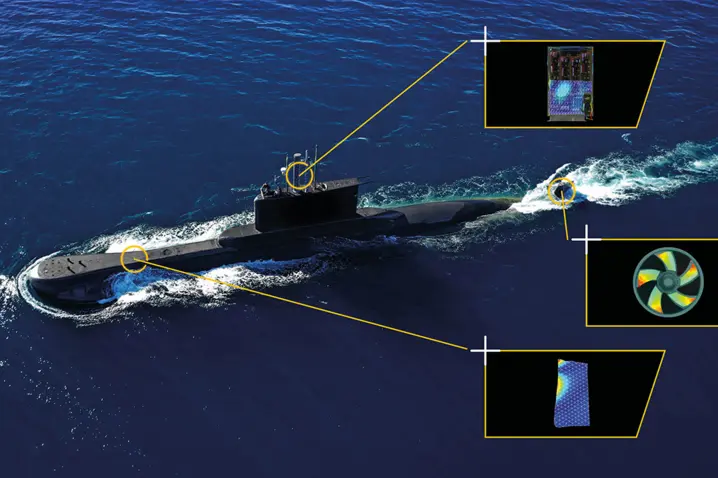
Naval and maritime systems must withstand hydrodynamic loading, structure-borne vibration, and underwater acoustic signatures that directly affect stealth and sonar performance. Laser vibrometry enables precise, non-contact analysis of hull structures and submerged components—even in environments where conventional sensors are impractical or introduce measurement error.
- Water tank testing
- Validate components and scaled models in controlled aquatic test environments.
- Water tunnel testing
- Analyze flow-induced vibration and structural response under hydrodynamic loading.
- Hydroacoustic analysis
- Measure structure-borne vibration and radiated noise in underwater systems.
- Hull vibration & noise analysis
- Quantify vibration patterns and acoustic behavior of hull structures.
- FEA modeling
- Correlate experimental results with simulation models for confident engineering decisions.
- Sonar sensor validation
- Verify vibration behavior, mounting integrity, and performance of sonar sensors.
Application notes and webinar
UAV flutter analysis
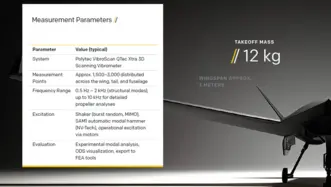
Laser vibrometry revealed the critical bending-torsion coupling responsible for UAV flutter risk.
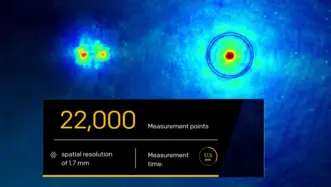
Defect detection
FFT Method for accelerated
measurement of wave fields
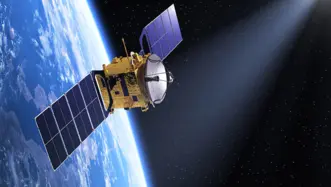
Satellite finite element model optimization
Validated finite element model of a satellite structure with thousands of measurement points.
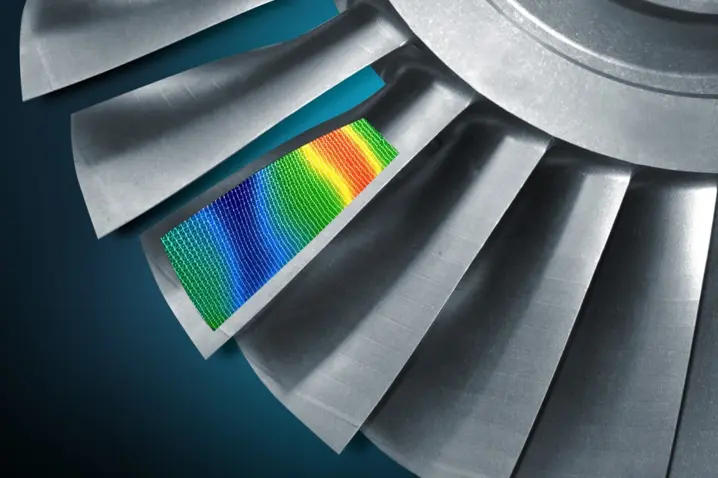
Spin the blade, not the risk
See how non-contact laser vibrometry reveals the vibration and strain behavior of blisks, turbine blades, and turbocharger components. Shorten test times, accelerate design validation, and gain more reliable insights into the dynamic behavior of your components.
We support your Mission
Polytec helps engineers uncover modes, resonances, and acoustic hotspots long before they become costly program delays. Make fast, confident engineering decisions.
These insights help you:
- Validate simulations with real data.
- Identify faults and failure points sooner.
- Reduce risk in development cycles.
- Improve robustness, performance, and reliability.
Polytec magazine articles and other relevant webpages





Related products