Seeing oil content and quality while the batch is running
Olive oil mills in Spain and Greece wanted to see the quality of their raw material and their oil while production is running. Three values decide the economics of every batch: the oil content of the delivered olives, the residual oil the decanter leaves in the pomace, and the free acidity that determines whether the oil is sold as extra virgin or virgin.
Until then, these values came from lab samples of a few grams. They cannot represent a full delivery of olives, and the results arrived when the batch had long been processed. Malaxation and decanting could only be adjusted afterwards, if at all.
The new solution had to cover three process steps with one system and cope with very different media: whole olives on a conveyor, wet pomace and clear oil. It also had to fit into the existing lines and process equipment.
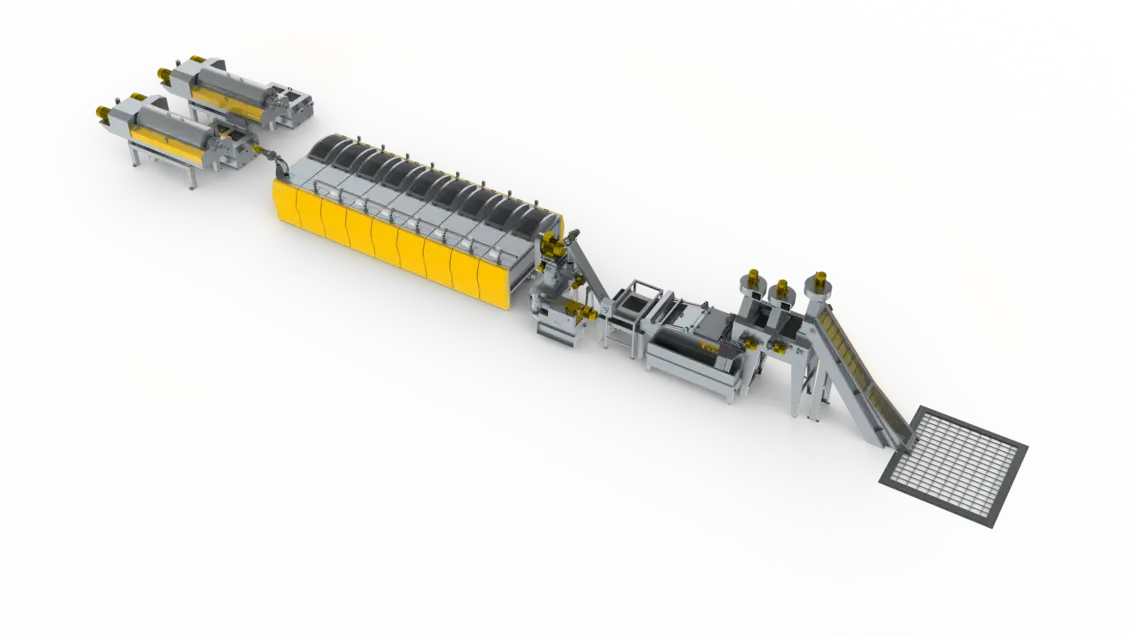
One NIR system, three measurement points along the line
Polytec equipped the line with three measurement points, each with a sensor head suited to its medium and connected to one inline NIR system:
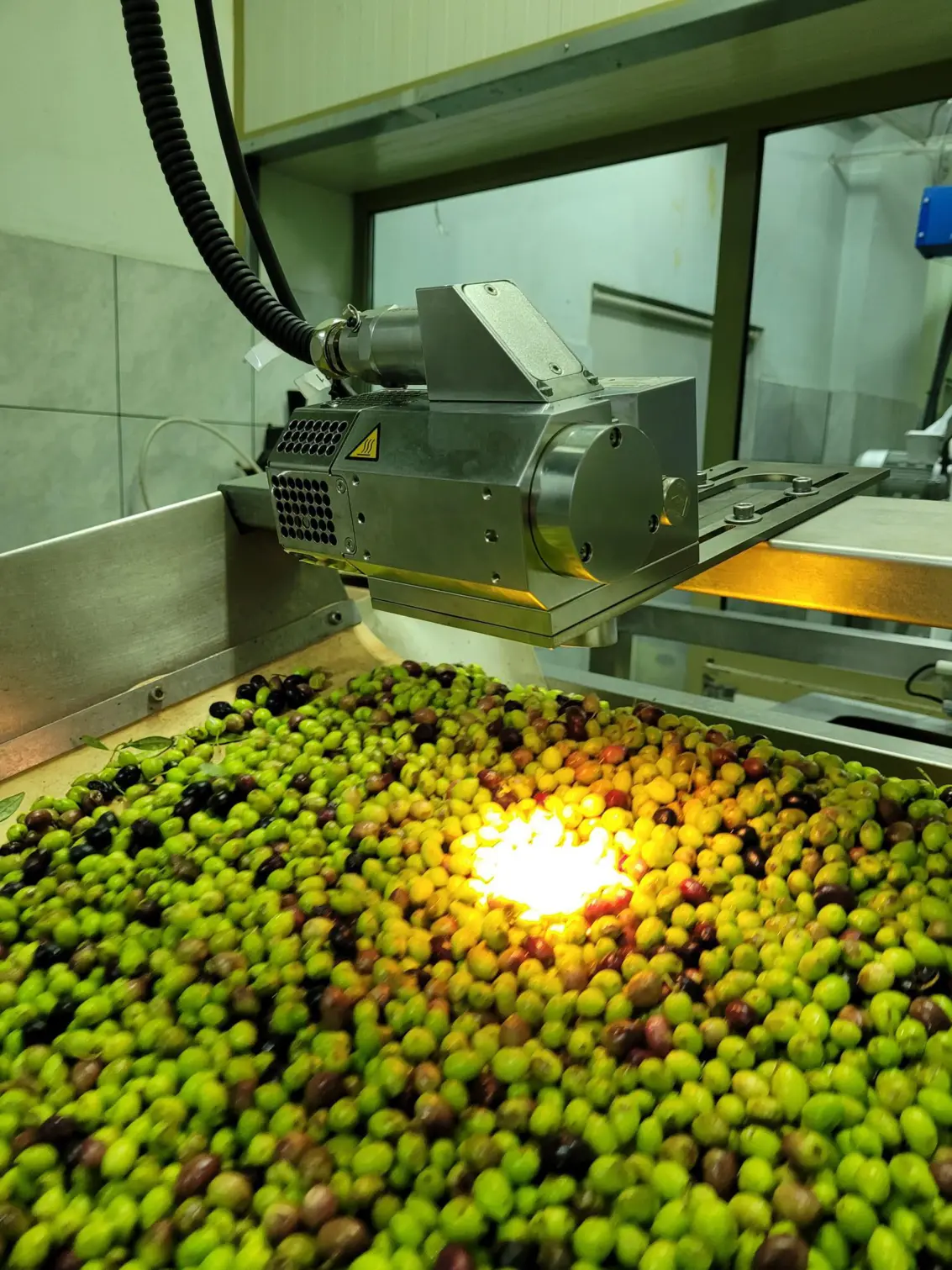
- Olive reception: a non-contact distance head measures the oil content of the olives on the conveyor.
- Decanter outlet: a contact head measures residual oil and moisture in the pomace.
- Purified oil: a contact head with transflection adapter measures the free acidity after the centrifuge.
Measuring on the conveyor covers the entire delivery, not just a sample. The decanter measurement point was realized in cooperation with decanter manufacturer Flottweg. Here the goal is a balance: too much residual oil means losing valuable extra virgin oil, too little lowers the value of the pomace, which is processed further or used as animal feed.
Why the mills chose Polytec
Two things set the solution apart. Thanks to multiplexing, one spectrometer serves all three measurement points, which keeps investment and maintenance lower than one analyzer per point. And for the acidity measurement in clear oil, Polytec developed a dedicated transflection adapter. Contact and non-contact heads from one supplier and custom flanges for the existing lines completed the package.
More oil from every batch, each grade in the right tank
For the mills, quality and yield are no longer a matter of hindsight. Six analysis systems are in use in Spanish and Greek olive oil mills (as of 2026).
- On delivery: the oil content of every load is known, and the process is set up accordingly
- At the decanter: settings can be optimized for the best balance of oil yield and pomace value
- In the tank: oils are stored by grade and variety, without mixing qualities
Want to measure oil content and quality along your line? Let's talk about your process.