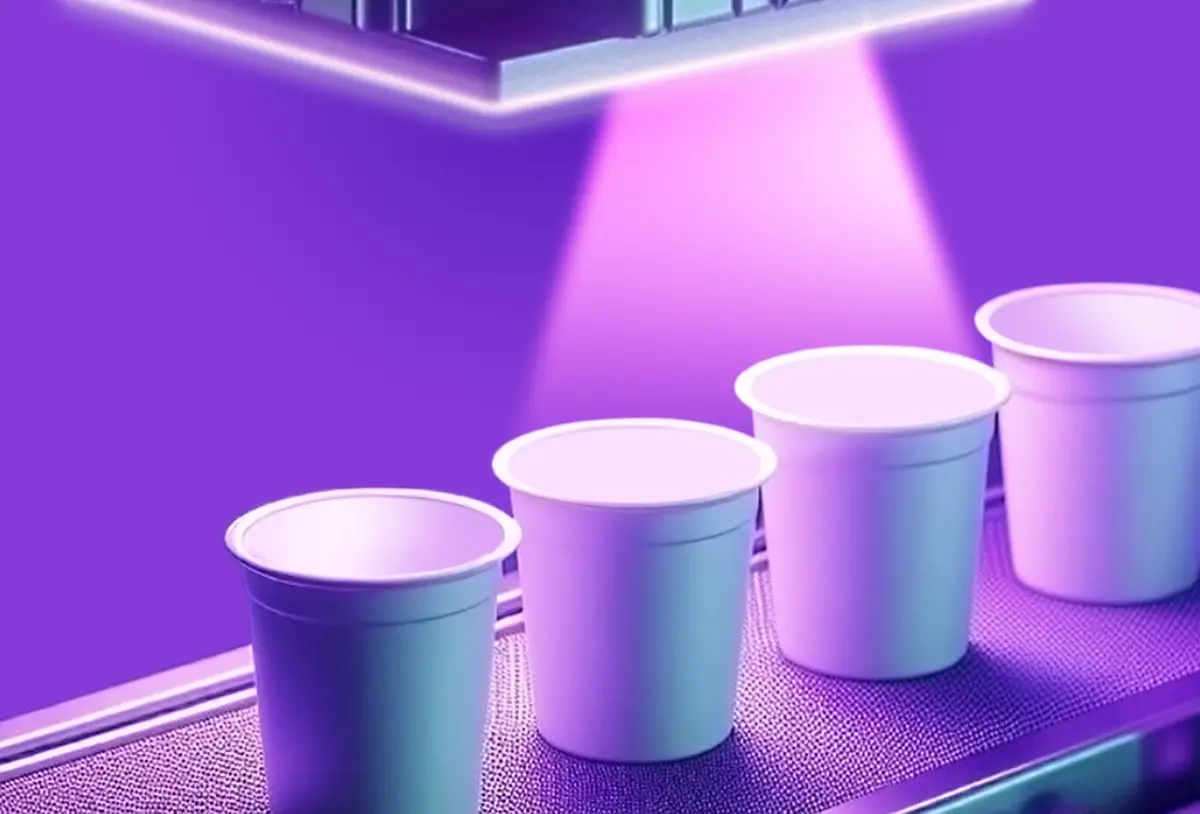
Disinfect the quick and easy way
UV light enables fast, chemical-free inactivation of microorganisms and is suitable for a wide range of disinfection tasks in industrial processes, food production and other hygiene-critical applications. Polytec offers a broad portfolio of UV solutions – from high-intensity pulsed xenon systems and continuous light UVC disinfection systems to UVC lamps and light sources for integration into customized equipment. Different technologies including xenon, UVC LED, excimer as well as low- and medium-pressure lamps enable solutions tailored to specific applications.
Pulsed or continuous UV light for disinfection?
UV solutions can generally be divided into pulsed and continuous systems:
Pulsed light systems generate extremely intense, short flashes of broad-spectrum light, delivering high UV doses within very short exposure times. They are particularly suitable for applications where high disinfection performance and short process times are essential.
Continuous UV systems and light sources provide a constant output and can be readily integrated into continuous processes and equipment. Depending on the technology, they offer specific UVC wavelengths, different power levels and an economical solution for a wide range of disinfection tasks. The optimal technology depends on factors such as the required log reduction, process speed, treatment area and the microorganisms to be inactivated.
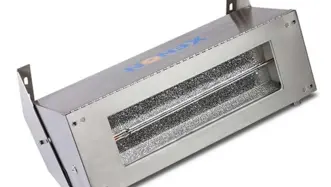
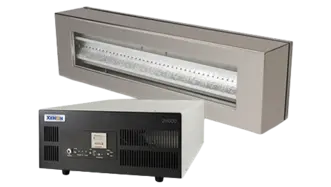
Continuous light systems
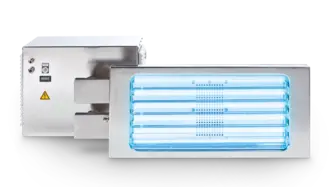
The following continuous UV light sources are divided into ready-to-use complete systems for disinfection applications and UVC light sources for integration into customized systems.
Which UVC technology is right for your application?
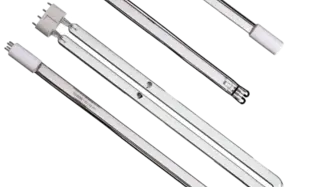
Continuous UVC solutions differ not only in their power output, but above all in the way the light is generated, its wavelength and spectral characteristics. While UVC LEDs and excimer light sources provide specifically defined wavelengths, low-pressure and amalgam lamps operate predominantly at 254 nm. Medium-pressure lamps, by contrast, provide a broad UV spectrum with high power density. Depending on the application, complete disinfection systems or individual light sources for integration into customized equipment are available.
Complete UVC systems
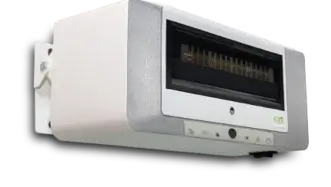
UVC light sources
Frequently Asked Questions about continuous UVC technologies
What do low-pressure and medium-pressure mean in UV lamps?
The terms low-pressure and medium-pressure refer to the vapor pressure inside the gas-discharge lamp – not to its UV output. Low-pressure lamps predominantly generate UVC radiation at 254 nm, while medium-pressure lamps provide a broader spectrum and significantly higher power density.
What's the difference between amalgam low-pressure and conventional low-pressure lamps?
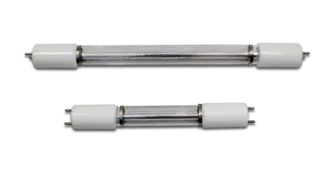
Both technologies operate on the low-pressure principle and primarily emit at 254 nm. In amalgam lamps, however, the mercury is bound in an amalgam. This allows them to operate at higher electrical power and UVC power density while maintaining good performance over a wider temperature range. Amalgam technology is therefore particularly suitable for applications requiring higher UVC output than conventional low-pressure lamps.
What are the advantages of UVC LEDs compared with UV lamps?
UVC LEDs are compact, switch on and off instantly and enable precise selection of the required wavelength. They can also be flexibly combined into customized geometries, modules and systems. This makes UVC LEDs particularly suitable for compact, electronically controlled and application-specific disinfection solutions.
When are low-pressure, amalgam or medium-pressure UVC lamps the right choice?
Low-pressure UVC lamps are particularly suitable when high efficiency at predominantly 254 nm and comparatively low heat generation are required. Typical applications include water, air and surface disinfection.
Amalgam UVC lamps are a good choice when higher UVC output than conventional low-pressure lamps is required while retaining the advantages of low-pressure technology. They are also suitable for applications involving higher or varying ambient temperatures.
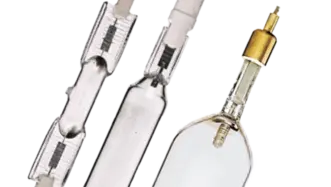
Medium-pressure UV lamps are designed for applications requiring high power density and high throughput. Their broad UV spectrum also makes them suitable for oxidation and photochemical processes in addition to disinfection.
Which UVC technology is best suited to my application?
The optimal technology depends primarily on the required wavelength, UVC output, process speed, available installation space, ambient conditions and whether a complete disinfection system or an individual light source for system integration is required.
Low-pressure and amalgam lamps are particularly suitable for efficient 254 nm applications, while medium-pressure lamps provide high power densities and a broad UV spectrum. 222 nm excimer light sources offer targeted, narrowband UVC radiation, while UVC LEDs are particularly well suited to compact and flexibly integrated solutions.
Polytec magazine
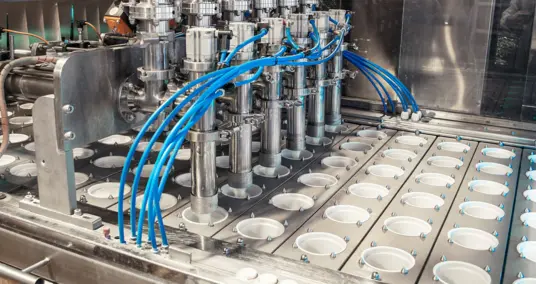
A modern approach to germ-free food packaging
Since the 1960s, sterile packaging has played an important role in food safety. However, there has been little innovation since then. Chemicals and heat remain the most common methods for sterilizing food …

Sterilization by Light Flash
The success of sterile environments in the pharmaceutical, medical, and food industries depends on transferring materials in and out without causing microbial contamination
Pulsed UV light against germs
Hygiene is essential in all areas of the food industry. This is especially true for dairy products like yogurt, which are highly susceptible to contamination by microorganisms and mold spores. These can or…