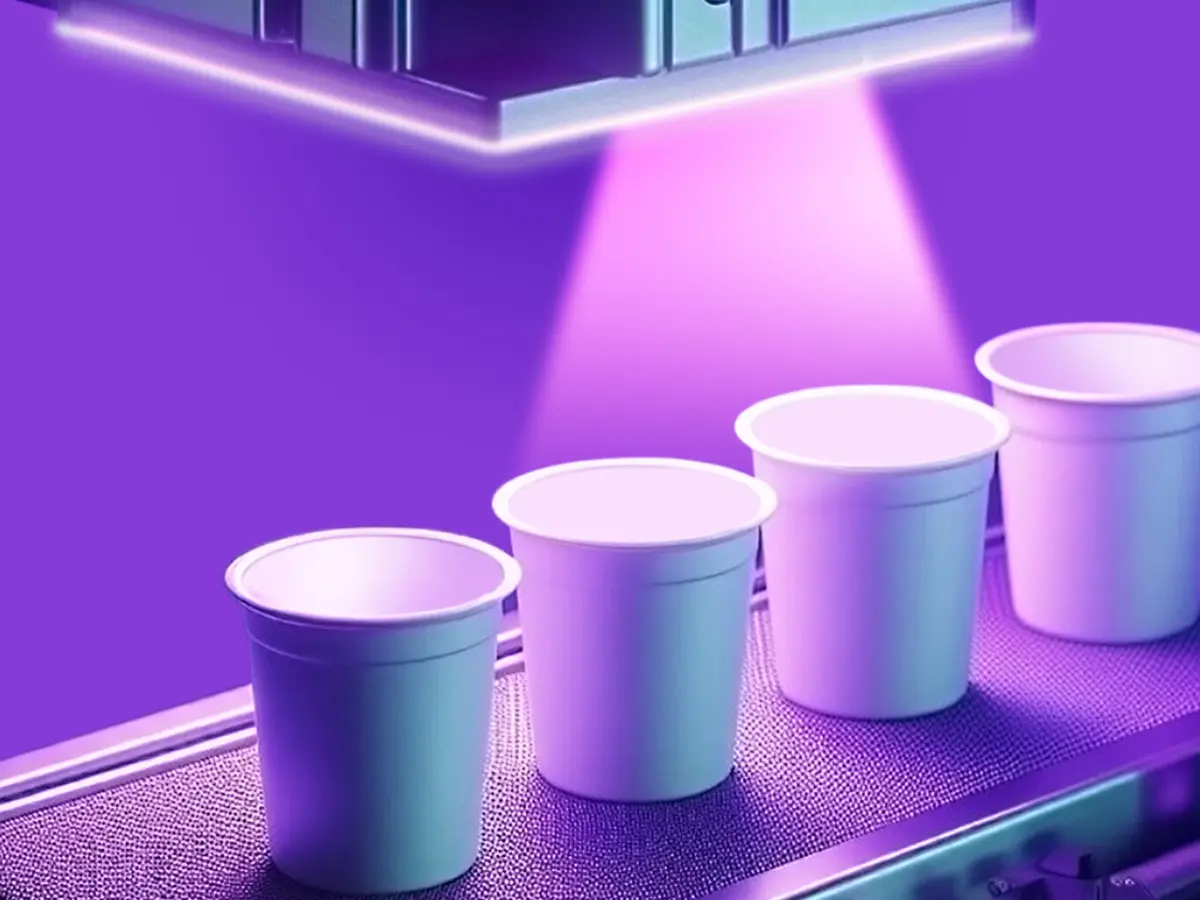
Einfach und schnell entkeimen
UV-Licht ermöglicht die schnelle und chemiefreie Inaktivierung von Mikroorganismen und eignet sich für vielfältige Desinfektionsaufgaben in Industrie, Lebensmittelproduktion und weiteren hygienekritischen Anwendungen. Polytec bietet dafür ein breites Portfolio an UV-Lösungen – von leistungsstarken gepulsten Xenon-Systemen über mit Dauerlicht arbeitende UVC-Desinfektionssysteme bis hin zu UVC-Lampen und Lichtquellen für die Integration in kundenspezifische Anlagen. Unterschiedliche Technologien wie Xenon, UVC-LED, Excimer sowie Nieder- und Mitteldruckstrahler ermöglichen eine gezielte Anpassung an die jeweilige Anwendung.
Pulsed or continuous UV light for disinfection?
UV solutions can generally be divided into pulsed and continuous systems:
Pulsed light systems generate extremely intense, short flashes of broad-spectrum light, delivering high UV doses within very short exposure times. They are particularly suitable for applications where high disinfection performance and short process times are essential.
Continuous UV systems and light sources provide a constant output and can be readily integrated into continuous processes and equipment. Depending on the technology, they offer specific UVC wavelengths, different power levels and an economical solution for a wide range of disinfection tasks. The optimal technology depends on factors such as the required log reduction, process speed, treatment area and the microorganisms to be inactivated.
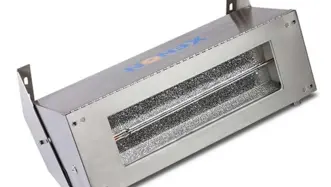
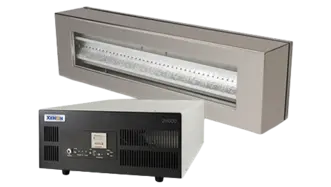
Continuous light systems
The following continuous UV light sources are divided into ready-to-use complete systems for disinfection applications and UVC light sources for integration into customized systems.
Which UVC technology is right for your application?
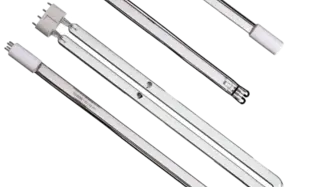
Continuous UVC solutions differ not only in their power output, but above all in the way the light is generated, its wavelength and spectral characteristics. While UVC LEDs and excimer light sources provide specifically defined wavelengths, low-pressure and amalgam lamps operate predominantly at 254 nm. Medium-pressure lamps, by contrast, provide a broad UV spectrum with high power density. Depending on the application, complete disinfection systems or individual light sources for integration into customized equipment are available.
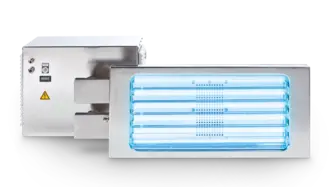
Complete UVC systems
UVC light sources
Frequently Asked Questions about continuous UVC technologies
What do low-pressure and medium-pressure mean in UV lamps?
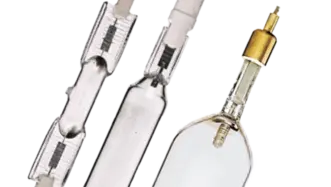
The terms low-pressure and medium-pressure refer to the vapor pressure inside the gas-discharge lamp – not to its UV output. Low-pressure lamps predominantly generate UVC radiation at 254 nm, while medium-pressure lamps provide a broader spectrum and significantly higher power density.
What's the difference between amalgam low-pressure and conventional low-pressure lamps?
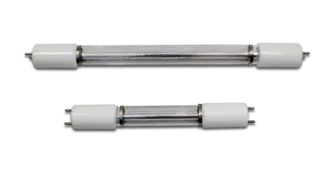
Both technologies operate on the low-pressure principle and primarily emit at 254 nm. In amalgam lamps, however, the mercury is bound in an amalgam. This allows them to operate at higher electrical power and UVC power density while maintaining good performance over a wider temperature range. Amalgam technology is therefore particularly suitable for applications requiring higher UVC output than conventional low-pressure lamps.
What are the advantages of UVC LEDs compared with UV lamps?
UVC LEDs are compact, switch on and off instantly and enable precise selection of the required wavelength. They can also be flexibly combined into customized geometries, modules and systems. This makes UVC LEDs particularly suitable for compact, electronically controlled and application-specific disinfection solutions.
When are low-pressure, amalgam or medium-pressure UVC lamps the right choice?
Low-pressure UVC lamps are particularly suitable when high efficiency at predominantly 254 nm and comparatively low heat generation are required. Typical applications include water, air and surface disinfection.
Amalgam UVC lamps are a good choice when higher UVC output than conventional low-pressure lamps is required while retaining the advantages of low-pressure technology. They are also suitable for applications involving higher or varying ambient temperatures.
Medium-pressure UV lamps are designed for applications requiring high power density and high throughput. Their broad UV spectrum also makes them suitable for oxidation and photochemical processes in addition to disinfection.
Which UVC technology is best suited to my application?
The optimal technology depends primarily on the required wavelength, UVC output, process speed, available installation space, ambient conditions and whether a complete disinfection system or an individual light source for system integration is required.
Low-pressure and amalgam lamps are particularly suitable for efficient 254 nm applications, while medium-pressure lamps provide high power densities and a broad UV spectrum. 222 nm excimer light sources offer targeted, narrowband UVC radiation, while UVC LEDs are particularly well suited to compact and flexibly integrated solutions.
Systemauswahl
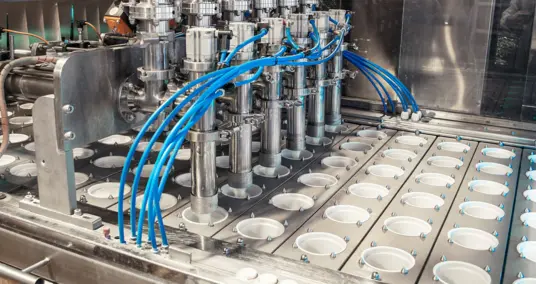
Ein moderner Ansatz für keimfreie Lebensmittelverpackungen
Seit den 1960er Jahren spielen keimfreie Verpackungen eine wichtige Rolle für die Lebensmittelsicherheit. Dennoch gab es seit dieser Zeit kaum Innovationen. Chemikalien und Hitze sind nach wie vor die gäng…
Xenon UV-Blitzlampen in der fotochemischen Sterilisation
Der Erfolg steriler Umgebungen oder Räume der Pharma-, Medizin- und Nahrungsmittelbranche hängt davon ab, dass Materialien hinein- und herausgebracht werden können, ohne mikrobiologische Verunreinigungen z…
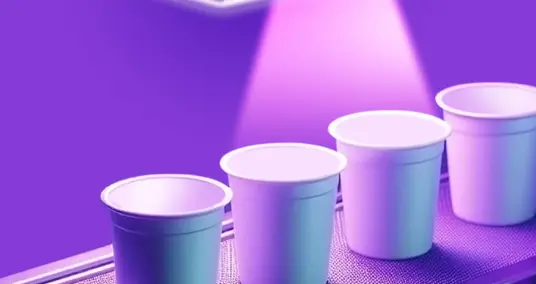
Gepulstes UV-Licht gegen Keime
Hygiene ist in allen Bereichen der Lebensmittelindustrie wichtig. Besonders gilt das für Milchprodukte wie in der Joghurthabfüllung, denn sie sind sehr anfällig für Verunreinigungen durch Mikroorganismen u…
Polytec-Magazin
Kontaktieren Sie unsere PolyXperts
Kontaktieren Sie unsere PolyXperts
Sprechen Sie uns an! Wir finden die beste Lösung für Ihre Anforderungen