Stop defects before they leave your production line
- Non-contact measurement for sensitive and small components
Ideal for delicate surfaces, microstructures, and finished products—no added mass, no risk of measurement distortion - Detect defects early—before they become costly failures
Identify vibration and acoustic anomalies in real time to reduce scrap, rework, and warranty claims - High-speed, inline-ready testing for production environments
Keep pace with fast cycle times using automated, repeatable measurements directly in your production line - Reliable results across the full frequency spectrum—even at the highest frequencies
Capture everything from low-frequency motion to ultrasonic behavior for complete quality insight
Vibro-acoustic end-of-line quality control
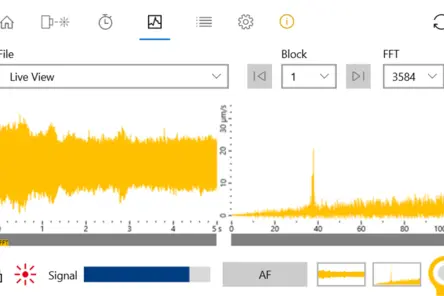
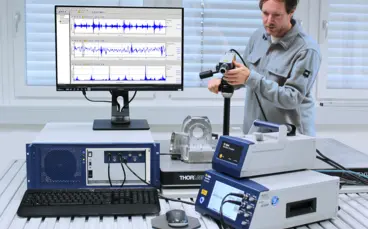
Accelerometers, microphones or Laser Doppler Vibrometers (LDV) are generally used when quality control is required for vibration, acoustics and/or structure-borne noise. Laser Doppler vibrometers have the advantage of being non-contact and therefore do not require a sensor feed as is the case with accelerometers. Also, unlike a microphone, LDVs cannot be influenced by ambient noise.

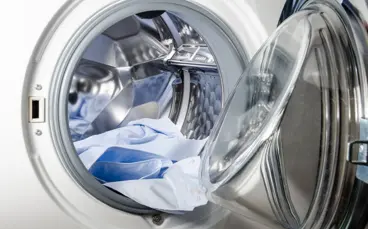
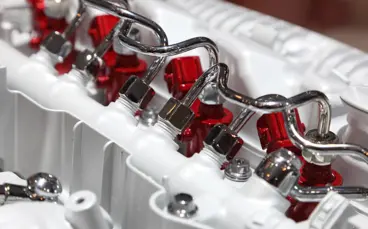
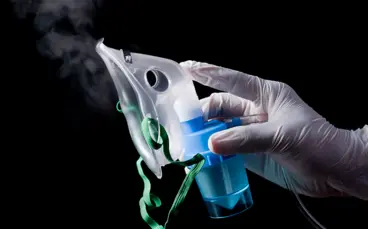
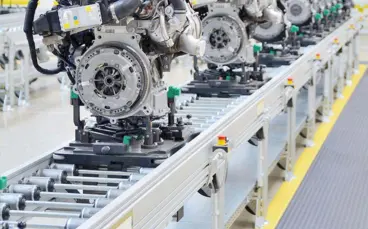
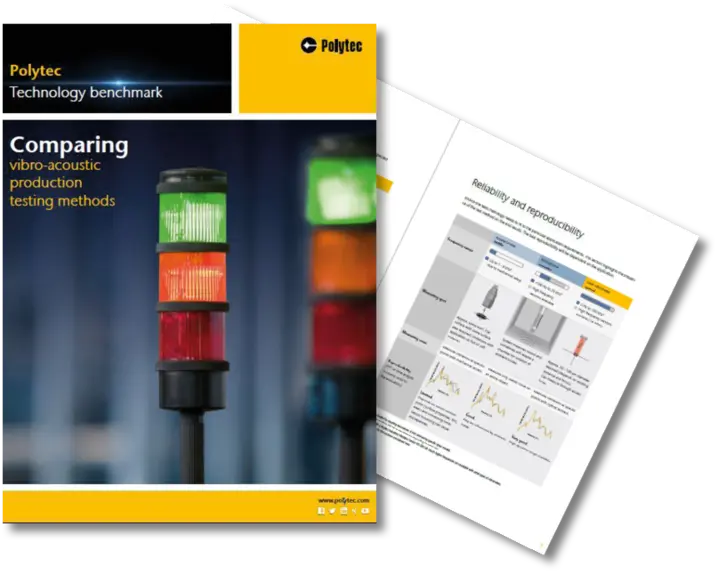
Technology benchmark
Comparing vibro-acoustic production testing methods and putting accelerometers, microphones and laser vibrometers on the test stand.
Wafer-level MEMS testing & quality control for improved production processes
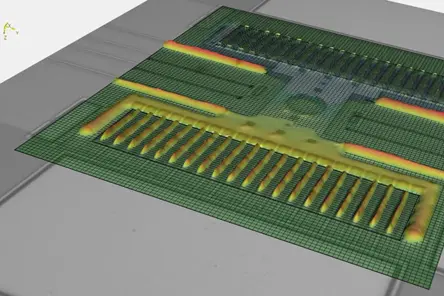
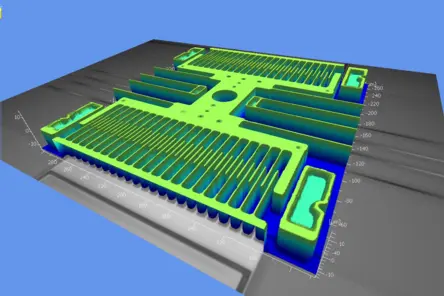
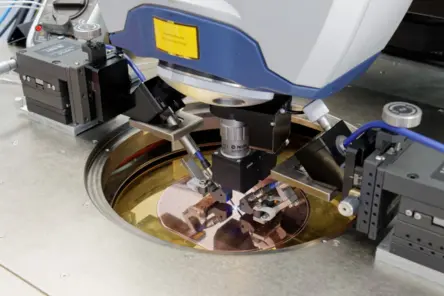
The development of a new MEMS typically requires specifically improved production processes. MSA-600 Micro System Analyzers evaluate current processes and their impact on device parameters such as dimensions, mechanical and material properties. This in turn will allow to better control the manufacturing process. For instance, topographic analysis is critical for building three-dimensional surface micro-machined sensors and actuators using Silicon-on-Insulator (SOI) technology. Measurements can be performed on wafer-level prior to packaging. Stress on the membrane of a MEMS pressure sensor can adversely affect the expected lifetime of the device. Since stress shifts the vibrational resonance frequencies, devices that require a long lifetime can be selected from production runs by examination of their dynamic spectrum.
Speak with an application specialist
Speak with an application specialist
Deflection shape analysis determining the sweet spot for production testing
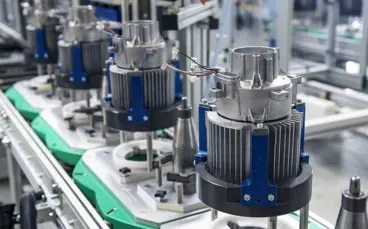
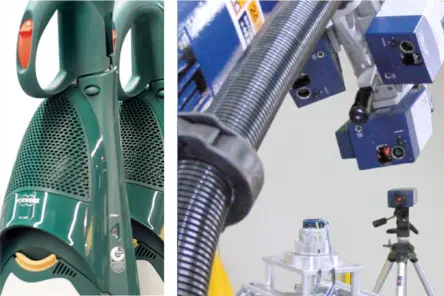
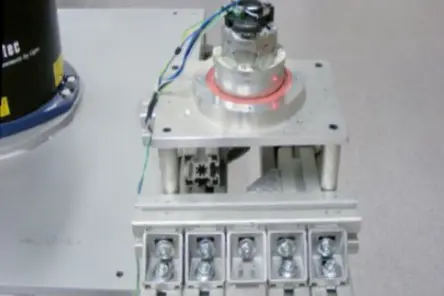
Acoustics and long service life are quality criteria which consumers value particularly in house-hold appliances for daily use. For this reason 100% of the vacuum cleaner motors by Vorwerk are subject to final testing during production. Understanding dynamics using laser Scanning vibrometry reveals valuable information for production control. A pass/fail decision is made based on a comparison of measured spectra with reference spectra.
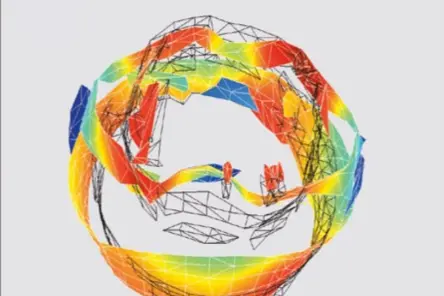
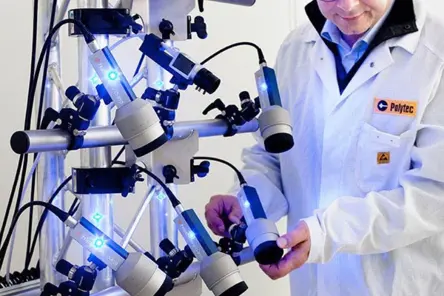
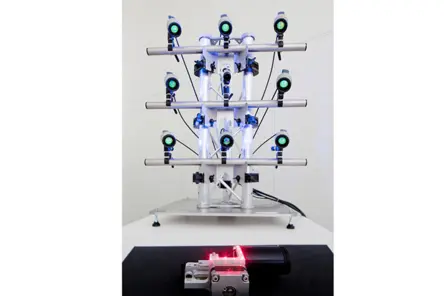
In order to minimize false rejects, it is important to find suitable measurement points. To optimize the testing process, the motors that have already been optimized during the development phase with respect to their vibration behavior are measured using a 3D Scanning Vibrometer. The measuring system determines and visualizes the operational deflection shape, leading to the sweet spot aka suitable measuring points for further production testing.

Talk to our experts
Our experts are ready to support your projects with tailored measurement solutions or support you in measuring what matters—get in touch with us today.
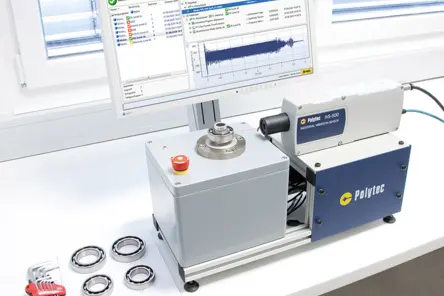
End-of-line vibration testing with laser vibrometers
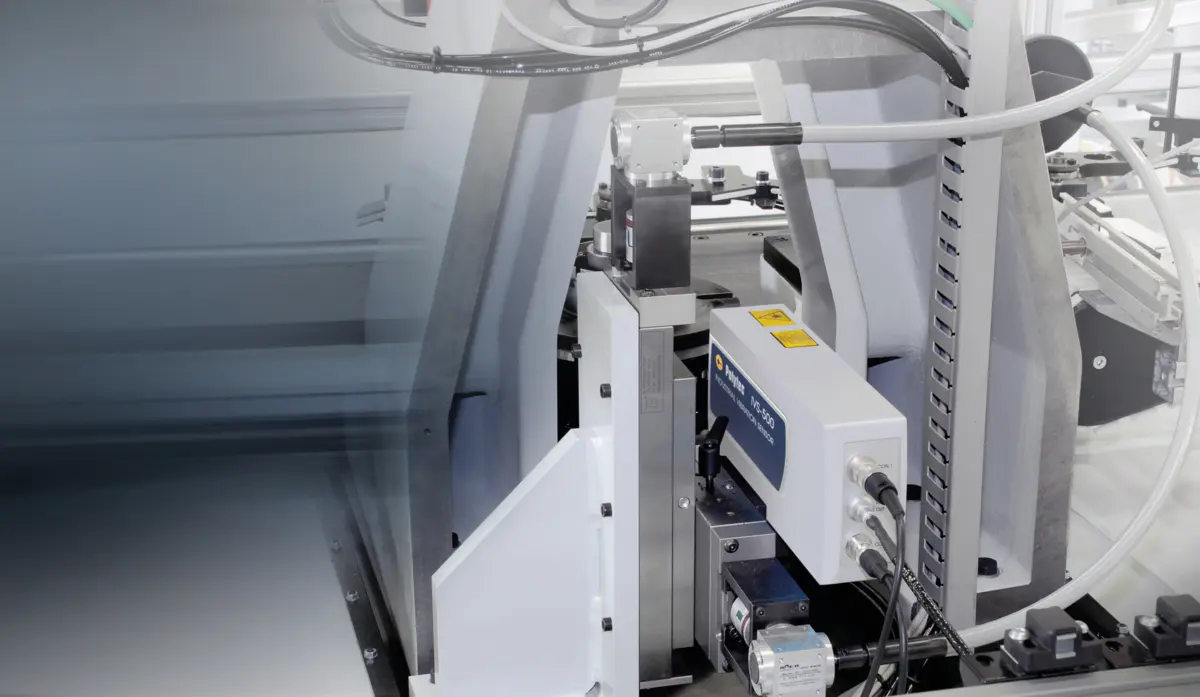
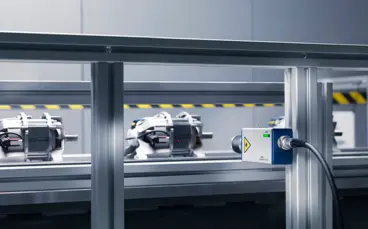
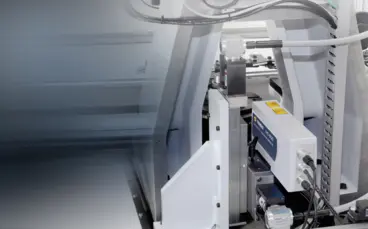
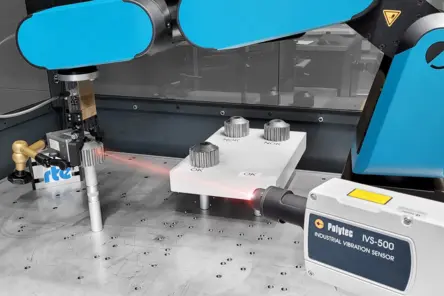
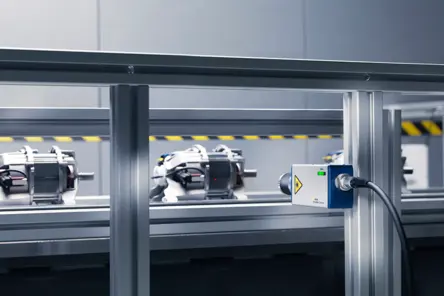
In addition to the reliability of the test equipment, end-of-line testing also depends on easy integration into the test station and automation capability to achieve the highest possible test throughput. Laser Doppler vibrometers (LDV) offer advantages in all these areas.
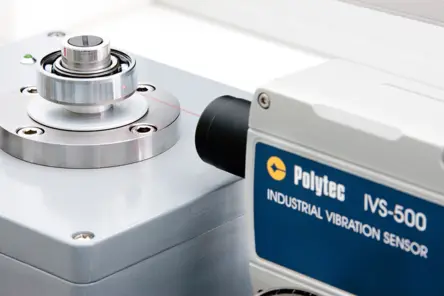
Because vibrometer EoL testing works in a non-contact way with a flexible, adjustable working distance, LDVs can reliably measure at some distance from the test specimen. In addition, a signal can be recorded and analyzed at measurement points that are inaccessible to accelerometers. The high accuracy means that extremely precise data can be recorded and even the smallest changes in test results can be detected. Integration into the production system and communication with the PLC process control system is also possible.
Quality inspections on precision parts
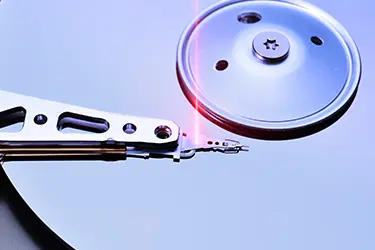
Have you ever lost important photos or documents due to a defective hard drive? We want all our data, personal or work-related, to be stored safely and reliably. Hard disk drives – with their ever growing storage densities and shorter access times – require an extremely high level of stability as regards the read/write head’s positioning above the disk surface. Its flying height of just a few nanometers is a compromise between high data density and risk of collision. The resonances of the aerodynamic bearing depend on the ambient pressure and thus can cause instabilities.
Since laser vibrometers measure in a non-contact and non-intrusive way, they provide the only method of inspecting the response behaviour of the read/write head including its suspension following dynamic excitation as a function of the ambient pressure. Such resonance tests are used to identify critical conditions and then derive design improvements to develop precision mechanics that respond robustly to resonances caused by aerodynamic excitation.
Condition monitoring in industrial plants
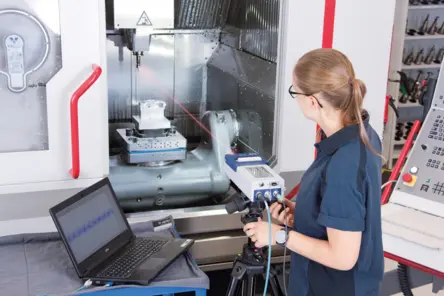
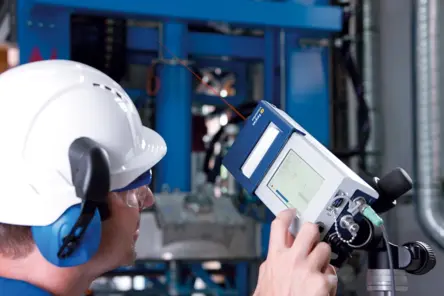
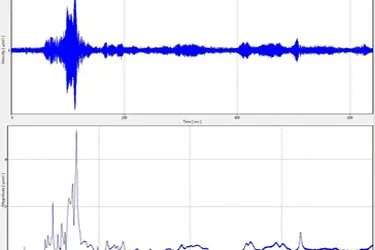
Production quality in industrial manufacturing processes highly depends on reliable and reproducible machining processes such as grinding, drilling, milling or cutting. For calibration or potential failure analysis, portable laser vibrometers like the VibroGo® allow an entirely remote inspection from comfortable and safe distances, measuring the out-of-plane motion of the milling head, analyzing the noise on pumps and compressors and more. Here, the laser sensors reliably detect noise on a wide frequency bandwidth and monitor the component's condition for a flexible and simplified preventive maintenance.