Form and position tolerances in precision components
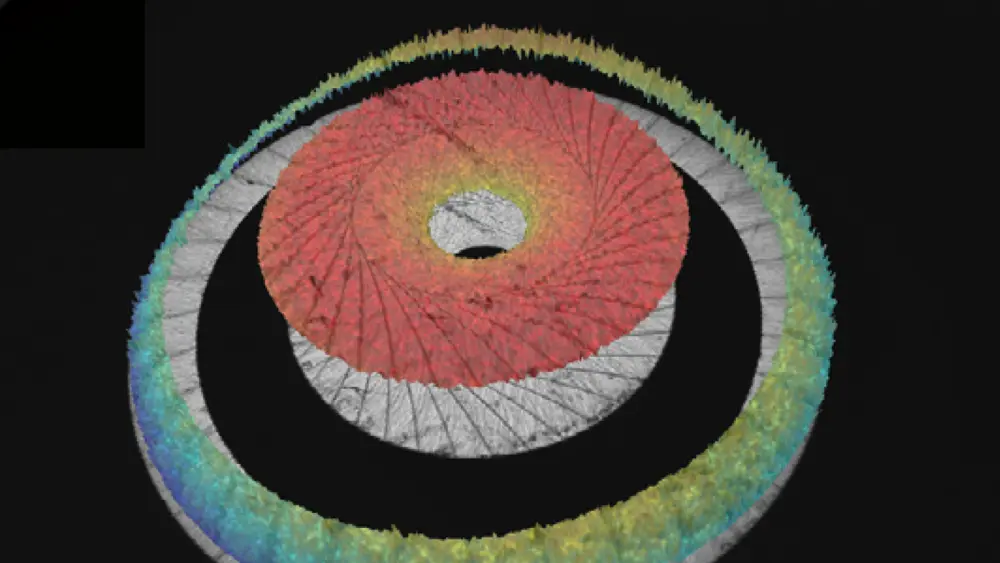
When manufacturing components, increasingly tight manufacturing tolerances must be met — particularly on technical and functional precision surfaces. Manufacturers therefore need to verify form tolerances such as waviness and flatness, as well as position tolerances such as parallelism and tilt, with high accuracy. This ensures compliance with specifications and reliable delivery within defined time frames.
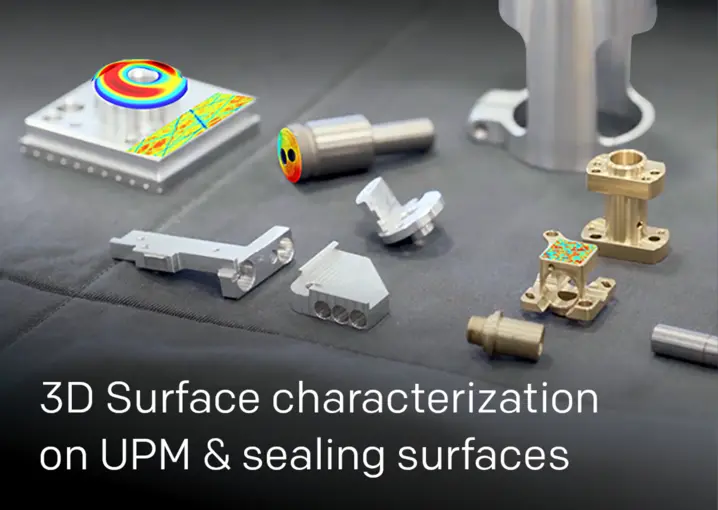
In many cases, manufacturers inspect the complete surface topography of a component to verify compliance with form and position tolerances — for example in shock absorber components, other precision components in the automotive and aerospace industries, or in fine mechanics.
Verifying form and position tolerances
White-light interferometry measures form parameters such as flatness, parallelism, and step-height faster and more efficient even for large samples. Working great on materials of different reflectivity, such as shiny polished metals or dull ceramics makes them the flexible choice for lab and production. Requirements for component warpage (e.g., printed circuit boards) also continue to increase as geometries shrink.
In addition, many applications involve challenging geometries: areas of interest may be located inside deep bores or show significant height differences between functional areas. Here, Polytec systems based on proven white-light interferometry deliver reliable results — where other optical measurement methods face limitations.
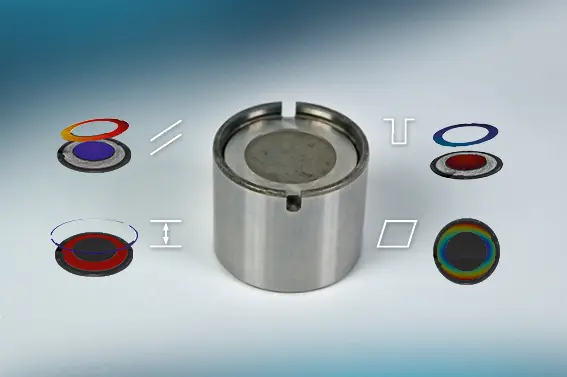
Polytec white-light interferometers perform repeatable, non-destructive measurements with resolutions down to a few nanometers — or even sub-nanometer capability. Optical profilers are ideally suited for the precise determination of form parameters such as flatness and parallelism — supporting efficient verification and easy integration into inline inspection workflows for form and position tolerances.
Free webinar "Characterizing ultra-precision & sealing surfaces"
Compact web talk on 3D surface characterization of ultra-precision machined (UPM) and sealing components — from lapped, CNC ground to polished texture and finish.
Optical profilers for tolerance verification
Polytec provides optical systems for measuring the topography of large surfaces with nanometer-level vertical resolution. This high vertical resolution is independent of the field of view, enabling stable measurement results across different sample sizes and inspection setups. Typical measurement tasks include determining flatness, step height, roughness, parallelism, and other surface parameters required to comply with form and position tolerances.
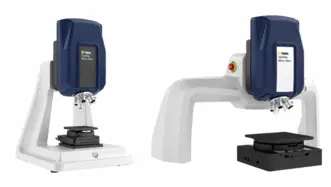
マイクロプロファイラー
Micro.View profiler systems are optimized for measurements with sub-nanometer resolution. With focused optics and high vertical resolution they enable detailed analysis of microstructures, surface finish and material distribution where even the smallest deviations matter.
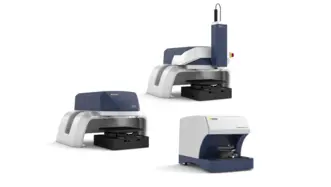
マクロプロファイラ
Pro.Surf は、大型部品やマルチパートトレイの平面度・段差・平行度を非接触でわずか数秒で検査します。衝突を防ぐテレセントリック光学系は穴の内部まで測定でき、生産現場が求める精度と再現性を実現します。
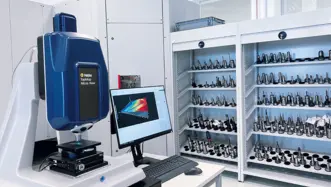
Roughness Deal Days
Polytecの光学式Roughness Testerが30%オフ。サブナノメートル分解能による高精度な非接触3D形状測定を実現します。本キャンペーンは2026年10月31日まで有効です。
Related articles
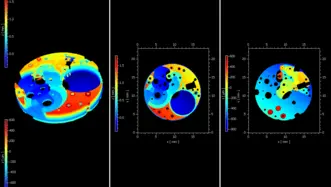
平坦度、厚さ、平行度
Flatness, thickness and parallelism (FTP) measurement combines top & bottom topography measurement in a single shot.
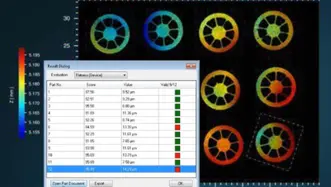
合格/不合格分析
WLIs deliver fast, objective and easy to use pass/fail feedback from areal 3D data. Sub-nanometer Z and recipe-driven workflows support inline SPC.

「購入前に試す」キャンペーン
Measure, rent, decide - on your terms. Make a confident decision about which surface profiler fits to your metrology strategy and safeguard your capital investment
ご要望について専門家とご相談ください
まずは部品仕様、公差、ワークフローについて簡単に話し合いましょう。必要に応じて、実現可能性調査、PolyMeasure(契約測定)、またはPolyRentトライアルをオプションの次のステップとして追加することも可能です。