10.11.2025Customer Case

Measuring packaged electronic warpage through glass at 250 °C

In packaged electronics, a few micrometers can decide whether a product works or fails. A global electronics manufacturer needed to measure how its packages deform under heat — warpage — while the parts sat sealed inside a heating chamber, behind glass, at temperatures up to 250 °C. This is the story of how a tailored TopMap Pro.Surf solution made that measurement possible where conventional techniques fell short.

The challenge: when warpage decides functionality

Across packaged electronics, how a surface deforms under heat increasingly decides whether a device works at all — and that warpage is hard to measure.

As tolerances in packaged electronics keep tightening — finer solder-paste deposits, smaller interconnection pitches — the way a surface deforms under thermal stress increasingly determines whether a device functions reliably. Engineers needed to quantify this "form deviation," or warpage, not at room temperature alone, but across the full thermal cycle a package experiences in production and in the field.

The difficulty was twofold. First, established optical techniques such as fringe projection could not deliver the resolution and repeatability the application demanded. Second, systems comparable to ours simply could not capture such large fields in a single measurement the way Polytec does. The customer needed performance and field coverage at the same time — and a way to see into a sealed, heated environment.

The solution: a tailored TopMap Pro.Surf for the thermal chamber

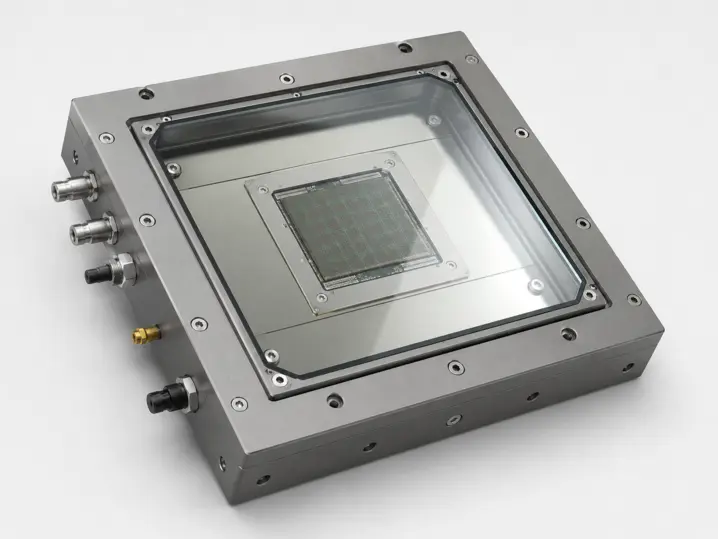
For this global player, a special solution based on the Pro.Surf was realized for packaged-electronics warpage measurement. The sample is placed inside a dedicated heating chamber that brings it through a defined temperature profile — a typical sequence being 20 °C, 250 °C, then back to 20 °C — while the system captures the full topography of the package at each step.

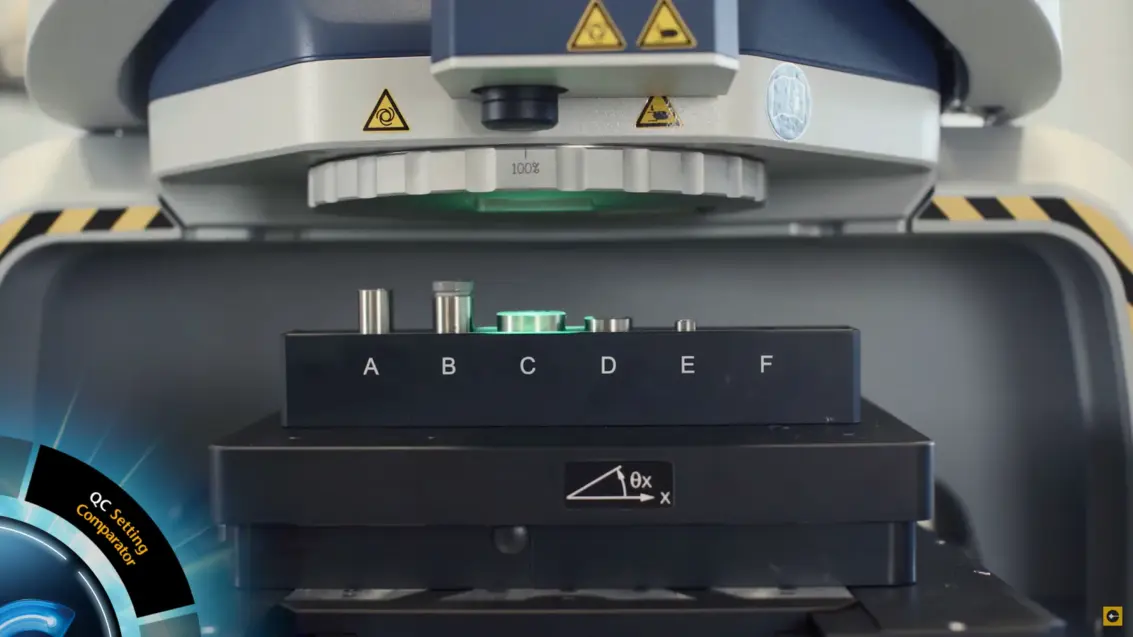
Thermochamber for warpage surface metrology
Heating chamber (altered by AI for customer IP protection)

The approach follows recognized industry practice. The JEITA standard (Japan Electronics and Information Technology Industries Association) for "measurement methods of package warpage at elevated temperature and the maximum permissible warpage" defines exactly this kind of temperature-dependent form-deviation measurement, giving the results a common, comparable basis.

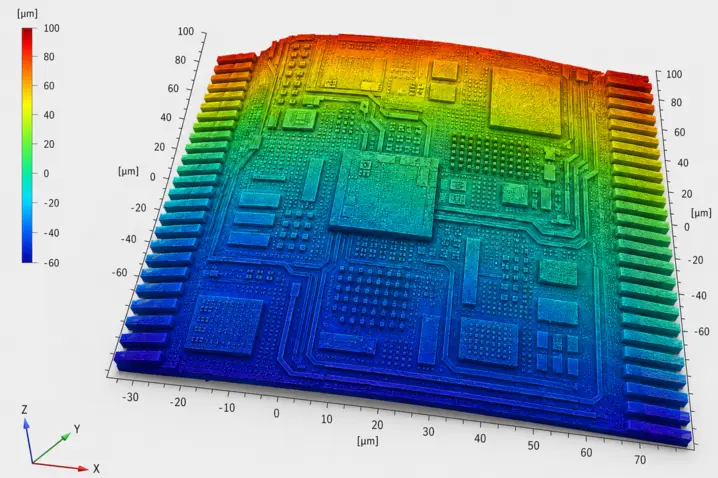
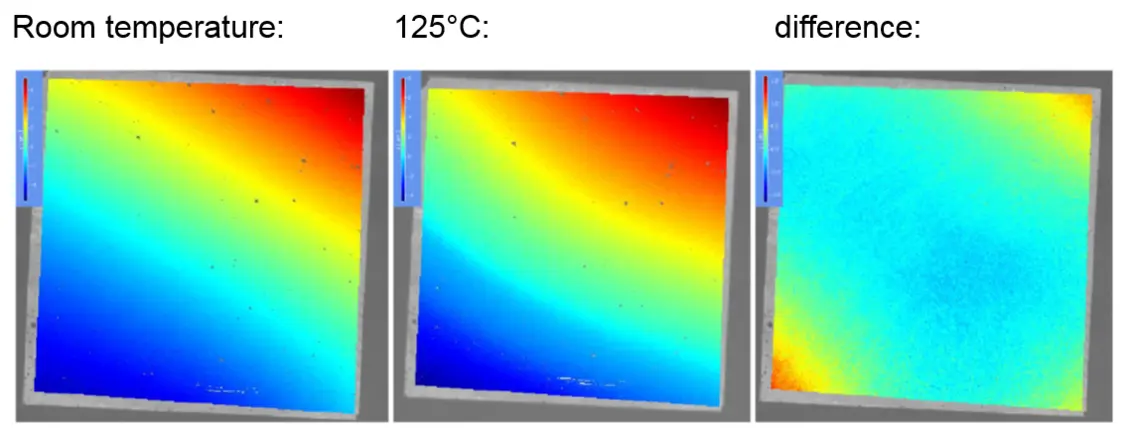
During the measurement, the sample sits inside the heating chamber and the task is to capture its form deviation — its warpage — at each target temperature. Because the TopMap Pro.Surf captures the entire package in a single large field of view rather than stitching several measurements together, each topography is acquired quickly and repeatably. That matters when warpage has to be compared across a full thermal cycle, where every additional stitching step would add uncertainty to the result.

Warpage measurement
Warpage measurement (altered by AI)

What made this application demanding was not only the measurement itself, but the conditions under which it had to take place. The sample is sealed inside the chamber and held at temperature, so it can be reached neither directly nor up close. This is exactly where the TopMap Pro.Surf's combination of strengths comes into play.

Seeing into the chamber: large field, long working distance, through glass

The conditions inside the chamber are exactly where the TopMap Pro.Surf's combination of strengths applies:

  • Measurement through glass: the sample is sealed behind a viewing window, and Polytec's glass-compensation technology corrects for the optical path through the glass so the topography is measured accurately despite the barrier.
  • Long working distance: because the part sits inside the chamber, close-up measurement is impossible — the system's long working distance lets it measure at a standoff, without contact and without disturbing the thermal environment.
  • Large field of view: entire packages are captured in a single measurement rather than stitched together, keeping acquisition fast and repeatable across every temperature step — essential when comparing warpage across a full thermal cycle.
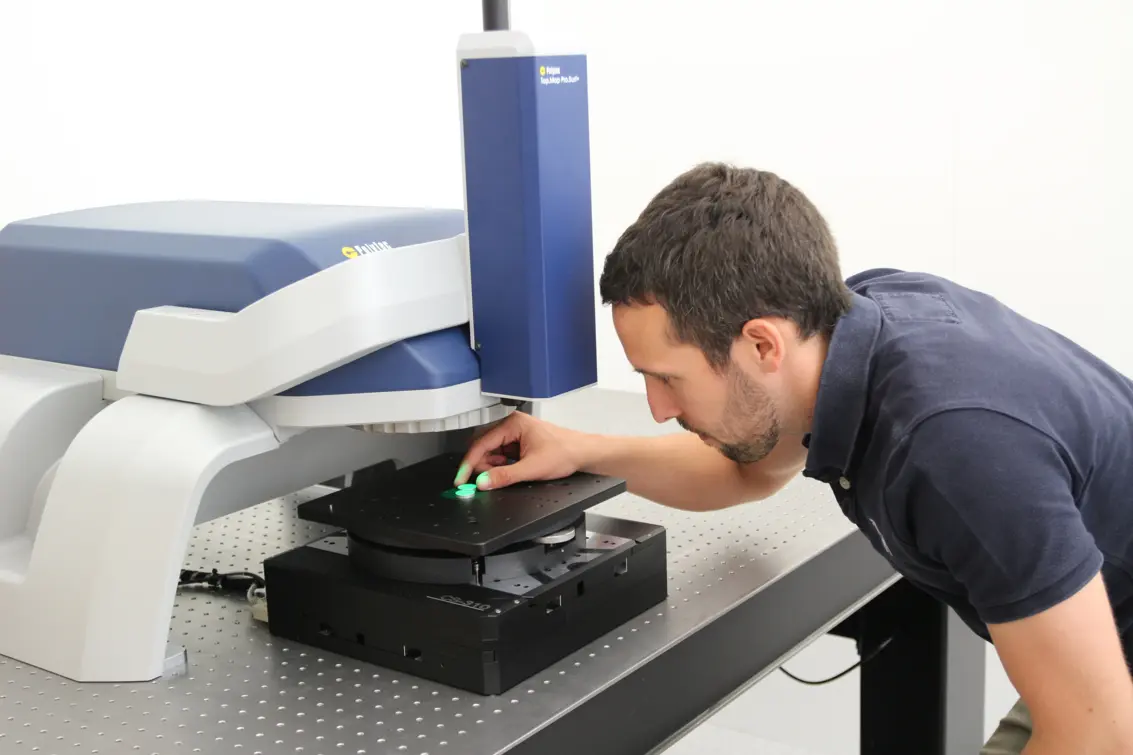
Component inspection with the Pro.Surf +

With this setup, the team could characterize how each package deforms across the full temperature range — directly, repeatably, and under realistic thermal conditions. Because every topography is captured in a single field of view through the chamber glass, the warpage values at 20 °C, 250 °C and back at 20 °C can be compared on a consistent basis.


That turns a difficult, access-limited measurement into a routine part of qualification — giving engineers reliable, temperature-resolved warpage data to support tighter tolerances in packaged electronics.

Demonstration of multiple part measurement
Demonstration of multiple part measurement with fixture and software automation

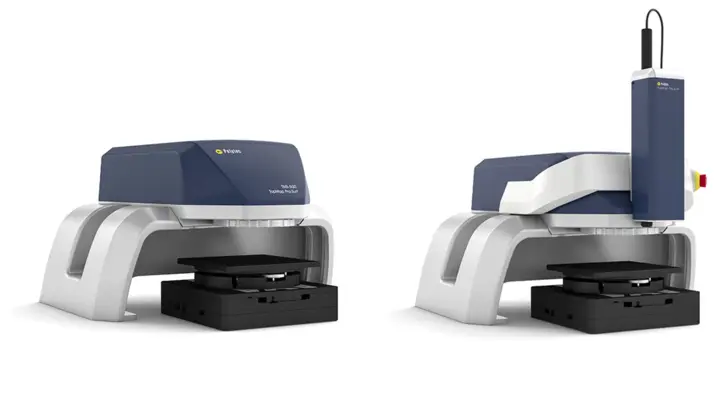
Industrial large-area profiler

The telecentric Pro.Surf systems are optimized for industrial surface profiling with high throughput and repeatable measurement precision.

The result

The tailored TopMap Pro.Surf solution let the manufacturer characterize package warpage reliably across the full temperature range, through glass and at a safe working distance — conditions in which conventional fringe-projection and comparable systems could not perform. The benefits were clear:

  • Standards-aligned warpage measurement (JEITA) at elevated temperatures
  • Full-package topography in a single field of view
  • Non-contact measurement through the chamber's glass window
  • Repeatable comparison of form deviation across the thermal cycle

The outcome: trustworthy, temperature-resolved warpage data that supports tighter tolerances and more reliable packaged-electronic products.

Quick start into surface metrology

We take our claim Measure what matters seriously — and we support you in whatever way fits your situation. Even if your need is only temporary, or a full system isn’t in the budget yet, you have options: rent a system with PolyRent, or let our specialists run the measurements for you with PolyMeasure. And if you’re looking to buy, we’d recommend starting with a feasibility study or a rental — with the rental fee credited against your purchase price afterwards. Talk to our experts and we’ll recommend the best-fitting approach for your metrology tasks.

Discuss your demands with our experts

Let’s start with a short discussion about your parts, tolerances, and workflow
—and, if useful, we can add a feasibility study, PolyMeasure, or a PolyRent trial as optional next steps.

関連製品

Pro.SurfPro.Surf+