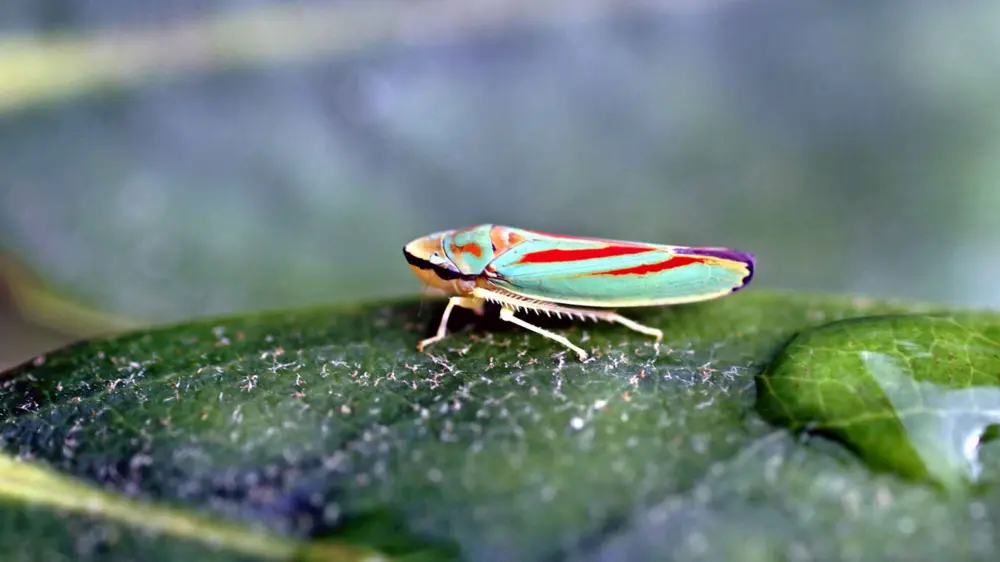
Vibration measurement for animal communication research
For every living species on our planet, there are corresponding biological applications of laser vibrometry. One of the most well-known ones is insect communication. Certain insects, such as the cicada, communicate by “singing” in the audible frequency range, while other sounds produced are ultrasonic and imperceptible to humans. Some insects are so small that their signals are, in actual fact, only vibrations that are transmitted through plants.
Entomologists can detect these audible and inaudible sounds using laser vibrometers. Non-contact measuring technology allows them to “listen in” on animals without disturbing them, and thereby examine their natural communication behaviour. Imagine the honeycomb vibrations in beehives. Signals such as these can only be measured with highly sophisticated measuring technology. Other biological applications include studying communication between elephants, fruit ripeness, spiderweb motion and the hearing mechanism in crickets, frogs or fruit flies. Another benefit of laser vibrometers lies in the fact that the measuring technology is portable and has its own self-sufficient power supply, allowing you to carry out measurements right in the field too.
Polytec Magazine
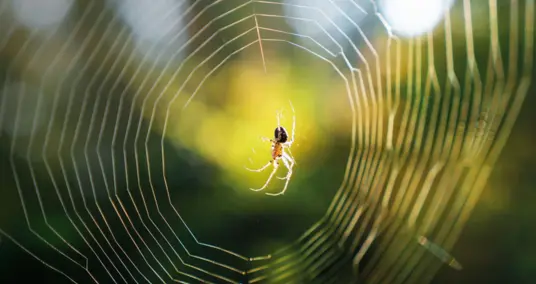
In situ damping measurements of spider webs
Spider webs are naturally occurring structures with amazing and very distinctive architecture, mechanics and dynamics. To predict the vibration damping response of a complete spider web structure, the damp…
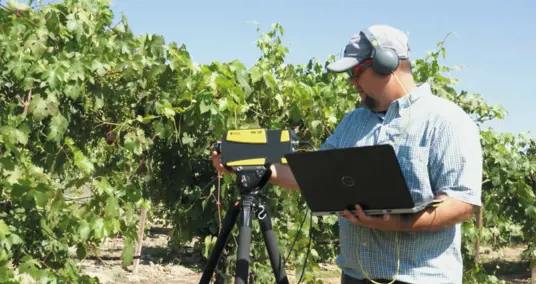
Laser vibrometry is the key
The bacterium Xylella fastidiosa causes various serious diseases in a large number of crop plants. Among other things, the plant pathogen is responsible for a devastating disease in grape vines in Californ…
Laser vibrometry focusing on the small details
Characterize small and delicate structures in a non-contact way. Analyze vibration, acoustics and dynamics. Measure biomedical samples, electronics components and microstructures like MEMS by light, without mass-loading, and from DC up to the GHz range on a large bandwidth. Laser vibrometers focus on the small details, measuring deflection shapes for model validation. They assess the frequency response and determine resonance frequency, impulse response and Q factor. No matter how big or small – Polytec vibrometers measure it!
Entomological and biological studies with laser sensors
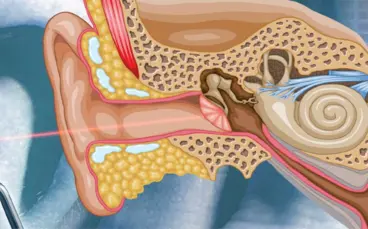
Ears are complex micromechanical machines that amplify tiny acoustic vibrations and convert them into electrical signals. What kind of structures and processes are responsible for signal processing inside the ear? Measurements performed on fruit flies with the laser Doppler vibrometer offer insights into the sophisticated mechanisms of hearing of these insects.
“I love working with the laser because it gives me an insight into the exciting world of vibrational communication in insects, plus it’s really easy to operate too.”
Dr. Biol. Taina Conrad, Institute of Evolutionary Ecology and Conservation Genomics, University of Ulm
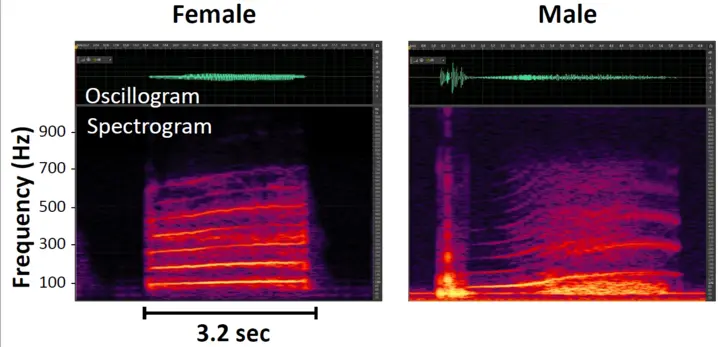
Sharpshooter insects’ vibrations decoded for viticulture
Related products
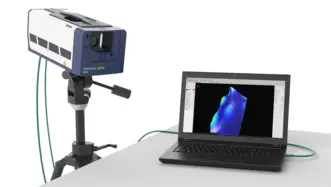
VibroScan QTec Xtra
VibroScan QTec Xtra measures vibrations in a new way - without contact, full-field and with unprecedented precision. With its groundbreaking multi-path interferometry, QTec® sets new standards in terms of optical sensitivity and interference immunity. The Xtra, based on an infrared (SWIR) laser is characterized by the highest optical sensitivity to guarantee highly accurate measurements even on demanding technical surfaces. VibroScan QTec Xtra ensures maximum portability through integrated data acquisition and signal generator up to 32 MHz.
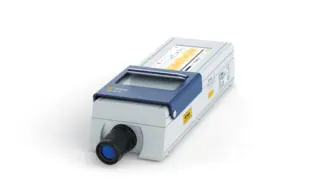
VibroGo
VibroGo® is the truly portable, battery powered digital laser vibrometer for field studies and quick and easy condition monitoring of machines and facilities on the go. It allows the non-contact measurement of vibrational displacement, velocity and acceleration up to 320 kHz and from safe distances up to 30 m. Integrated on-board data recording, live monitoring and quick analysis of measurement data make VibroGo® more autonomous than ever before.


Talk to our experts
Our experts are ready to support your projects with tailored measurement solutions or support you in measuring what matters—get in touch with us today.