Why vibration measurement in the medical device industry?
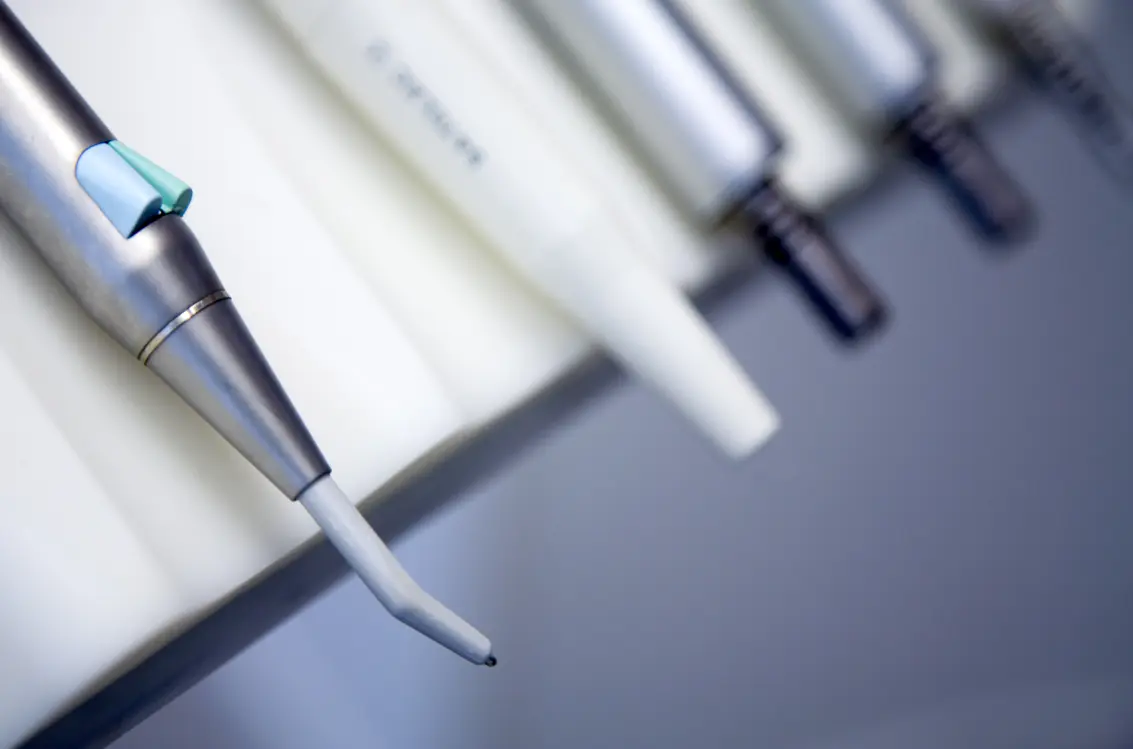
In many medical technology applications, vibration is not merely a side effect — it is part of the device function. Ultrasonic surgical instruments use controlled mechanical oscillation to cut, dissect, coagulate or debride tissue. Dental scalers transfer high-frequency motion to the instrument tip to remove calculus. Bone-conduction hearing systems rely on vibration transmission through bone, while biomedical research applications use ultrasound-induced effects for processes such as sonoporation.
However, unwanted vibration can also affect performance, safety, usability, lifetime and patient comfort. For medical device engineers, it is therefore essential to understand how a component or system actually behaves under operating conditions.
Laser Doppler vibrometry makes this dynamic behavior visible. The measurement is optical, non-contact and free from mass loading, making it especially suitable for small, delicate, sterile, high-frequency or hard-to-access medical devices. It provides objective data throughout the product lifecycle — from development and simulation validation to verification testing and production quality control.
1. Biomedical research: making micro-scale vibration effects measurable
Vibrometry is also valuable in biomedical research, where ultrasound and vibration are used to investigate new therapeutic or diagnostic mechanisms.
One example is sonoporation, a targeted drug-delivery technique that uses ultrasound to temporarily increase the permeability of cell membranes. The process is closely related to the acoustic behavior of microbubbles. Stable microbubble oscillation can support more controlled and efficient sonoporation.
In such applications, conventional acoustic measurement methods may be difficult to use, especially in enclosed microfluidic channels or very small test environments. Optical vibrometry can provide an alternative way to measure vibration behavior, characterize excitation conditions or detect harmonic responses associated with stable cavitation.
This demonstrates an important advantage: vibrometry is not limited to macroscopic medical instruments. It can also help researchers investigate dynamic effects in small, delicate or optically accessible biomedical systems.
2. Development: understanding the real device behavior
In early development, the key question is often simple: does the prototype behave as intended?
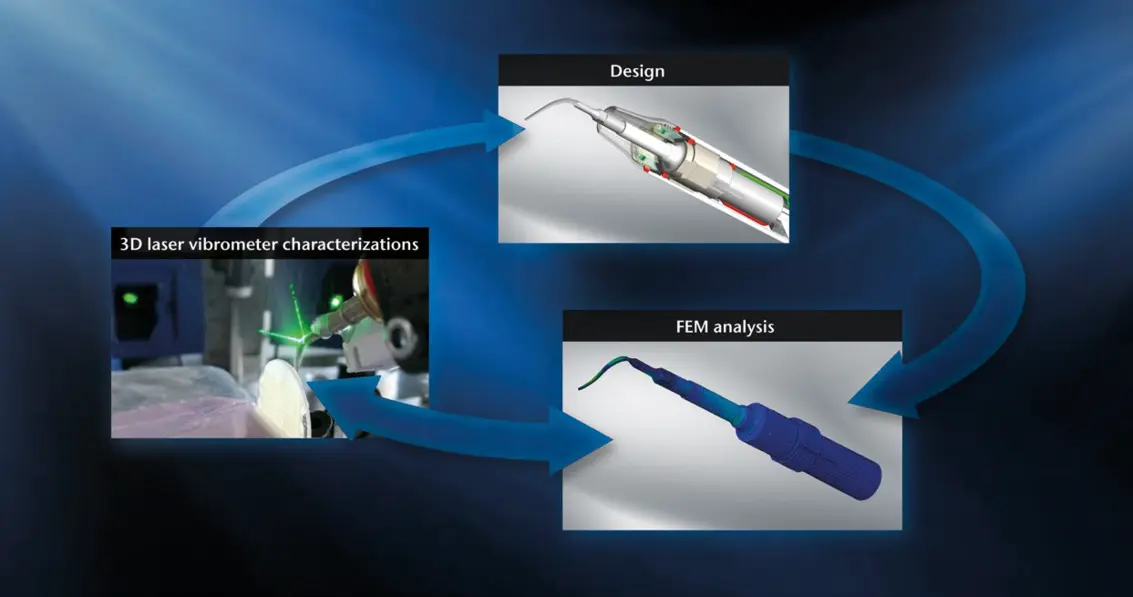
For vibrating or ultrasonic medical devices, simulation models can predict resonance frequencies, mode shapes, displacement amplitudes and stress-critical areas. But only measurement can confirm whether the physical device behaves in the same way. Laser Doppler vibrometry helps engineers compare simulation and reality, identify deviations and improve the design before costly iterations occur.
Typical development questions include:
- Does the device operate at the intended resonance frequency?
- Is the displacement amplitude sufficient for the intended function?
- Does the instrument tip move in the intended direction?
- Are there unwanted lateral or torsional vibration components?
- Do measured mode shapes match the finite element model?
- How does the device behave under real operating conditions?
For example, in ultrasonic surgical instruments, the longitudinal motion of the sonotrode or instrument tip is often central to function. However, unwanted bending or lateral motion may reduce efficiency, increase mechanical stress or negatively affect handling and patient safety. Vibrometry helps visualize and quantify these effects.
3. Simulation validation: closing the gap between model and reality
Numerical simulation is an important part of modern medical device development. Finite element analysis can help predict dynamic behavior before hardware is built. However, simulation models depend on assumptions: material properties, boundary conditions, joints, bonding layers, damping and excitation all influence the result.
Vibrometry provides the experimental data needed to validate and improve these models. By measuring resonance frequencies, operational deflection shapes and vibration amplitudes, engineers can check whether the simulation represents the real device accurately.
This is particularly valuable for devices where mechanical vibration directly affects clinical performance, such as:
- ultrasonic surgical instruments
- dental scalers
- bone-conduction hearing devices
- ultrasound transducers
- microfluidic systems
- miniaturized actuators and sensors
The result is a more reliable development process: design decisions are based not only on theoretical assumptions, but on measured dynamic behavior.
4. Ultrasonic instruments: improving function and safety
Ultrasonic medical instruments often operate at frequencies between several kilohertz and tens of kilohertz. Their function depends on precisely controlled mechanical motion. Small deviations in frequency, amplitude or vibration direction can affect cutting performance, dissection efficiency, tissue interaction or user comfort.
Laser vibrometry can be used to characterize the motion of surgical instruments, sonotrodes, handpieces and tips. It helps engineers evaluate whether the device delivers the required mechanical output and whether the vibration pattern is suitable for the intended use.
For surgical cutting, coagulation or dissection devices, typical measurement tasks include:
- determining resonance frequency and operating frequency
- measuring displacement or velocity amplitudes
- evaluating longitudinal, lateral and torsional motion
- identifying unwanted vibration modes
- validating design changes
- comparing prototypes or production samples
This supports both product development and objective functional verification.
Application example: Dental scalers – optimizing tip motion
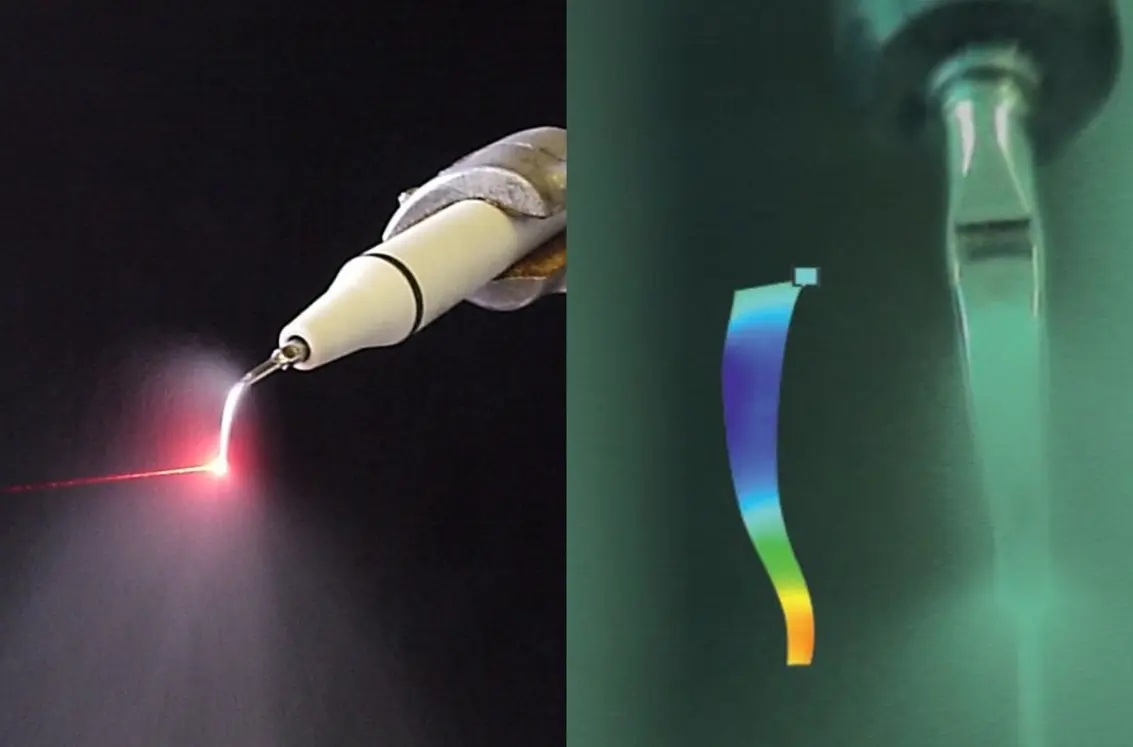
Dental scalers are a good example of a medical device where vibration quality directly influences performance and comfort. The instrument tip must remove calculus efficiently while avoiding unnecessary lateral motion, excessive vibration of the handpiece or discomfort for the patient.
The desired movement is usually a controlled high-frequency motion at the scaler tip. However, real instruments can show complex 3D vibration patterns. Depending on geometry, excitation, water cooling and mounting conditions, the tip may show longitudinal, lateral or elliptical motion components.
3D scanning vibrometry helps engineers analyze these motion patterns in detail. It can reveal whether the tip movement is aligned with the intended cleaning function or whether unwanted motion components occur.
Typical benefits include:
- optimization of tip geometry
- validation of simulation models
- reduction of unwanted lateral motion
- comparison of different scaler designs
- evaluation of operating conditions
- definition of quality criteria for production testing
Because the measurement is non-contact, even high-frequency and high-amplitude tip motion can be measured without influencing the dynamic behavior of the instrument.
5. Production and quality assurance: defining objective test criteria
Once a medical device moves from prototype to series production, the question changes. It is no longer only about understanding the design. It is about ensuring that every product performs within specification.
Laser vibrometry can support quality assurance by measuring reproducible dynamic parameters such as resonance frequency, vibration amplitude, frequency response, phase behavior or motion at a defined test point. These parameters can be used to detect assembly errors, material deviations, bonding issues, damaged components or incorrect excitation behavior.
Typical production-related measurement tasks include:
- end-of-line functional testing
- resonance frequency checks
- amplitude verification at critical points
- comparison against reference devices
- detection of defective assemblies
- definition of pass/fail criteria
- documentation of vibration-related quality parameters
For medical device manufacturers, this is especially relevant because product performance must be reliable, traceable and objectively documented.
6. Service, troubleshooting and clinical research
In some applications, vibrometry can also be useful beyond development and production — for troubleshooting, service analysis or clinical research.
Bone-conduction hearing systems are one example. These devices rely on the transmission of mechanical vibration through bone to stimulate the auditory system. In research or clinical evaluation, vibrometry can help investigate whether vibration is effectively transmitted to relevant anatomical structures or mechanical interfaces.
For troubleshooting, vibrometry can also be used to compare a reference device with a device showing abnormal behavior. Differences in resonance frequency, amplitude or vibration mode can quickly indicate whether the root cause is related to mechanics, assembly, excitation or coupling.
How to start with vibration measurement in medical device projects
The best starting point is usually not the choice of a specific measurement system, but the technical question behind the measurement.
- Do you need to validate a simulation model?
- Do you want to understand the motion of an instrument tip?
- Are you comparing prototypes?
- Do you need to identify unwanted vibration modes?
- Are you planning to define a production test criterion?
- Or do you need objective measurement data for documentation and verification?
Depending on the task, a single-point measurement may be sufficient, for example to check resonance frequency or vibration amplitude at a defined position. For more complex motion behavior, such as dental scaler tips, ultrasonic surgical instruments or bone-conduction devices, 3D or full-field measurements can provide deeper insight into mode shapes, motion direction and unwanted vibration components.
The key advantage of laser Doppler vibrometry is that it measures optically, non-contact and without mass loading. This is particularly important for small, sensitive, sterile, high-frequency or hard-to-access medical devices, where contact sensors may influence the result or cannot be used at all.
For many organizations, a step-by-step approach is the most practical way to begin: a feasibility measurement, a measurement service project, a temporary rental system or a leasing model. With PolyFlex, Polytec offers flexible options such as PolyMeasure, PolyRent and PolyLease. This allows medical device manufacturers and research teams to evaluate the measurement approach, prove technical feasibility and integrate vibrometry into development, validation or quality assurance at the right pace.