Challenge and situation
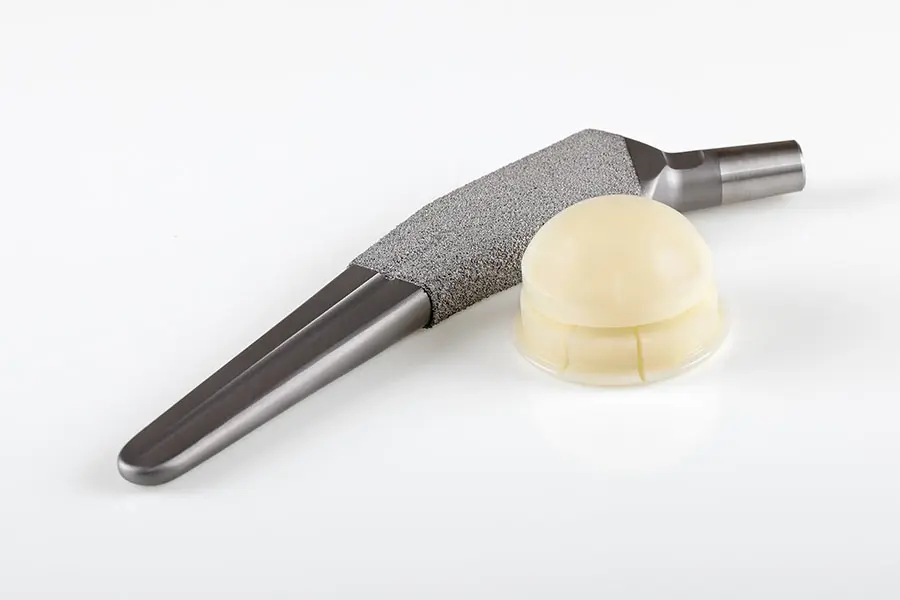
Ceramic and metal components play a major part in hip and knee implants. Hip procedure rates alone rose by around 30 % between 2007 and 2017, and demand continues to grow with ageing populations — while healthcare systems face financial and staffing pressures. That makes the quality, and therefore the lifetime, of every implant increasingly important.
One risk of implant surgery is an immune response to the implant material. Such reactions can trigger inflammation, often linked to corrosion of metals, fretting and wear. To minimise these risks, the manufacturing process of implants has to be tightly quality controlled — including the grinding and polishing steps that define the final surface finish.
The solution: roughness characterisation with Micro.View
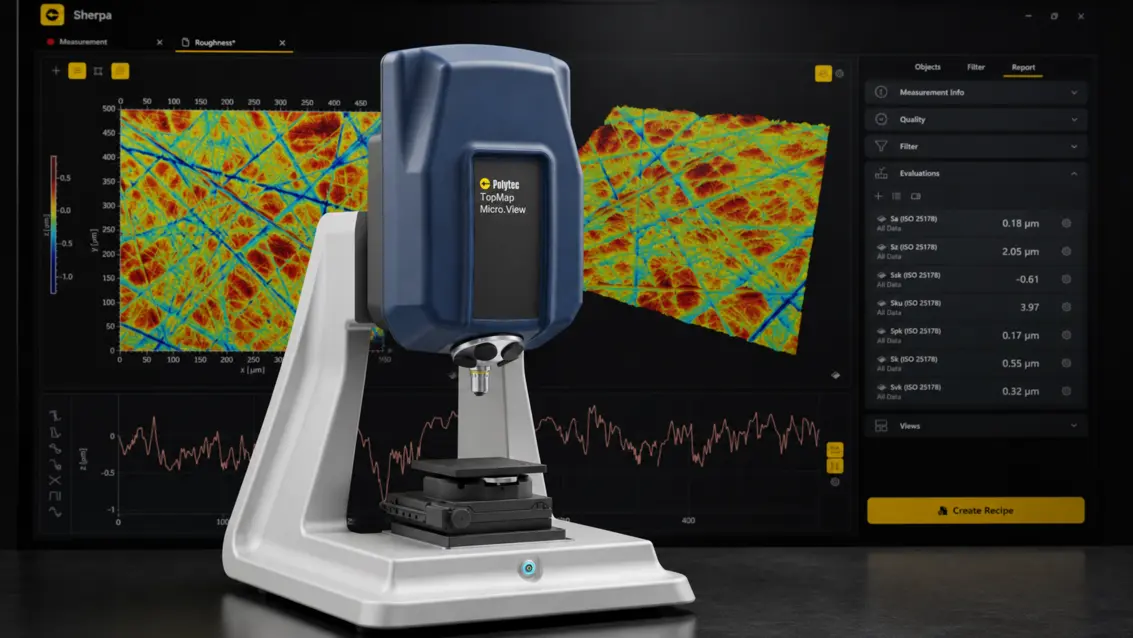
The Micro.View is used to characterise roughness parameters on material samples without contact, using scanning white light interferometry. Because implant surfaces are typically very shiny, this technology has a clear advantage over other optical measurement methods, which often struggle on highly reflective parts.
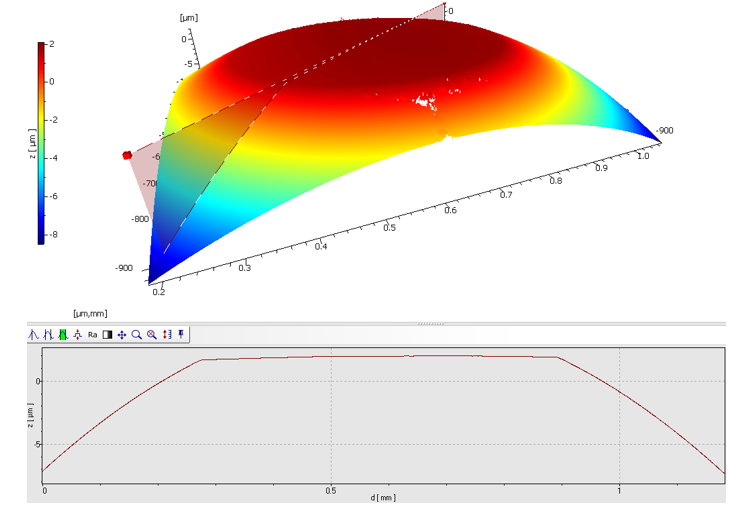
During implant development, the goal is to identify the material that delivers the longest lifetime with the least wear. Measuring roughness on candidate samples with the Micro.View gives developers an objective way to compare how well each new material performs. In production, random roughness checks on finished implants add a second benefit: they reveal tool wear, so the manufacturing team knows exactly when tools need to be replaced.
The result
With non-contact roughness analysis on the Micro.View, implant manufacturers get reliable, repeatable surface data on demanding ceramic and metal parts. In development, that means better-informed material decisions; in production, routine checks keep the grinding and polishing process under control and flag tool wear early. The result is fewer returns and rejects — and safer, longer-lasting implants for patients.
Wear analysis on ceramic and metal implants with Micro.View
Quick start into surface metrology
We take our claim Measure what matters seriously — and we support you in whatever way fits your situation. Even if your need is only temporary, or a full system isn’t in the budget yet, you have options: rent a system with PolyRent, or let our specialists run the measurements for you with PolyMeasure. And if you’re looking to buy, we’d recommend starting with a feasibility study or a rental — with the rental fee credited against your purchase price afterwards. Talk to our experts and we’ll recommend the best-fitting approach for your metrology tasks.